Best Rabbit Cages That Keep Bunnies Happy and Active
You need a cage that supports your rabbit’s health and activity. The MidWest Medium Wabbitat (37 x 19 x 20 in) offers tool-free assembly, a 5.5-inch deep leakproof tray, and dual-access doors with secure latches. Choose the Amazon Basics Jumbo or Living World X-Large for larger breeds, featuring rust-resistant wire and elevated mesh floors. Models like the Oneluck 2-level hutch encourage movement with ramps and balconies. A 12-panel playpen provides expandable exercise space. Proper wire spacing, durable trays, and chew-resistant materials guarantee safety and ease of cleaning. Each design meets minimum 12 sq ft and 18-inch height requirements for proper rabbit care. Further details reveal how specific features enhance long-term well-being.
We are supported by our audience. When you purchase through links on our site, we may earn an affiliate commission, at no extra cost for you. Learn more. Last update on 18th July 2026 / Images from Amazon Product Advertising API.
Notable Insights
- Spacious cages like the MidWest Wabbitat Deluxe offer room to hop and support add-on expansions for play.
- Elevated levels and ramps, as in the Deluxe 2-Level Hutch, encourage activity and mimic natural movement.
- Chew-safe materials and included toys, such as Grddaef’s apple wood set, support dental health and mental stimulation.
- Ample ventilation and secure wire spacing (under 1 inch) ensure safety and comfort in models like Living World X-Large.
- Easy-to-clean, removable trays and tool-free assembly help maintain hygiene, keeping bunnies healthier and happier.
MidWest Medium Wabbitat Rabbit Cage

If you’re setting up a starter home for a large-breed rabbit, the MidWest Medium Wabbitat Rabbit Cage stands out as a practical, well-engineered choice. It measures 37 x 19 x 20 inches, offering ample space for big rabbits. The grid mesh floor supports feet and reduces hock pressure. A removable slide-out ABS plastic tray has a urine guard and locking pan stop for easy cleaning. Rust-resistant metal construction guarantees durability. Top and front doors open with one hand via secure slide latches. It assembles tool-free and folds flat for transport. Made by MidWest Homes for Pets, it’s built for indoor use and backed by a 1-year warranty.
Best For: Large-breed rabbits and small-animal pet owners seeking a durable, easy-to-clean, and spacious indoor starter cage.
Pros:
- Spacious design with grid mesh floor helps reduce hock pressure and supports foot health
- Tool-free assembly and folding design make setup and transport simple
- Removable slide-out tray with urine guard allows for quick, mess-free cleaning
Cons:
- Limited ventilation for reptiles or amphibians despite multi-species target audience
- Plastic tray may degrade over time with heavy chewing from determined pets
- Assembly, while tool-free, can be confusing without clear visual instructions
MidWest Small Wabbitat Rabbit Cage

The MidWest Small Wabbitat Rabbit Cage stands out for small rabbit owners who need a durable, low-maintenance habitat that combines practical design with reliable safety features. It measures 25 x 19 x 20 inches, made of alloy steel with a rust-resistant e-coat finish. The grid mesh floor supports feet and reduces hock pressure. A removable plastic tray with urine guard maintains hygiene. Front and top doors open easily with one hand and secure with slide latches. No tools are needed for assembly-it sets up in seconds. I use it indoors or out. It weighs 12 pounds. Covered by a one-year warranty.
Best For: Small rabbit owners seeking a durable, easy-to-assemble, and hygienic indoor or outdoor habitat with user-friendly access and foot-friendly design.
Pros:
- Durable alloy steel construction with rust-resistant e-coat finish for long-lasting use
- Tool-free assembly and one-handed door operation make it convenient for everyday use
- Removable plastic tray with urine guard ensures easy cleaning and optimal hygiene
Cons:
- Limited to small rabbits and small animals, not suitable for larger or growing breeds
- Warranty does not cover damage from animal use or misuse, limiting protection
- Some users may find the 12-pound weight less portable despite its compact size
GUTINNEEN Small Chicken Coop for 1-2 Chickens
I choose the GUTINNEEN Small Chicken Coop when I need a durable, multi-species housing solution that works just as well for rabbits as it does for chickens. It measures 57″ L x 21″ W x 33″ H, built from wood with a taupe finish for weather resistance. The two-level design includes a full asphalt roof to prevent leaks and keep the interior dry. Multiple access doors allow easy feeding and cleaning. A removable waterproof plastic tray simplifies waste management. I can connect it to other units for expanded layouts. It’s suitable for indoor or outdoor use, supports all small animal breeds, and comes with a 2-year warranty.
Best For: Small animal owners seeking a durable, weather-resistant, and expandable coop ideal for housing 1–2 chickens, rabbits, or guinea pigs both indoors and outdoors.
Pros:
- Sturdy wood construction with a taupe finish and full asphalt roof provides excellent weather resistance and long-term durability
- Multi-access doors and a removable waterproof plastic tray make feeding, cleaning, and maintenance effortless
- Expandable design allows connection to additional units for customized, multi-animal setups
Cons:
- Limited space makes it unsuitable for more than 2 small animals, restricting scalability for larger flocks or litters
- Assembly required, which may be time-consuming without clear instructions or included tools
- Plastic tray, while waterproof, may require frequent cleaning to prevent odor buildup in warm conditions
Amazon Basics Small Animal Cage (Jumbo)
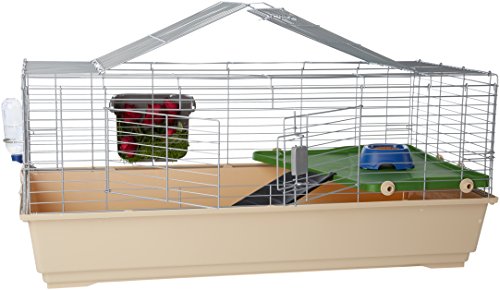
Since space and durability matter most for larger rabbits or active multi-pet households, the Amazon Basics Small Animal Cage (Jumbo) stands out as a practical long-term solution. It measures 48.6 x 26.6 x 20.6 inches, offering ample room for movement. The iron wire upper frame guarantees stability, while the PP plastic base resists chew damage. Large top and front openings allow easy access. It includes a balcony with a ramp, a private hideaway space, and a tip-proof food dish. A non-drip water bottle, hay guard, and food dish come included. Assembly requires no tools. It’s backed by a 1-year limited warranty. Not for prolonged outdoor use in cold temperatures.
Best For: Rabbit owners and multi-pet households needing a spacious, durable indoor cage with easy access and included accessories.
Pros:
- Spacious jumbo design with a balcony, ramp, and hideaway space supports active pets and natural behaviors
- Durable construction featuring a chew-resistant PP plastic base and sturdy iron wire frame
- Comes with essential accessories including a non-drip water bottle, hay guard, and tip-proof food dish
Cons:
- Not suitable for prolonged outdoor use, especially in cold or low-temperature environments
- Plastic base may not be fully chew-proof for aggressive chewers despite resistance claims
- Limited ventilation in lower hideaway area could reduce air circulation
Living World Deluxe Hybrid Habitat X-Large

Looking for a spacious, no-fuss home that keeps your rabbit safe and active? The Living World Deluxe Hybrid Habitat X-Large delivers. Its hybrid design combines a durable plastic base with a powder-coated wire upper frame, measuring 46.9”L x 22.8”W x 24”H-plenty of room for movement. I appreciate the two-part opening top and front wire door for easy access. The included ramp leads to a balcony with a secured, tip-proof food dish and hay guard, maximizing floor space. An external drip-proof water bottle simplifies hydration. A hideaway under the balcony offers security, reducing stress. Assembly takes minutes-no tools needed-using eight secure plastic clips.
Best For: Small animal owners seeking a spacious, easy-to-assemble habitat with smart space-saving features for rabbits, guinea pigs, chinchillas, or ferrets.
Pros:
- Spacious X-large design with hybrid construction for durability and ventilation
- Tool-free assembly and easy access with two-part opening top and front wire door
- Includes convenient features like external water bottle, hay guard, balcony, and hideaway for comfort and space efficiency
Cons:
- Plastic base may be prone to chewing damage from persistent animals
- Limited roof clearance on balcony could restrict movement for larger rabbits
- Wire spacing might not be secure enough for very small pets like dwarf hamsters
MidWest Wabbitat Deluxe Rabbit Home (Maroon/White)
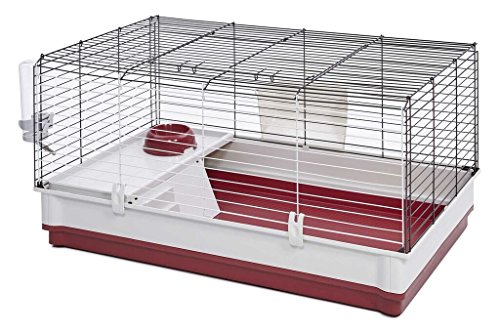
The MidWest Wabbitat Deluxe Rabbit Home (Maroon/White) is a top-tier choice for pet owners who want a durable, functional, and expandable living space for rabbits, guinea pigs, or chinchillas. It measures 39.5 L x 23.75 W x 19.75 H inches, with a 5.5-inch deep base that contains litter effectively. I appreciate the top and full side-door access-it makes cleaning easy and reduces stress during handling. It includes a hay feeder, water bottle, feeding bowl, and elevated feeding area. The design supports expansion with the 158WEX wire or 158HEX wood hutch add-ons. No tools are needed for setup. It’s backed by a 1-year warranty.
Best For: Pet owners seeking a spacious, easy-to-clean, and expandable habitat for rabbits, guinea pigs, or chinchillas.
Pros:
- Spacious 39.5″ L x 23.75″ W x 19.75″ H design with a 5.5-inch deep base for effective litter containment
- Top and full side-door access for easy cleaning and stress-free pet handling
- Includes essential accessories (hay feeder, water bottle, feeding bowl, elevated feeding area) and supports expandable setups with optional wire or wood extensions
Cons:
- May be too large for small living spaces or apartments with limited room
- Plastic base may be chewed through by persistent chewers despite durable construction
- No tool-free expansion mechanism-additional kits (158WEX or 158HEX) sold separately
Oneluck Rabbit Cage Indoor with Leak-Proof Trays

If you own a small breed rabbit or a chinchilla that needs a secure, dry, and easy-to-maintain indoor space, the Oneluck Rabbit Cage Indoor with Leak-Proof Trays is a preferred choice. It measures 28.7″ L x 18.1″ W x 25.6″ H, with 1.1-inch wire spacing for visibility and ventilation. Three 7.1-inch urine-proof walls prevent waste from seeping through. Two removable leak-proof trays make cleanup fast and keep the habitat dry. Lockable wheels allow easy movement indoors or outdoors. Top and front doors offer full access. The loft design includes a ramp, balcony, and secluded resting area for comfort.
Best For: Small breed rabbits, chinchillas, or similar small pets needing a secure, dry, and easily cleanable indoor living space with mobility and comfort features.
Pros:
- Features removable leak-proof trays and urine-proof walls to keep the habitat dry and minimize odors
- Equipped with lockable wheels for easy indoor or outdoor relocation and positioning
- Loft design with ramp, balcony, and secluded area enhances pet comfort and accessibility for cleaning and bonding
Cons:
- Limited floor space may not suit larger rabbits or highly active animals
- Wire spacing of 1.1″ may not be safe for very small pets or those prone to foot issues
- Plastic trays may degrade over time with heavy use or exposure to sunlight outdoors
12-Panel Small Animal Playpen with Mat

While I prioritize both safety and versatility in a playpen, I find the 12-panel design with 0.5-inch encrypted iron mesh spacing delivers unmatched security for small animals prone to squeezing through gaps. Each panel is constructed from coated steel with rounded corners, connected by durable ABS joints and reinforced with nylon zip ties. Fully assembled, it measures 48″ x 24″ x 16″. The included 600D Oxford cloth mat has a PVC backing, 4.7-inch raised sides, and fits snugly when placed with 12-inch edges grounded. It’s waterproof, floor-protecting, and wipe-clean. Its modular C&C design allows customizable layouts, ideal for rabbits, guinea pigs, and other small pets indoors or out.
Best For: Small pet owners seeking a secure, customizable, and durable playpen for rabbits, guinea pigs, puppies, and similar animals.
Pros:
- Sturdy coated steel construction with 0.5-inch mesh spacing ensures safety and prevents escapes or trapping
- Modular C&C design allows flexible configurations for indoor or outdoor use
- Includes waterproof, wear-resistant floor mat with raised edges to protect surfaces and simplify cleaning
Cons:
- Assembly requires manual effort and proper tightening with zip ties for stability
- Raised mat sides may limit visibility for very small or low-to-the-ground pets
- Large footprint may be unsuitable for small living spaces when fully assembled
Deluxe 2-Level Rabbit Hutch with Lockable Casters

You’ll find the Deluxe 2-Level Rabbit Hutch with Lockable Casters works best when you need secure, mobile housing for rabbits or similarly sized small animals like guinea pigs or chinchillas. I use its 26.5L x 17.5W x 24H frame indoors and out. Heavy-duty metal wire with 0.9-inch bar spacing prevents escapes and injury. A solid plastic platform and anti-slip ramp protect paws. The raised mesh floor includes a urine guard; a 2-inch deep slide-out tray stays leakproof. Two large doors-one top, one front-allow easy access. A front lock guarantees security. Four lockable casters with brakes offer mobility. Assembly is tool-free. Washable parts make cleaning simple.
Best For: Small pet owners needing secure, portable, and easy-to-clean indoor/outdoor housing for rabbits, guinea pigs, chinchillas, or similar-sized animals.
Pros:
- Spacious, durable design with paw-safe features like solid plastic platform and anti-slip ramp
- Lockable casters provide easy mobility and stability on multiple surfaces
- Tool-free assembly and washable, removable parts simplify setup and maintenance
Cons:
- Limited height may restrict larger breeds or multi-pet occupancy
- Plastic tray may require frequent cleaning to prevent odor buildup
- Outdoor use may require additional weather protection despite sturdy construction
Grddaef 20 PCS Bunny Chew Toys

I choose the Grddaef 20 PCS Bunny Chew Toys for owners prioritizing dental health and behavioral enrichment in adult small-breed rabbits. This 20-piece set includes apple wood molars, timothy grass balls, loofahs, and woven carrots. Each toy uses natural, non-toxic materials like timothy grass, loofah, and apple wood. High fiber content supports digestion and dental wear. Teeth overgrowth is reduced through consistent chewing. The kit weighs 6.7 oz and fits most cages. Dimensions: 7.2 x 4.9 x 2.1 in. You can hang pieces easily. Safe for rabbits, guinea pigs, and chinchillas. Part of Grddaef 1994’s 2021 line (ASIN: B09MK9GJFS).
Best For: Adult small-breed rabbits and other small pets needing dental maintenance and behavioral enrichment through natural, chewable toys.
Pros:
- Made from 100% natural, non-toxic materials like apple wood, timothy grass, and loofah for safe chewing
- Promotes dental health by preventing teeth overgrowth and supports digestion with high-fiber content
- Offers variety with 20 pieces including toys that encourage play, reduce boredom, and can be hung in cages
Cons:
- May not last long with aggressive chewers due to natural, biodegradable materials
- Limited suitability for very small or young animals; designed specifically for adults
- Packaging dimensions slightly larger than product, which could cause confusion about actual size
Factors to Consider When Choosing Rabbit Cages
You need to pick a rabbit cage that matches your bunny’s size and activity level-experts recommend at least 8 square feet of space for a medium-sized rabbit, plus a separate exercise area. Look for sturdy materials like galvanized steel or powder-coated wire with a solid base to prevent foot injuries and guarantee long-term durability. Easy access, simple cleaning, and whether you’re placing the cage indoors or out will directly affect your rabbit’s health and your daily care routine.
Size And Space Needs
When selecting a rabbit cage, ensuring adequate space is critical for your pet’s physical health and behavioral well-being. Your rabbit needs at least 12 square feet of floor space to move freely. This allows room to stretch, stand fully on hind legs, and take three full hops in one direction-key to muscle development and joint health. The cage must be at least 18 inches tall so your rabbit can stand upright without restriction. Wire spacing should not exceed 1 inch to prevent escapes or injuries, especially in smaller breeds. Choose multi-level enclosures when possible-they add usable vertical space. Ramps and secure platforms encourage natural climbing behavior and exercise. Include a sheltered sleeping area large enough for your rabbit to curl up fully. This enclosed space provides safety, reduces stress, and supports healthy resting patterns. Size isn’t just comfort-it’s essential for long-term health.
Material And Durability
Since long-term durability and safety depend heavily on construction quality, choosing a rabbit cage made from high-grade materials is essential. Use rust-resistant coated steel or alloy with e-coat finishes to prevent corrosion in humid or dry conditions. These materials resist chipping and extend the cage’s lifespan. Look for wire spacing between 0.5 and 1.1 inches-it keeps your bunny secure without risking limb injuries. Welded joints or reinforced metal frames offer stability and resist warping under daily use. The base should include a durable plastic tray at least 2 inches deep, with urine guards to protect flooring and the cage structure from moisture damage. Solid plastic platforms or sturdy mesh floors support your rabbit’s weight safely and reduce sore hocks. These surfaces resist wear from constant foot traffic. Choose designs that balance strength and safety-like a bridge built for both load and longevity.
Access And Entry Design
A well-constructed cage must also feature intelligent access and entry design to support daily care and long-term usability. Multiple access points, like top and front doors, let you feed, clean, or interact easily and adapt to space limits. Top openings are ideal for quick check-ins, while front doors allow full access for handling larger rabbits or inserting wide food bowls. Door openings should have secure latches to prevent escapes-many models use spring-loaded or twist-lock mechanisms that offer one-handed operation. Look for apertures measuring at least 10 x 8 inches for unobstructed access. Large openings simplify inserting bulky cleaning tools or removing nesting materials. Strategically positioned doors improve airflow and visibility, enhancing both comfort and monitoring. Tool-free assembly using snap or clip connectors allows fast setup and easier reconfiguration, improving long-term flexibility and practicality without sacrificing structural integrity.
Ease Of Cleaning
Though cleaning may not be the most exciting part of rabbit care, designing for ease of sanitation makes a critical difference in daily maintenance and long-term hygiene. Choose cages with removable, slide-out trays to clear waste quickly without dismantling the unit. Models with raised tray edges or waterproof panels prevent leaks and protect flooring. Use smooth, non-porous materials like ABS plastic or sealed bases-they resist odors and wipe clean with disinfectants. Elevated mesh floors keep bunnies dry by letting droppings and liquids fall into trays below. This design reduces contact with waste and improves air circulation. Prioritize tool-free disassembly for fast access to every part, enabling deep, regular cleaning. These features cut cleaning time by up to 50% compared to fixed-base models. Durable plastics withstand repeated scrubbing, while seamless joints prevent bacterial buildup. A well-designed cleaning system guarantees consistent sanitation, which directly supports your rabbit’s health.
Indoor Versus Outdoor Use
You’ve already seen how smart design simplifies cleaning and supports hygiene-now consider where that hygiene system operates, because location affects both structure and performance. Indoor cages lack weatherproofing, making them vulnerable to moisture damage outdoors. They’re built with lightweight materials and compact dimensions, often prioritizing aesthetics over endurance. Without sealed joints or rust-resistant coatings, they degrade quickly in damp conditions. Outdoor enclosures, however, feature elevated floors, sloped waterproof roofs, and galvanized wire mesh to resist corrosion. They endure temperature swings and resist mold thanks to superior airflow. Ventilation gaps are larger, preventing condensation. Outdoor models also include predator-resistant locks and reinforced frames-essential for security. Indoors, you rely on climate control, so airflow needs are lower. Choose indoors for comfort and convenience, outdoors only with proper protection. Your rabbit’s safety depends on matching cage design to environment.
Mobility And Placement
When selecting a rabbit cage, prioritize mobility features that allow effortless repositioning without sacrificing stability. Choose models with lockable wheels or casters to guarantee smooth movement and secure placement on tile, wood, or carpet. Lightweight cages-ideally under 20 pounds-make indoor-outdoor shifts quick and manageable. Opt for foldable designs or tool-free assembly to simplify transport and setup across rooms or yards. This flexibility supports consistent cleaning routines and environmental enrichment. Guarantee the base includes a leak-proof tray system to protect floors from urine damage and contain bedding spills. Select a cage with both top and front access doors so you can place it flush against walls while still reaching your rabbit easily. Proper placement boosts functionality and preserves home integrity. These precise features enhance utility without compromising your bunny’s living standards.
Pet Safety Features
A well-designed rabbit cage prioritizes safety with features that prevent injury and support long-term health. Choose cages with solid or plastic-coated flooring to reduce the risk of foot injuries and hock sores, especially in larger breeds. Wire mesh floors can damage sensitive feet, so solid surfaces are essential. Guarantee bar spacing is no wider than 1 inch to prevent escapes or limb entrapment. Narrow gaps stop your bunny from getting stuck or injured. Use chew-resistant materials like powder-coated metal and protect electrical wires to prevent dental damage or electrocution. Look for urine guards and leak-proof trays that keep bedding dry and prevent skin irritation. Damp environments increase health risks. Rounded corners and smooth edges reduce cuts, abrasions, and entrapment. Sharp angles trap limbs or cause trauma over time. Safety-focused design prevents common injuries.
Frequently Asked Questions
How Often Should I Clean My Rabbit’s Cage?
You should clean your rabbit’s cage at least once a week. Spot-clean daily by removing soiled bedding and waste. Replace all bedding weekly to prevent ammonia buildup from urine, which can harm your rabbit’s respiratory system. Wash the cage with a 1:10 vinegar-water solution to disinfect without harsh chemicals. Guarantee full drying before reintroducing your rabbit. High-traffic cages may require biweekly deep cleaning to maintain hygiene and odor control.
Can Rabbits Live Outdoors in These Cages?
Yes, rabbits can live outdoors in these cages if you secure them against predators and insulate against extreme weather. You must use welded wire mesh with ½-inch gaps and frame the base at least 12 inches underground to deter digging. You need UV-resistant, waterproof roofing materials. The enclosure must provide 8 cubic feet per 5 lbs of body weight. You’ll supply continuous access to sheltered, dry bedding and fresh water. You monitor temperature-rabbits thrive between 50°F and 70°F.
Do I Need to Cover My Rabbit Cage at Night?
You don’t need to cover your rabbit cage at night unless temperatures drop below 50°F (10°C). Rabbits regulate body heat efficiently in well-ventilated enclosures with at least 2 cubic feet of space per pound of body weight. Covering restricts airflow and increases humidity, risking respiratory issues. Instead, provide a sheltered hide box measuring 12”x12”x12” for insulation. Use straw bedding for warmth without blocking ventilation. Guarantee ambient light cycles remain natural for circadian rhythm regulation.
Are These Cages Safe for Baby Bunnies?
Yes, these cages are safe for baby bunnies if they meet specific requirements. You need solid flooring-no wires-to protect delicate feet. Guarantee bar spacing is under 1 inch to prevent escapes or injuries. Use low-entry ramps and shallow litter boxes for easy access. Keep bedding absorbent and non-toxic. Monitor temperature, as kits can’t regulate body heat well. Always supervise during floor time to avoid accidents.
Can I Use Multiple Cages Together for Expansion?
Yes, you can connect multiple cages securely using compatible connector kits or zip ties. Guarantee alignment of wire spacing-ideally 1″ x ½”-to prevent escapes. Use rigid, non-toxic materials like powder-coated steel. Maintain structural stability by anchoring linked units. Provide continuous flooring to avoid foot injuries. Confirm ventilation across all sections. Monitor for weak joints. This modular approach mimics natural roaming ranges, improving exercise and mental stimulation when properly configured. Always supervise initial use.