Best Prong Collars for Dogs That Train Responsibly
You need a prong collar made from high-tensile chrome-plated or black German stainless steel with a 2.25 mm to 4.0 mm wire diameter for strength and rust resistance. Look for beveled or rubber-tipped prongs to prevent skin damage. Models like Herm Sprenger feature a center plate and swivel ring for even pressure and tangle-free movement. Guarantee a proper fit-snug just below the ears, with room for one finger. Adjustable links let you customize the size. Choose responsibly designed collars that distribute pressure evenly and avoid injury. Smart selection reflects your commitment to effective, humane training. You’ll find the right balance of control and comfort with the correct specifications. Further details refine your understanding of ideal fit and function.
We are supported by our audience. When you purchase through links on our site, we may earn an affiliate commission, at no extra cost for you. Learn more. Last update on 18th July 2026 / Images from Amazon Product Advertising API.
Notable Insights
- Choose prong collars made from durable, rust-resistant materials like chrome-plated or black German stainless steel for long-term reliability.
- Opt for models with blunt, beveled, or rubber-tipped prongs to ensure humane correction without skin damage.
- Select collars with adjustable sizing and removable links to achieve a proper, snug fit just below the ears.
- Use collars with a swivel ring and center plate to prevent tangling and distribute pressure evenly during training.
- Only use prong collars under supervision, for short training sessions, with proper technique to encourage responsible dog training.
Herm Sprenger Prong Dog Collar 22in

If you’re training a medium to large dog that pulls on walks, the Herm Sprenger Prong Dog Collar 22in is one of the most effective tools available. I use it because it distributes pressure evenly across the neck via a center plate and blunt, interlocking prongs. The collar is made from chrome-plated steel with a 3.0mm wire diameter-durable and built to last. Beveled prong tips reduce skin irritation. It fits necks up to 18 inches; add 3 inches to your dog’s measurement for the right size. I can remove or add up to four links for a custom fit. Made in Germany, it’s precision-engineered for reliable training.
Best For: Dogs that pull during walks and need effective, even-pressure correction with a durable, well-engineered training collar.
Pros:
- Distributes pressure evenly with a center plate and blunt, interlocking prongs for safer, more humane correction
- Made from durable chrome-plated steel with beveled prong tips to reduce skin irritation
- Adjustable fit with up to four removable or addable links for precise customization
Cons:
- Requires proper use and understanding to avoid misuse or harm to the dog
- Not suitable for dogs with neck sizes over 18 inches
- Some pet owners may prefer non-prong alternatives for ethical or comfort reasons
Prong Collar for Dogs (Adjustable, No Pull)
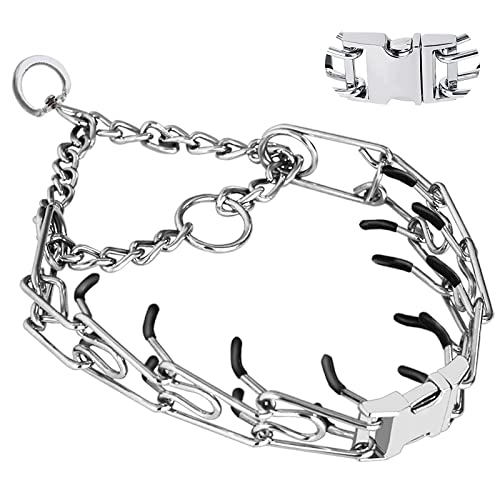
This prong collar stands out as the best choice for dog owners seeking reliable no-pull control without compromising safety or comfort. It uses 8 directional prong links to deliver even feedback from any angle, mimicking how mother dogs correct puppies. The round, smooth prongs have rubber tips and protective caps to prevent skin damage. I appreciate the humane design-it’s effective without causing harm. Made from chrome-plated stainless steel, it resists rust and lasts in all weather. The front quick-release buckle makes leash attachment easy. It fits small to extra-large breeds, including Bulldogs and German Shepherds. Two extra links allow precise sizing.
Best For: Dog owners seeking effective, humane no-pull training with strong behavioral control for small to extra-large breeds.
Pros:
- Utilizes 8 directional prong links for consistent, omnidirectional feedback that mimics natural maternal correction
- Features rubber-tipped prongs and protective covers for humane use and skin protection
- Made from rust-resistant chrome-plated stainless steel with a quick-release buckle for durability and easy use
Cons:
- May be misunderstood as harsh despite humane design, leading to user hesitation
- Requires proper fitting and responsible use to avoid misuse or discomfort
- Not recommended for unsupervised wear due to potential entanglement risks
Herm Sprenger Prong Dog Training Collar

The Herm Sprenger Prong Dog Training Collar stands as the top-tier choice for disciplined dog owners committed to effective, humane no-pull training. I rely on its chrome-plated steel construction for durability and consistent performance. Each collar has interlocking links with two blunt, slightly beveled prongs that reduce skin irritation. A swivel ring prevents tangling during active use. The center plate aligns links precisely, distributing pressure evenly-critical for ethical correction. I size it by measuring my dog’s neck and adding 3 inches; the small fits up to 13-inch necks. At 2.25 mm thick, it’s sturdy but not bulky. I customize fit by removing or adding up to four links. Made in Germany, it reflects uncompromising quality.
Best For: Dedicated dog trainers and owners seeking a durable, precisely engineered no-pull collar for humane, effective correction during training.
Pros:
- Chrome-plated steel construction ensures long-lasting durability and smooth operation
- Even pressure distribution via center plate promotes ethical, consistent corrections
- Adjustable length with up to four removable links allows for a customized, secure fit
Cons:
- Potential for misuse leading to discomfort if not properly fitted or used incorrectly
- Not suitable for everyday wear or for dogs with sensitive skin or neck injuries
- Some dog owners may prefer non-aversive training tools over prong collars
Supet Adjustable Prong Collar for Dogs

Supet’s Adjustable Prong Collar stands as a top-tier choice for dog owners committed to effective, humane training without compromising safety or durability. It applies even pressure, mimicking how a mother dog carries her pup, avoiding harm to the airway. Smooth, rounded prongs deliver a gentle yet clear correction, curbing pulling without injury. Constructed from durable materials, it features a quick-release buckle and requires pliers to adjust, preventing tampering. Sizes range from small (2.5 mm, 14″) to X-large (4.0 mm, 20″), with an extra link included. I offer 24-hour support and a 100% satisfaction guarantee.
Best For: Dog owners seeking a humane, durable training collar that provides effective behavioral correction without harming their pet’s neck or airway.
Pros:
- Mimics maternal correction with even pressure distribution for safe, effective training
- Smooth, rounded prongs prevent injury while reducing pulling during walks
- Durable construction with quick-release buckle and tamper-resistant design requiring pliers for adjustment
Cons:
- Requires use of pliers to adjust size, which may be inconvenient for some users
- Misconceptions about prong collars may lead to stigma despite humane design
- Not suitable for dogs with certain neck or spinal conditions without veterinary guidance
Herm Sprenger Ultra-Plus Prong Dog Collar

German engineering sets the Herm Sprenger Ultra-Plus Prong Dog Collar apart for handlers who demand precision and durability in training tools. I rely on its 2.25 mm thick, chrome-plated steel construction for long-term resilience. Each collar adjusts via individual prong links-I can add or remove them to fit necks up to 13 inches. The solid fastener plate guarantees a secure connection, reducing failure risk. It functions through controlled pressure distribution, offering correction without excessive force. I clean mine with water, mild soap, and a soft toothbrush to maintain hygiene. Made in Germany, it weighs only 0.2 units, balancing sturdiness with lightweight design.
Best For: Experienced dog trainers and handlers seeking a durable, precision-engineered training collar for effective, controlled corrections.
Pros:
- German-made construction with 2.25 mm chrome-plated steel ensures exceptional durability and resistance to wear
- Adjustable prong links allow for a customized fit up to 13 inches, ensuring proper sizing and secure fastening
- Controlled pressure distribution enables effective training with minimized risk of injury when used properly
Cons:
- Requires proper training knowledge for humane use; not suitable for inexperienced or novice dog owners
- Chrome plating may wear over time with heavy use, especially in wet or humid conditions
- Limited to a maximum 13-inch neck size, which may not fit larger breeds without modification
Prong Collar for Dogs (Stainless Steel)
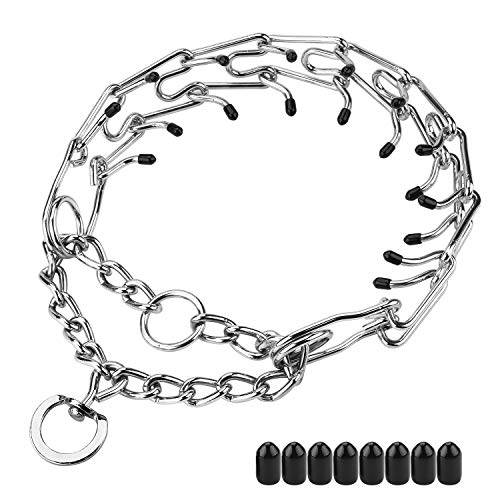
When you’re training a strong-pulling large breed dog, a durable stainless steel prong collar like the Aheasoun model delivers reliable control and even pressure distribution. It’s made of chrome-plated stainless steel with rubber-tipped prongs to protect your dog’s skin. The collar adjusts from 15 to 23.6 inches, fitting small, medium, and large breeds. I can remove or add chain links for a precise fit. High-tensile steel resists deformation during pulls. Pressure distributes evenly around the neck, avoiding trachea compression. A D-ring secures the leash. I only use it during training, not for long-term wear.
Best For: Dog owners training strong-pulling large breed dogs who need controlled, even pressure without trachea compression.
Pros:
- Durable chrome-plated stainless steel construction resists wear and deformation
- Adjustable size (15–23.6 inches) fits small, medium, and large dogs with customizable fit
- Rubber-tipped prongs and even pressure distribution enhance safety and comfort during training
Cons:
- Not suitable for long-term or everyday wear, limiting continuous use
- Requires proper assembly and adjustment, which may be challenging for beginners
- Not recommended for use in wet environments, risking potential corrosion over time
PetJett ProTrainer Prong Collar for Dogs

If you’re training strong-willed breeds like German Shepherds, Rottweilers, or Pitbulls, the PetJett ProTrainer Prong Collar delivers controlled, humane correction without risk of injury. It mimics maternal correction with a gentle pinching sensation, discouraging pulling, barking, and disobedience. Stainless steel construction guarantees durability, while chrome-plated, rounded prongs prevent skin damage. Silicone caps and neck protection reduce irritation. Evenly spaced prongs distribute pressure uniformly, safeguarding the trachea. The self-limiting design prevents over-tightening. A quick-release buckle allows easy use. Two extra links and four rubber tips enable precise sizing. D-ring and chrome links guarantee leash reliability. It fits small to large dogs securely. A free training guide supports effective, safe use.
Best For: Dog owners seeking effective, humane behavioral correction for strong-willed or large breeds such as German Shepherds, Rottweilers, and Pitbulls during leash training.
Pros:
- Mimics natural maternal correction with a gentle, even pressure that discourages pulling, barking, and disobedience without causing pain
- Durable stainless steel construction with rust-resistant, chrome-plated prongs and a secure D-ring for long-term, reliable use
- Includes silicone protection, soft caps, and a self-limiting design to ensure safety, comfort, and tracheal protection during training
Cons:
- May be misunderstood or misused without proper training, potentially leading to improper application or dog discomfort
- Not suitable for everyday wear; intended strictly for supervised training sessions
- Some owners may prefer non-aversive training tools due to the prong collar’s association with negative reinforcement methods
Prong Training Collar for Dogs (Adjustable)
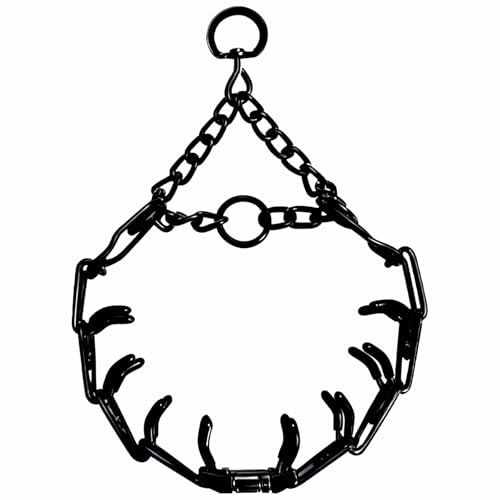
A prong training collar with an adjustable design is ideal for dog owners seeking effective, humane control during obedience training. I use a quick-release buckle for secure, fast application and removal. The round, smooth pins feature a humane pinch-never shock-that guides behavior gently. Soft rubber caps and a protective cover prevent skin irritation. I fit necks from small to large dogs; just measure your dog’s neck plus one inch. Two extra links let me customize the size precisely. Made for durability, individual links are replaceable, ensuring long-term use. I help stop pulling and reduce barking with consistent, gentle corrections.
Best For: Dog owners seeking a humane, adjustable training tool to effectively manage pulling, barking, and obedience training across small to large breeds.
Pros:
- Features a quick-release buckle for easy, secure application and removal
- Designed with smooth pins, rubber caps, and a protective cover for safe, comfortable use
- Fully adjustable and customizable with replaceable links for long-term durability and proper fit
Cons:
- May be misunderstood or misused without proper training knowledge
- Not suitable for unsupervised or continuous wear
- Requires accurate neck measurement and correct sizing for optimal effectiveness
Herm Sprenger Prong Collar for Dogs

The Herm Sprenger Prong Collar stands out as the best choice for trainers seeking reliable, humane control during obedience training, especially for small to medium dogs with neck sizes between 13 and 19 inches. It’s German-made, featuring a quick-release buckle for secure, easy on and off. The center plate aligns 10 directionally placed prongs to deliver even pressure from any angle, mimicking canine corrective nips. Adjustability lets you remove or add links for a snug fit-measure your dog’s neck, then add 2 inches. It applies gentle, consistent feedback without shock or harm, curbing barking and pulling effectively. Pressure distributes evenly, avoiding tracheal damage. Note: warranty claims go through the seller, not Herm Sprenger.
Best For: Trainers seeking effective, humane control for small to medium dogs (13–19 inch necks) during obedience training.
Pros:
- German-made prong collar with even pressure distribution for safe, effective training
- Quick-release buckle and adjustable design allow for secure, customized fit
- Delivers immediate, gentle feedback without shock, reducing pulling and barking
Cons:
- Not covered by Herm Sprenger warranty; support must go through the seller
- Requires precise sizing and proper fitting to avoid discomfort or misuse
- May be misunderstood as harsh despite humane design when used correctly
Herm Sprenger Stainless Steel Prong Dog Collar

This Herm Sprenger Stainless Steel Prong Dog Collar is my top pick for small-breed dogs needing reliable control during training. It’s made in Germany from black German stainless steel, so it won’t rust. The 3.2 mm wire gauge guarantees durability without excess weight-just 7.9 ounces. At 23 inches long, it fits necks up to 19 inches. Blunt, beveled prongs reduce skin irritation. Interlocking links let you adjust the size-add or remove up to four. A swivel attachment prevents leash tangling. I recommend a snug fit just below the ears. Clean with mild soap and water, then dry fully.
Best For: Small-breed dogs that require gentle yet effective control during training with a durable, non-rusting prong collar.
Pros:
- Made from black German stainless steel for rust resistance and long-lasting durability
- Adjustable fit with removable links (up to 4) and a 23-inch length for customized sizing
- Blunt, beveled prongs and swivel leash attachment reduce skin irritation and prevent tangling
Cons:
- Limited to small breeds due to size and design, not suitable for larger dogs
- Requires careful fitting (snug, just below the ears) to avoid misuse or discomfort
- Some owners may prefer non-prong alternatives for ethical or behavioral reasons
Factors to Consider When Choosing a Prong Collar for Dogs
You need to choose a prong collar that balances material quality and safety to protect your dog’s neck during training. Look for collars made from solid stainless steel with smooth, rounded prongs-typically ⅛ inch in diameter-to prevent skin irritation and guarantee durability; improper materials can cause corrosion or injury. Make sure the collar fits snugly but allows one finger underneath, with adjustable links spaced every half inch so you can match your dog’s neck size precisely.
Material Quality
A well-built prong collar starts with durable materials designed to withstand daily use and environmental exposure. You need chrome-plated or stainless steel construction for reliable strength. High-quality collars use wire diameters between 2.25 mm and 4.0 mm, balancing rigidity and comfort. Stainless steel offers superior rust resistance, especially when exposed to rain, mud, or sweat. Chrome plating also resists corrosion but may wear over time. Look for beveled or rounded prong tips-they reduce skin abrasions and deliver safer contact. Smooth surfaces and blunt ends distribute pressure evenly, lowering injury risk. Interlocking links with solid fastener plates prevent accidental disassembly during active training. These design elements work like load-bearing joints in engineering, guaranteeing structural integrity. Avoid collars with rough welds or sharp edges. Quality materials and precise craftsmanship guarantee long-term performance. Choose wisely-your dog’s safety and comfort depend on it.
Proper Sizing
Getting the right fit starts with accurate measurements-grab a soft tape measure and record your dog’s neck circumference snugly just below the ears. Add 3 to 4 inches to this number to determine the correct collar length. The collar must fit tightly enough to prevent slipping over the head but not so tight it restricts movement or causes discomfort. Properly fitted, the prong tips should sit flush against the skin without pressing in. A well-sized prong collar distributes pressure evenly across the neck, targeting muscled sides to avoid tracheal compression. Most models allow adjustment by adding or removing links, with up to four links for precise sizing. This guarantees alignment with your dog’s anatomy. Never rely on guesswork-accurate measurement prevents injury and improves control. A correctly sized collar enhances training effectiveness while maintaining safety.
Adjustability Options
Accurate measurement sets the foundation, but fine-tuning the fit defines performance. You need a prong collar with interlocking links so you can add or remove up to four segments for a custom fit. This guarantees the collar sits snug just below the ears, ideally 2–4 inches larger than your dog’s neck measurement. Look for models with directional prong alignment-they maintain even pressure distribution no matter which way your dog pulls. Some collars include extra links in the package, letting you adapt the size for growing pups or multiple breeds. Quick-release buckles paired with adjustable chains give you both convenience and precision. You can secure the collar quickly while still dialing in the exact neck circumference. Adjustability isn’t just about comfort-it’s about control, consistency, and effective communication during training sessions.
Safety Features
When used correctly, a prong collar can be a safe training tool, but only if it includes key safety features designed to protect your dog. Rubber-tipped or silicone-covered prongs prevent skin abrasions and reduce injury risk. Blunt, beveled prong ends minimize scratching or puncturing while still delivering controlled pressure feedback. Interlocking links distribute force evenly around the neck, lowering trachea stress and preventing concentrated pressure points. Quick-release buckles let you remove the collar easily, preventing prolonged wear that could cause irritation or restricted blood flow. Choose collars made from high-strength, rust-resistant stainless steel-they maintain durability and structural integrity over time. This material resists corrosion and reduces breakage risks during active use. Never use collars with exposed metal prongs or weak plastic components. Safety hinges on design precision, not just control. Prioritize engineering that protects your dog’s neck anatomy and guarantees reliable, consistent performance over repeated training sessions.
Training Effectiveness
While proper fit and safety are foundational, the training effectiveness of a prong collar depends on how well its design translates leash input into clear, consistent feedback. The interlocking links with blunt, beveled prongs deliver controlled pressure, giving your dog immediate cues that can curb pulling. Unlike flat collars, this system evenly distributes force across multiple neck points, enhancing responsiveness. Directional link placement guarantees corrections remain uniform from any pull angle, improving communication. A center alignment plate in some models keeps links stable, maintaining balanced pressure and boosting reliability during commands. You’ll want adjustable sizing to fit snugly just below the ears-this guarantees constant contact and sharp signal delivery. Proper alignment and consistent mechanics mean your dog learns faster, responding to subtle leash cues. The collar becomes a precision tool, not just a restraint. When applied correctly, this design sharpens training outcomes with measurable control and repeatability.
Comfort Design
A well-designed prong collar prioritizes your dog’s comfort without sacrificing control. Choose collars with beveled or rounded prong tips-they distribute pressure evenly and reduce skin irritation. Rubber or silicone caps on prong ends act as protective buffers, minimizing the risk of abrasions or punctures during use. These caps are especially effective for dogs with sensitive or thin coats. Look for symmetrical prong alignment; balanced spacing guarantees even pressure distribution around the neck, preventing localized pinching. Smooth, polished links reduce friction against fur and skin, making movement easier during training. This finish also prevents matting and tugging. Fit matters-position the collar high on the neck, just below the ears, where the neck is narrower. It should be snug but not tight, allowing one finger underneath. A proper fit guarantees slipping while avoiding discomfort.
Durability And Care
You’ve considered how comfort shapes your dog’s experience with a prong collar-now it’s time to evaluate how well the collar holds up over time. Choose stainless steel models with chrome or black coatings-they resist rust and corrosion, even in wet or humid conditions. The wire diameter matters: 2.25 mm to 4.0 mm provides balanced strength, with thicker gauges standing up better to strong pulls. Look for interlocking links; they prevent accidental separation while letting you remove or replace individual prongs for fit and maintenance. Clean the collar regularly with mild soap and water, then dry it completely to stop grime buildup and metal damage. Never leave it damp-moisture accelerates wear. Store it in a dry place to prevent coating breakdown and metal fatigue. A well-maintained prong collar lasts years, staying safe and functional through daily use and training stress.
Frequently Asked Questions
Are Prong Collars Legal in My Country?
Yes, prong collars are legal in most countries, including the U.S. and Canada, but regulations vary by region. You must check local animal welfare laws, as some European nations ban them. Always follow leash laws and training guidelines. The collars typically feature 6–12 nickel-plated or stainless steel prongs, each ½ inch long, distributing pressure evenly. Use responsibly: improper application can harm your dog. Legal doesn’t mean universally accepted-consider behavioral impact.
Can Prong Collars Cause Long-Term Neck Damage?
Yes, prong collars can cause long-term neck damage if used incorrectly. You apply pressure on sensitive tracheal and cervical structures with each correction. Sustained or excessive force may lead to chronic inflammation, cartilage damage, or nerve injury. Proper fit-snug but allowing two fingers beneath the collar-is critical. You must limit use to trained handlers during brief sessions. Misuse amplifies risks, making consistent technique essential for minimizing harm.
Do Veterinarians Recommend Prong Collars for Training?
Most veterinarians don’t recommend prong collars for training because they can cause physical and psychological harm. You apply pressure on sensitive neck structures, risking injury to the trachea, spine, or thyroid. Studies link aversive tools to increased cortisol levels, indicating stress. Safer, evidence-based alternatives like head halters or front-clip harnesses offer effective control without trauma. You achieve better long-term results using positive reinforcement methods supported by veterinary behaviorists.
How Do I Clean and Maintain a Prong Collar?
You clean a prong collar by hand with mild soap and warm water, scrubbing links and surface debris with a soft brush. Rinse thoroughly to remove residue. Dry completely with a towel to prevent rust, especially on chrome or stainless steel. Inspect regularly for bent prongs or worn padding. Avoid submerging nylon or leather parts. Store in a dry place. Never machine-wash-it damages structural integrity.
Can I Use a Prong Collar on a Puppy?
You shouldn’t use a prong collar on a puppy. Their neck structures are still developing, and pressure from prong collars can cause injury. Puppies need positive reinforcement training, not corrective tools. Soft collars or harnesses are safer and more appropriate. If you’re dealing with pulling, use a no-pull harness instead. Prong collars are designed for adult dogs with established training needs, not young, growing animals.