Best Pet Geckos: Leopard vs Crested & Care Needs
You want a low-maintenance companion that thrives in small spaces. Leopard geckos are ideal, tolerating handling well and living 15–20 years with proper care. They need a 10–20 gallon enclosure, a heat gradient from 75–90°F, and a diet of appropriately sized insects dusted with calcium. Crested geckos suit those preferring minimal contact, requiring taller enclosures with 50–70% humidity. Both species benefit from moisture-retaining hides, climbing structures, and consistent routines-traits that guarantee long-term health and adaptability in captivity.
We are supported by our audience. When you purchase through links on our site, we may earn an affiliate commission, at no extra cost for you. Learn more. Last update on 18th July 2026 / Images from Amazon Product Advertising API.
Notable Insights
- Leopard geckos are ideal beginner pets due to their docile nature and tolerance for regular, gentle handling.
- Crested geckos are low-maintenance companions that thrive in naturalistic, vertically enriched enclosures with minimal handling.
- Proper habitat setup includes temperature gradients, humidity control, and species-appropriate lighting for health and comfort.
- Enrichment with climbing structures, hides, and moisture-retaining substrates mimics natural environments and reduces stress.
- Regular feeding, limited handling, and clean enclosures support longevity and strong bonds between geckos and owners.
Mossy Caves Reptile Hide Decor (4″)

If you keep a crested gecko or another small forest-dwelling reptile, the Mossy Caves Reptile Hide Decor (4″) is an ideal shelter choice. It measures exactly 4 inches, with a woodland green finish that blends naturally in planted enclosures. This artificial hide resists high humidity and UV exposure, maintaining structural integrity over time. I use it to create secure burrows that encourage natural hiding behaviors. Made for long-term vivarium use, it supports moss application and misting to mimic a damp, mossy forest floor. The design offers both physical protection and mental stimulation. It works well for frogs, lizards, tarantulas, and small snakes.
Best For: Small forest-dwelling reptiles, amphibians, and arachnids like crested geckos, frogs, tarantulas, and small snakes seeking a naturalistic, durable hide.
Pros:
- Provides a secure, natural-looking hiding spot that encourages instinctual sheltering behaviors
- Resistant to high humidity and UV exposure, ensuring long-term durability in vivariums
- Designed to support moss application and misting for enhanced habitat realism
Cons:
- At 4 inches, may be too small for larger or growing reptiles
- Artificial material may not appeal to owners preferring all-natural decor
- Limited ventilation design could retain excess moisture if not monitored
Sukh Sphagnum Moss for Reptiles (5 oz)

Sukh Sphagnum Moss for Reptiles (5 oz) works best for keepers maintaining tropical gecko species that require consistent humidity, such as crested and gargoyle geckos, since these animals rely on moist environments to support hydration and successful shedding. I use it as a moisture-retaining substrate layer, not a primary bedding. It holds water well, stabilizes humidity between 60–80%, and resists mold when monitored. I combine it with bioactive substrates or place it in humid hides. It aids shedding by softening skin and supports egg-laying in females. I replace it monthly or when degraded. Over-saturation risks stagnation, so I dampen it lightly. Beyond geckos, it works for amphibians, incubation, and live plant setups.
Best For: Reptile keepers maintaining tropical species like crested and gargoyle geckos that require consistent humidity for hydration, shedding, and breeding.
Pros:
- Effectively retains moisture and maintains stable humidity levels (60–80%) crucial for tropical reptiles
- Supports natural behaviors such as shedding and egg-laying when used in humid hides or as part of a layered substrate
- Versatile for use with amphibians, incubation, bioactive setups, and live plants
Cons:
- Not suitable as a primary substrate and requires combination with other materials for full enclosure setup
- Can develop mold or stagnation if over-saturated or not monitored regularly
- Needs monthly replacement or sooner if degraded, increasing long-term maintenance effort
HERCOCCI Reptile Tank Accessories with Coconut Hideout

I choose the HERCOCCI Reptile Tank Accessories with Coconut Hideout for geckos that thrive in enriched, naturalistic habitats. The 14.9-inch coconut house is made of 100% natural coconut, offering a safe, hollow interior for hiding or feeding. A built-in ladder enables vertical movement. The 3.3-foot bendable vine, wood bridge, and reptile vine support climbing and exploration. I include a hanging plant, three stand plants, artificial leaves, and coconut fiber to enhance cover and texture. All components are non-toxic and designed for reptile safety. These accessories encourage natural behaviors in geckos, chameleons, frogs, snakes, and more. I arrange them to create layered, three-dimensional terrain that mimics wild microhabitats.
Best For: Reptile and small pet owners seeking safe, naturalistic habitat enrichment that encourages climbing, hiding, and exploration in species like geckos, chameleons, frogs, and snakes.
Pros:
- Made from 100% natural coconut and non-toxic materials, ensuring pet safety and environmental mimicry
- Bendable vines and modular components allow customizable, three-dimensional terrain setups
- Promotes natural behaviors such as climbing, hiding, and foraging, enhancing mental and physical well-being
Cons:
- Coconut fiber and wooden parts may degrade over time with frequent moisture exposure
- Assembly and positioning of components may require additional fixtures or adjustment
- Some pets may not immediately interact with all elements, depending on individual temperament
SunGrow Bamboo Gecko Climbing Bridge

The SunGrow Bamboo Gecko Climbing Bridge is an ideal enrichment tool for gecko owners who want to maximize habitat functionality and promote natural behaviors. It measures 18 inches long and 4 inches wide, providing sturdy support for climbing. Suspended placement creates thermal gradients, aiding thermoregulation. The bridge frees floor space and adds vertical exploration options. I’ve used it as a lounge, climber, or moisture station by partially submerging one end in water. It’s safe for geckos, rodents, and birds. Smooth, splinter-free bamboo guarantees durability against claws and teeth. Natural material suits both aquatic and dry setups.
Best For: Reptile, bird, and small animal owners seeking durable, versatile habitat enrichment that supports climbing, thermoregulation, and natural behaviors.
Pros:
- Promotes physical activity, thermoregulation, and cognitive stimulation through flexible placement options
- Constructed from smooth, splinter-free bamboo for safety and durability with claws, teeth, and moisture exposure
- Compatible with multiple species including geckos, rodents, and birds, and usable in both aquatic and dry enclosures
Cons:
- May require strong support or additional hardware for secure suspension in larger enclosures
- Bamboo may degrade over time if constantly submerged or exposed to excessive moisture
- Limited width (4 inches) might restrict use for larger reptiles or multiple animals simultaneously
Reptile Food Bowl 2 Pack Ceramic

A reliable feeding setup starts with the right dish, and for gecko owners dealing with escape-prone live prey, these ceramic bowls are a game-changer. I use the small 2.75-inch diameter bowls daily. Their 0.78-inch height and inward-curved walls trap mealworms and crickets effectively. Made from high-density ceramic, they’re nonporous and resistant to chipping. The smooth, white surface is easy to clean and improves food visibility, especially for geckos with poor eyesight. I’ve found the 2-pack offers flexibility-one for feeding, one for water. They work well for leopard geckos, crickets, dubia, and even superworms. Available in large and XL sizes for bigger reptiles.
Leopard Gecko Tank Climbing Toys

When setting up a habitat that supports natural climbing behaviors, leopard geckos benefit most from adjustable, durable climbing structures designed for small reptiles. This climbing toy measures 7.87 x 5.12 x 1.18 inches when collapsed and extends to 16 inches long. It features a 5mm horticultural aluminum core wrapped in forest moss, making it rust-resistant, bendable, and built to last. The natural fibers retain moisture, aiding hydration and shedding. I recommend spraying it before use. Position it at your desired height-its adjustability fits most tank sizes. Mist regularly; dryness causes brittleness.
Best For: Leopard gecko owners seeking an adjustable, natural-fiber climbing toy that supports hydration and shedding.
Pros:
- Adjustable aluminum core allows customizable shaping and fits various tank sizes
- Moisture-retaining forest moss aids in hydration and successful shedding
- Durable, rust-resistant construction safely supports climbing for multiple reptile types
Cons:
- Requires regular misting to prevent brittleness and fiber shedding
- Natural materials may degrade over time with prolonged use
- Not suitable for completely dry environments due to hydration needs
6 Pack Bearded Dragon Toy Balls
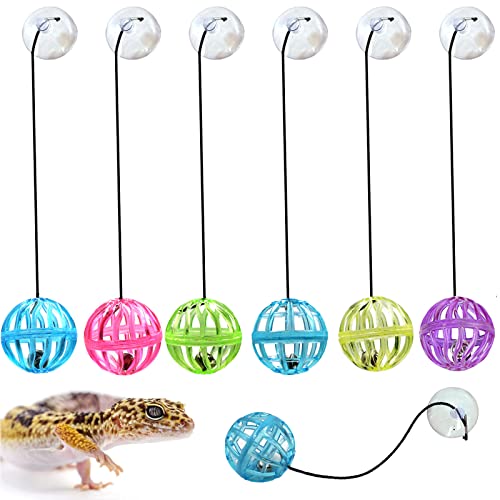
You’ll find these six-pack bearded dragon toy balls work especially well if your gecko thrives on interactive stimulation. Each ball contains small perforations designed to hold insects, encouraging your pet to chase and manipulate the toy to access treats. Built-in bells and vibrant colors capture attention, promoting prolonged engagement. High-quality, non-toxic plastic guarantees safety during play. Suction cups secure to enclosure walls or floors; detachable ropes allow hanging or floor-only use. The design supports motor skill development and mental stimulation, especially in juveniles. You can expect durable, consistent performance across daily use with minimal maintenance.
Best For: Reptile owners seeking interactive, safe, and engaging toys to stimulate bearded dragons, geckos, and other small pets.
Pros:
- Encourages physical activity and mental stimulation through treat-dispensing design and built-in bells
- Secure attachment options with suction cups and detachable ropes for versatile placement
- Made from high-quality, non-toxic plastic safe for reptiles and small animals
Cons:
- Small holes may be difficult to clean after repeated use with insects or treats
- Suction cups may lose adhesion over time on certain surfaces
- May be less engaging for older or less active reptiles
Paper Feeding Cups for Crested Geckos (100-Pack)

These paper feeding cups work best for keepers managing hygienic, efficient feeding routines across multiple small reptile enclosures. I use them daily with my crested geckos, and they hold up remarkably well. Each cup is made from 100% natural plant fiber-durable, tightly woven paper that resists tearing. At 0.5 oz capacity, one cup holds enough food or water for up to two days. The pack includes 100, making restocking quick and waste minimal. They fit standard feeding ledges-acrylic, suction, and mini magnetic types-and snap in securely. I’ve used them for chameleons, frogs, and even small spiders. They’re disposable, so I skip daily washing. No more slimy residue. Think of them as single-use dishes-like paper espresso cups but for reptiles. They keep feeding clean, precise, and efficient. I replace them every two days without fail.
Best For: Reptile keepers seeking a hygienic, low-maintenance feeding solution for multiple small reptiles like crested geckos, chameleons, and frogs.
Pros:
- Made from durable, 100% natural plant fiber that resists tearing during use
- Fits standard feeding ledges (acrylic, suction, magnetic) and eliminates daily bowl washing
- Disposable design reduces waste and prevents bacterial buildup from leftover food or water
Cons:
- Limited 0.5 oz capacity may require frequent更换 for larger or thirstier reptiles
- Not reusable, which may increase long-term costs and environmental impact
- May not fit non-standard or custom feeding ledge systems
100 pcs 0.5oz Crested Gecko Feeding Cups

I rely on the 100-piece set of 0.5 oz feeding cups for my crested gecko because it delivers consistent functionality and convenience. Each cup holds exactly 0.5 ounces, ideal for small food or water portions. The transparent, odorless plastic is environmentally friendly and lets me monitor contents easily. These cups fit securely on acrylic reptile feeding ledges, ensuring stability in the terrarium. Their design prevents spills and resists tipping, even when bumped. I use them for crickets, meal replacements, and hydration. The quantity allows daily changes without immediate washing. They’re also useful beyond pet care-perfect for spices, pills, or crafting.
Best For: Reptile owners, especially those with crested geckos or other small amphibians and invertebrates, who need reliable, spill-resistant feeding cups that integrate well with terrarium setups.
Pros:
- Transparent, environmentally friendly plastic allows for easy monitoring of food and water levels while being safe for pets
- Secure fit on acrylic reptile feeding ledges prevents spills and tipping, even in active enclosures
- Large 100-piece quantity enables hygienic daily changes without the need for immediate washing
Cons:
- Small 0.5 oz capacity may require frequent refilling for larger or more active animals
- Limited structural durability if used with aggressive chewers or strong reptiles
- Not designed for high-heat environments, restricting use in certain cooking or sterilization applications
SLSON Hanging Reptile Terrarium Plants (12″)
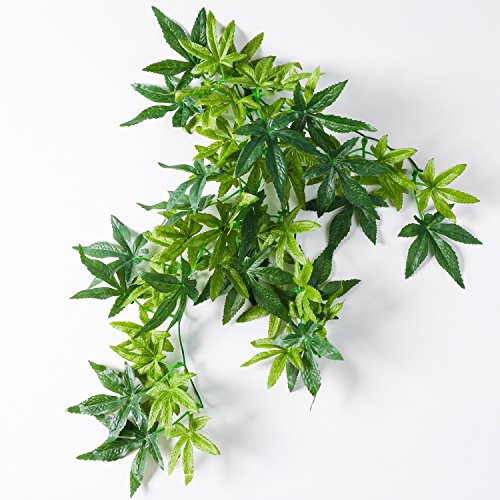
A gecko owner’s terrarium setup demands both safety and realism, and the SLSON Hanging Reptile Terrarium Plant (12″) delivers on those needs with precision. It’s made from non-toxic polyethylene and soft silk, ensuring safety for geckos and other reptiles. The 12-inch design mimics natural foliage, offering visual cover and environmental enrichment. It requires no light or water, making it ideal for dry or humid setups where live plants fail. Included suction cups allow secure attachment to glass. I recommend soaking it in warm water for 15–30 minutes first to relax the leaves. One plant per package.
Best For: Reptile and amphibian owners seeking safe, low-maintenance, and realistic terrarium decoration for geckos, lizards, snakes, or turtles.
Pros:
- Made from non-toxic materials, ensuring safety for reptiles, amphibians, and aquatic pets
- Realistic 12-inch silk design provides visual cover and environmental enrichment
- Easy to install with included suction cups and requires no watering or lighting
Cons:
- Silk leaves may flatten during shipping and require soaking to regain shape
- Not as durable as live plants in high-traffic or chew-prone enclosures
- Limited to one plant per package, requiring multiple purchases for fuller setups
Factors to Consider When Choosing a Pet Gecko
You need to take into account your gecko’s size and space needs before making a choice-most species require at least a 20-gallon terrarium, with larger enclosures for bigger adults. Think about temperament and handling; leopard geckos tolerate interaction well, while crested geckos are skittish and prefer minimal contact. Your gecko’s diet, habitat setup, and lighting needs vary by species-most need UVB lighting, a heat gradient of 75–90°F, and diets based on live insects or commercial crested gecko food.
Size And Space Needs
Tank size directly impacts your gecko’s health and behavior, so choosing the right enclosure starts with understanding species-specific space requirements. Most adult geckos need 10 to 20 gallons, but larger species require up to 40 gallons or more. The tank’s width should match your gecko’s length to allow room for natural movement and exploration. For arboreal species like crested geckos, vertical space matters more-taller enclosures support climbing and promote physical health. Ground-dwelling species, such as leopard geckos, benefit from wider floor space. Overcrowding causes stress, poor shedding, and appetite loss. If housing multiple geckos, add 5–10 gallons per animal to prevent territorial disputes. Proper ventilation and internal layout don’t replace square footage-space is non-negotiable. Always prioritize minimum volume over aesthetics. A properly sized tank guarantees thermoregulation, activity, and long-term well-being.
Temperament And Handling
While some geckos tolerate frequent interaction, others find handling stressful, so choosing a species that matches your desired level of engagement is critical. Leopard geckos are docile and adapt well to gentle, regular handling, especially when started young. Their calm demeanor makes them ideal for beginners. In contrast, nocturnal species like crested geckos may resist handling during daylight hours, particularly if startled. Signs of stress-tail waving, vocalizations, biting, or escape attempts-mean you should return the gecko to its enclosure immediately. Limit sessions to 10–15 minutes, two to three times weekly, to prevent exhaustion. Overhandling, especially in juveniles or shy species, increases stress hormones and weakens immunity. Always support their body fully and avoid sudden movements. Temperament varies considerably between species; research your gecko’s behavior to guarantee compatibility with your interaction preferences.
Diet And Feeding Habits
Feeding a pet gecko properly hinges on understanding its species-specific dietary needs. You must offer live prey like crickets, mealworms, or dubia roaches, sized no larger than the width of your gecko’s head to prevent choking or impaction. Juveniles eat daily for rapid growth; adults eat every other day or 3–4 times weekly, depending on species and metabolism. Calcium and vitamin D3 supplements are essential-dust insects 2–3 times weekly to prevent metabolic bone disease. Hydration matters just as much; mist the enclosure daily so your gecko can lap water droplets, or provide a shallow water dish. Some geckos, like crested geckos, accept commercial powdered diets mixed with water, reducing live insect reliance. These diets must be complete and properly formulated to meet nutritional requirements. Always monitor feeding response and adjust portions to maintain healthy weight.
Habitat Setup Requirements
A well-designed habitat supports your gecko’s health as effectively as proper nutrition does. You need to provide multiple hiding spots on both the warm and cool sides of the enclosure to enable thermoregulation and reduce stress. Climbing structures like branches, vines, and shelves are essential for arboreal or semi-arboreal species, encouraging natural movement and exercise. Choose a substrate that retains moisture but won’t cause impaction-avoid loose materials like sand or small gravel. Use coconut fiber or reptile-safe paper instead. Maintain humidity between 50% and 70% for tropical geckos by misting daily and including moisture-retentive decor like moss or live plants. Temperature gradients are critical: keep the basking area at 85–90°F and the cooler side around 70–75°F. This balance guarantees your gecko can self-regulate body temperature efficiently.
Lighting And Heat Needs
Since geckos rely on external heat sources to regulate their body functions, providing the right lighting and temperature conditions is essential for their survival and well-being. You must create a temperature gradient in the enclosure, with a basking spot of 88–92°F (31–33°C) and a cooler side at 75–80°F (24–27°C). Diurnal geckos need 10–12 hours of UVB light daily; use a 5–7% UVB bulb to support vitamin D3 synthesis and calcium metabolism. Nocturnal species like leopard geckos don’t require UVB if fed D3-supplemented food, but still need consistent heat. Use an infrared or ceramic heat emitter at night to maintain 70–75°F (21–24°C) without disrupting their dark cycle. Inadequate heat or lighting causes metabolic bone disease, poor digestion, and lethargy. Monitor temperatures with reliable digital probes and adjust fixture height or wattage as needed. Proper thermal and light management guarantees physiological function and long-term health.
Lifespan And Commitment
Up to 20 years-that’s how long you could be responsible for a gecko, depending on the species. Leopard geckos commonly live 15–20 years in captivity with proper care, while other species may live 5 to 15 years. You must commit to daily feeding, hydration, and monitoring of enclosure conditions for the long term. Lifespan depends heavily on correct husbandry: consistent temperature gradients, appropriate substrate, and species-specific diets prevent health issues and extend life. You’ll need to maintain clean habitats, perform regular health checks, and budget for veterinary care over many years. Sexual maturity occurs at 1.5 to 2 years, introducing gender-based care needs or breeding risks. If your situation changes, rehoming a long-lived reptile can be difficult. You’re not just buying a pet-you’re making a decade-spanning commitment to precise, ongoing care.
Activity Level And Behavior
Wondering when you’ll actually see your gecko active? It depends on whether your gecko is nocturnal or diurnal. Nocturnal species, like leopard geckos, rest in hides during daylight and become active after dusk, hunting and exploring in low light. Diurnal geckos, such as day geckos, move throughout the day and need UVB lighting to sustain natural rhythms. Most geckos climb frequently, requiring vertical space and textured surfaces like cork bark for stimulation. Expect territorial behaviors in males, including vocalizations or aggressive posturing, especially during breeding season. Activity levels fluctuate-increased movement occurs before shedding or mating, while brief inactivity may follow. These behavioral patterns reflect instinctual drives, not mood swings. Observing consistent cycles indicates a healthy environment. Tailored lighting, secure enclosures, and enrichment mimic natural conditions, supporting both physical and mental well-being.
Health And Care Costs
A gecko’s behavior and activity patterns give clues to its health, but consistent care demands planning for ongoing and unexpected medical expenses. You’ll spend $50 to $100 per routine vet visit, with emergencies exceeding $30三大职业. Annual fecal exams cost $60 to $120, guaranteeing early detection of parasites or infections. Common illnesses like metabolic bone disease require $20 to $150 in medications yearly, depending on severity. You must replace UVB and heat bulbs every 6–12 months, costing $100 to $200 annually, to maintain proper thermal gradients. Preventative care-such as calcium supplements, multivitamins, safe substrates, and sanitizers-adds $150 to $250 per year. Lighting must deliver 2.0–5.0 UVB output; inconsistent use leads to disease. Humidity levels must stay between 40–60%, monitored with a calibrated hygrometer. Proper care reduces long-term costs. Unplanned vet visits drop by 70% with consistent husbandry. Budgeting secures your gecko stays healthy and thrives.
Frequently Asked Questions
Can Geckos Recognize Their Owners?
Yes, geckos can recognize their owners. You’ll notice they react differently to you than to strangers. Their vision detects movement and shape, allowing them to identify familiar faces. While they lack mammalian brain structures for emotional bonding, repeated interactions create learned behavioral responses. They associate you with food, warmth, and safety. Over time, you’ll see reduced stress signals-like fleeing or tail twitching-proving recognition through habituation, not affection.
Do Geckos Need a Heat Lamp at Night?
You don’t need a heat lamp at night if temperatures stay within your gecko’s thermal range. Most species thrive with nighttime temps between 68–75°F (20–24°C). Use an under-tank heater or ceramic heat emitter instead-they provide warmth without light, preserving the day-night cycle. Monitor with a digital thermometer. Heat lamps can overheat enclosures and disrupt sleep patterns. Maintain a 10–15°F drop from daytime temps for proper thermoregulation.
How Often Should I Handle My Gecko?
Handle your gecko once every 2–3 days for 10–15 minutes per session. Frequent handling stresses most species, especially new or young geckos. Start with short sessions to build trust. Always wash your hands before and after. Avoid handling during shedding or feeding times. Nocturnal species are best handled at dusk. Use slow, gentle movements to prevent injury. Never grab the tail-it drops reflexively. Keep handling calm and consistent.
Are Geckos Nocturnal or Diurnal?
Geckos are mostly nocturnal, meaning you’re active during the day, but they are awake and moving at night. Their large eyes have vertical pupils that maximize light intake, enhancing night vision. Unlike diurnal lizards, they rely on rod cells for low-light detection. Species like leopard and crested geckos thrive in dim conditions, using heat gradients and infrared sensing instead of bright light. Maintain a 12-hour dark cycle for peak health.
Can Geckos Live Together in the Same Tank?
You can house some geckos together, but it’s risky. Male geckos fight aggressively and must live alone. You might keep one male with multiple females, but stress and competition often lead to injury. Female-only groups sometimes work if the tank is large enough-minimum 40 gallons for three-and offers multiple hides, food bowls, and basking spots. Even then, monitor closely. Most experts recommend solitary housing to guarantee health, reduce stress, and prevent territorial behavior.