Best Mouse Habitat Cages: Cycodo 8-in-1 vs Hamiledyi Reviewed
You need a secure, spacious habitat that supports your mouse’s natural behaviors. Models like the Cycodo 8-in-1 Acrylic Cage offer 14″ x 10″ floor space, micro-hole ventilation under 5mm, and front-access doors with secure latches. Acrylic construction resists chewing and contains bedding. Pair deep 3-inch trays with 1/4-inch bar spacing to prevent escapes. Choose enclosures with removable parts for easy cleaning. The best designs integrate airflow, durability, and safe multi-level exploration-discover which models meet all critical criteria.
We are supported by our audience. When you purchase through links on our site, we may earn an affiliate commission, at no extra cost for you. Learn more. Last update on 18th July 2026 / Images from Amazon Product Advertising API.
Notable Insights
- Choose enclosures with at least 600 square inches of floor space to support natural mouse behaviors like foraging and running.
- Ensure bar spacing is no more than 1/4 inch to prevent escape and limb injury in small mice.
- Prioritize habitats with secure micro-hole ventilation under 5 mm to allow airflow without escape risks.
- Use non-toxic, chew-resistant materials like thick acrylic or untreated solid wood for safety and durability.
- Include multiple levels, tunnels, and nesting areas to promote mental stimulation and vertical exploration.
Cycodo 8-in-1 Acrylic Hamster Cage

The Cycodo 8-in-1 Acrylic Hamster Cage is an ideal choice for first-time small pet owners seeking a complete, space-efficient habitat. It includes a wooden hideout, silent exercise wheel, dust/sand bath container, drip-proof water bottle, food dish, and arched bridge toy-no extras needed. The two-tier design increases activity space and reduces foot dermatitis risks. Varied surfaces promote natural movement. Acrylic walls offer clear visibility once protective films are removed. Micro-hole ventilation on three sides guarantees airflow, with holes under 5mm to prevent escapes. A front-opening door simplifies feeding. Side latches allow quick tray removal. Cleaning requires no full disassembly. Dimensions are 14″ L × 10″ W × 11″ H. Suitable for pets under 10cm.
Best For: First-time small pet owners seeking a complete, space-efficient habitat for hamsters under 10cm in length.
Pros:
- All essential accessories included for immediate use-no additional purchases needed
- Two-tier design enhances activity space and promotes foot health with varied surfaces
- Easy to clean with front-opening door and quick-release tray, no full disassembly required
Cons:
- Acrylic walls may scratch over time, affecting visibility
- Limited space for larger or more active hamster breeds
- Ventilation may be insufficient in very hot or humid environments despite micro-holes
Hamiledyi Dwarf Hamster Cage with Toys
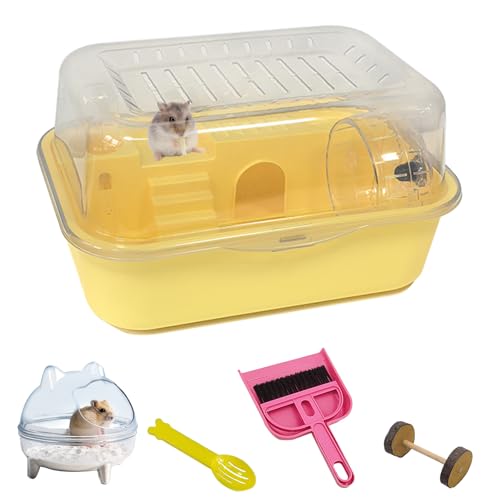
If you’re seeking a space-efficient, all-in-one habitat for dwarf hamsters, small gerbils, or young hamsters, the Hamiledyi Dwarf Hamster Cage with Toys delivers integrated functionality in a compact footprint. It measures 13.8 x 9.8 x 7.3 inches (35 x 25 x 18.5 cm), fitting neatly on desks or shelves. The unit includes a platform, feeding area, water bottle, exercise wheel, ladder, shelter, bathtub box, and spoon. Side openings are narrow, preventing escapes. A top ventilation system reduces humidity and improves air flow. Clear, lightweight plastic enables 360-degree observation and easy handling. Removable parts simplify cleaning and maintenance.
Best For: Small pet owners seeking a compact, multifunctional cage for dwarf hamsters, gerbils, or young hamsters with built-in accessories and secure containment.
Pros:
- All-in-one design integrates essential accessories like feeding area, water bottle, exercise wheel, and shelter for convenience
- Compact size and transparent construction allow for space-saving placement and 360-degree observation
- Removable components and easy-to-clean materials simplify maintenance and hygiene
Cons:
- Limited space may restrict activity for more energetic or larger hamster breeds
- Plastic construction may be less durable compared to wire or metal cages over time
- Ventilation limited to the top, potentially leading to uneven airflow within the enclosure
MidWest Hamster Cage (White)
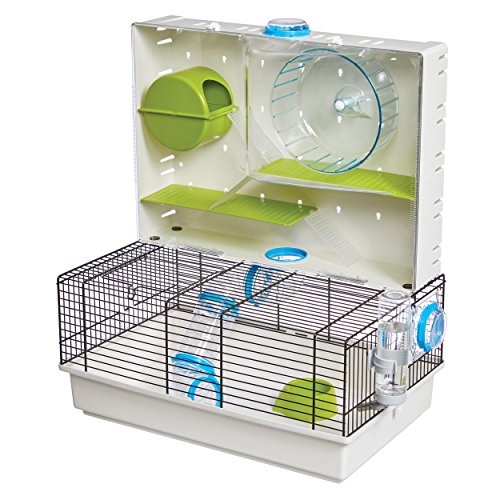
A standout choice for pet owners seeking a durable, expandable habitat, the MidWest Hamster Cage (White) delivers structured living space tailored to small rodents like mice and hamsters. It measures 18.11 x 11.61 x 21.26 inches and weighs 6.1 pounds, offering stability without taking up excess space. The multi-level design maximizes vertical room for climbing and exploration. A deep base retains bedding efficiently, reducing mess. I appreciate the included accessories-exercise wheel, food bowl, water bottle, nesting nook, and play tubes-that support immediate use. Top-access doors and a removable cover simplify cleaning. Modular connectors allow expansion, compatible with standard tubes or other habitats, enhancing long-term adaptability.
Best For: Small pet owners seeking a durable, expandable, and ready-to-use habitat for hamsters or mice.
Pros:
- Multi-level design with included accessories (wheel, water bottle, food bowl, nesting nook, and play tubes) provides enrichment and immediate usability
- Modular construction with connector pieces allows expansion and connection to other habitats or play tubes
- Top-access door and removable cover enable easy cleaning and convenient pet access
Cons:
- Limited floor space may restrict movement for more active or larger hamster breeds
- Plastic components may degrade over time with heavy chewing or improper cleaning
- Assembly required, which may be time-consuming for some users
Acrylic Hamster Cage with Wooden Accessories

When choosing a habitat that balances space, durability, and enrichment for small rodents, this acrylic hamllow cage with wooden accessories stands out for owners of dwarf and Syrian hamsters, mice, and gerbils. Its dual-layer design combines a transparent acrylic structure with natural wood components, maximizing usable area. Two levels include a wooden loft, slide, and house that encourage climbing and exploration. Acrylic panels offer full visibility while micro-perforated vents guarantee airflow without escape risks. The front door with a clear elastic band allows quick access. A removable tray simplifies cleaning. Durable materials and included setup guides guarantee reliable, long-term use.
Best For: Small pet owners seeking a durable, spacious, and visually clear habitat that promotes enrichment and easy maintenance for hamsters, mice, and gerbils.
Pros:
- Dual-layer design with wooden accessories maximizes play and exploration space while promoting natural behaviors
- Transparent acrylic panels and micro-perforated ventilation offer excellent visibility and safe airflow
- Removable tray and front-access door simplify feeding, cleaning, and daily interaction
Cons:
- Wood shavings not included, requiring additional purchases for complete setup
- Protective film on acrylic must be removed before assembly, adding extra setup step
- May be too large for very small living spaces due to two-story footprint
Cycodo 8-in-1 Acrylic Hamster Cage
The Cycodo 8-in-1 Acrylic Hamster Cage stands out for owners seeking a compact, all-inclusive habitat tailored to small rodents under 10cm in length. I’ve found it combines functionality and thoughtful engineering in a space-saving two-tier layout. The dual-level acrylic structure increases usable activity area while minimizing foot dermatitis through varied contact surfaces. Thermal stratification between levels supports natural thermoregulation behaviors. <5mm micro-hole ventilation along three sides guarantees constant airflow without escape risk. Front-access doors simplify feeding; side latches allow swift tray removal for cleaning. It includes a silent wheel, wooden hideout, water bottle, food dish, sand bath, and arched bridge-no extras needed.
Best For: Small pet owners seeking a compact, all-inclusive habitat designed specifically for hamsters under 10cm in length.
Pros:
- Comprehensive starter kit with essential accessories included: hideout, wheel, water bottle, food dish, and toys
- Two-tier acrylic design maximizes activity space and supports natural thermoregulation and foot health
- Excellent visibility and secure ventilation with <5mm micro-hole system to prevent escapes
Cons:
- Limited to very small hamsters; not suitable for larger breeds or long-term use as pets grow
- Acrylic surfaces may scratch over time, affecting clarity despite protective film removal
- Fixed layout offers minimal customization compared to modular or wire cage systems
2-Level Habitat Hamster Cage with Accessories (Blue)

You’ll find the 2-Level Habitat Hamster Cage with Accessories (Blue) best suits small animal owners seeking a secure, expandable home for mice, dwarf hamsters, or gerbils-think of it as a modular hub engineered for both comfort and growth. Its two-level design features a blue base and white wire body with horizontal and vertical bars for climbing. The 3/8-inch bar spacing prevents escapes, while the 5.5 x 5.5-inch front door allows easy access. Measuring 19 x 12 x 15 inches, it includes a 3-inch-deep base tray for bedding. A 2.36-inch crossover tunnel links levels. It comes with a 5-inch wheel, hide house, auto-watering bottle, food bowl, and is expandable with compatible accessories.
Best For: Small animal owners seeking a secure, expandable habitat ideal for dwarf hamsters, Syrian hamsters, gerbils, and mice.
Pros:
- Durable two-level design with safe 3/8-inch bar spacing prevents escapes and promotes climbing activity
- Includes essential accessories: exercise wheel, hide house, auto-watering bottle, food bowl, and connecting tunnel
- Expandable and compatible with various brand accessories for customizable habitat growth
Cons:
- Crossover tunnel diameter of 2.36 inches may be too narrow for larger Syrian hamsters to comfortably traverse
- Base tray depth of 3 inches limits maximum bedding depth for burrowing species
- Wire construction, while ventilated, may allow bedding or food to scatter outside when disturbed
Large Wooden Hamster Cage with Waterproof Bottom

I recommend the Large Wooden Hamster Cage with Waterproof Bottom for small animal owners who prioritize space, durability, and smart design-especially those housing mice, dwarf hamsters, or similarly active pets. It measures 22.8 L x 15.7 W x 18.85 H, offering ample room. Solid pine construction is FSC-certified, untreated, and sanded smooth. Acrylic panels prevent wood chewing and water damage while enabling 360-degree visibility. A waterproof base and removable panels simplify cleaning. Ventilation includes top mesh, side vents, and a built-in exhaust fan. Locking side clips guarantee security. Assembly takes about four minutes with included screws and tools. The design supports customization and long-term use.
Best For: Small animal owners seeking a durable, spacious, and easy-to-maintain enclosure for active pets like dwarf hamsters, mice, and young rabbits.
Pros:
- Spacious design with 360-degree visibility and removable acrylic panels for easy cleaning and customization
- Constructed from FSC-certified solid pine and waterproof materials, ensuring durability and pet safety
- Features enhanced ventilation with mesh, side vents, and an exhaust fan to maintain air quality and reduce odors
Cons:
- Limited height may restrict vertical climbing for some active species like chinchillas
- Acrylic panels, while chew-resistant, may yellow or scratch over time with heavy use
- Not fully modular beyond panel removal, limiting expansion options for larger setups
PINVNBY 2-Tier Dwarf Hamster Cage (Blue)

While larger rodents need spacious enclosures, small pets like dwarf hamsters and gerbils thrive in compact, well-ventilated habitats-and this is where the PINVNBY 2-Tier Dwarf Hamster Cage (Blue) stands out. Its 11.7 × 8.7 × 9.8-inch frame fits easily on desks or shelves. The 0.39-inch wire spacing prevents escapes while ensuring airflow. A durable plastic base and wire construction offer stability and visibility. I appreciate the included castle house, slide, and second-floor platform-each enriches your pet’s environment. The 6-inch running wheel and detachable food bowl support daily health. A 250ml water bottle mounts securely to the side. Carrying handles make transport simple. Assembly requires no tools. All parts拆卸 quickly for cleaning. This cage suits dwarf hamsters, Roborovskis, and gerbils-but not chinchillas or guinea pigs.
Best For: Dwarf hamsters, Roborovski hamsters, and gerbils needing a compact, secure, and enriching living space.
Pros:
- Thoughtfully designed 2-tier layout with castle house, slide, and platform for mental and physical stimulation
- Tool-free assembly and fully detachable components for quick, thorough cleaning
- Secure 0.39-inch wire spacing and included 250ml water bottle for safety and convenience
Cons:
- Not suitable for larger pets like chinchillas, guinea pigs, or large rats due to size and bar spacing
- Limited floor space may restrict activity for highly active or social rodents
- Plastic chassis may show wear over time with particularly chew-prone animals
8-in-1 Acrylic Hamster Cage with Accessories

The 8-in-1 Acrylic Hamster Cage with Accessories is ideal for owners seeking a fully equipped, low-maintenance habitat that supports both small mice and hamsters. I’ve found its thick, high-transparency acrylic construction guarantees durability and clear visibility. The 18cm extra-large exercise wheel promotes healthy activity. A leak-proof water bottle with steel ball valve prevents spills. Front access allows easy interaction; the detachable bottom simplifies cleaning. Included accessories-wooden house, food bowl, bridge toy, stairs, and external bath-meet essential care needs. Pre-cut panels and a step-by-step guide make assembly straightforward. Nature-themed stickers enhance visual appeal without compromising function.
Best For: Small pet owners seeking a durable, fully equipped, and easy-to-maintain habitat for hamsters or mice.
Pros:
- Includes essential accessories like an extra-large exercise wheel, leak-proof water bottle, and wooden house for a complete, ready-to-use habitat
- Durable acrylic construction with high transparency for excellent visibility and long-term use
- User-friendly design with front access and detachable bottom for easy cleaning and pet interaction
Cons:
- Assembly required, which may be time-consuming despite step-by-step instructions
- Stickers for aesthetic appeal may peel over time with cleaning or humidity
- Acrylic material, while durable, can scratch if not cleaned with care
8-in-1 Acrylic Hamster Cage with Accessories

If you’re seeking a secure, low-maintenance habitat that combines clear visibility with structured enrichment, the 8-in-1 Acrylic Hamster Cage with Accessories stands out for pet mice and small rodents. Its 18.5″ x 11.8″ x 14.6″ frame features high-transparent HD acrylic, enabling full 360-degree observation. Ventilation holes in side and top panels support consistent airflow while minimizing odors. An anti-escape button secures the lid when unattended. The top-open design allows easy access; stairs, railings, and the bottom tray are detachable for cleaning. It includes a wooden house, food bowl, 18cm silent wheel, arch bridge, external bath area, and leak-proof water bottle. Acrylic resists corrosion, and interior wood pieces enhance comfort. Assembly requires no tools-just remove the protective film and follow the included video guide. Customer support resolves setup or usability issues quickly. This habitat fits hamsters, dwarf hamsters, gerbils, and mice.
Best For: Small rodent owners seeking a secure, easy-to-clean, and highly visible habitat with built-in enrichment features for hamsters, dwarf hamsters, gerbils, or pet mice.
Pros:
- High-transparent HD acrylic walls provide unobstructed 360-degree viewing and full visibility of pet behavior
- Includes essential accessories like a silent wheel, wooden house, food bowl, water bottle, and detachable components for easy cleaning
- Tool-free assembly with responsive customer support and a video tutorial for hassle-free setup
Cons:
- Acrylic material, while durable, may scratch over time with abrasive cleaning or chew-prone pets
- Ventilation, though present, may be insufficient in high-humidity or hot environments due to enclosed design
- Limited expandability or modular connection options compared to some wire or modular cage systems
Factors to Consider When Choosing a Mouse Habitat
You need to prioritize size and space when picking a mouse habitat-aim for at least 60 square inches of floor space per mouse to support natural movement. Good ventilation keeps airflow steady and reduces ammonia buildup, so choose a cage with mesh siding or ventilated panels that don’t compromise structural integrity. Durable, non-toxic materials like powder-coated wire or BPA-free plastic stand up to chewing, while removable trays and smooth surfaces make cleaning quick and effective.
Size And Space Requirements
A minimum of 600 square inches of floor space guarantees your mice can engage in natural behaviors like foraging, running, and exploring without undue stress. This space supports physical health and mental stimulation. You need a cage at least 12 inches tall to allow vertical exploration, enabling climbing and multi-level nesting setups. Mice naturally climb and use vertical space efficiently, so height enhances usable area. Bar spacing must not exceed 1/4 inch to prevent escape or injury, especially with small or young mice. Wire spacing this narrow also guards against limb entrapment. You should include bedding layers of 2–3 inches deep to support burrowing, a key instinctive behavior. Deep bedding promotes natural digging and nest-building, improving welfare. The enclosure must accommodate these dimensions together-floor area, height, safe bars, and bedding depth-to meet basic spatial needs effectively and humanely.
Ventilation And Airflow
While moisture and waste accumulation can compromise air quality, effective ventilation guarantees fresh, healthy air circulates continuously through the enclosure. You need airflow to prevent ammonia buildup from urine, which harms your mice at levels as low as 25 ppm. Ventilation holes must be smaller than 5 mm-big enough for air exchange, but small enough to prevent escapes or injuries. Mesh or perforated panels on at least two sides boost cross-ventilation, keeping humidity below 60% and limiting bacterial and fungal growth. Proper airflow also maintains a stable temperature gradient, critical since mice suffer in temps above 80°F (27°C) or below 65°F (18°C). Avoid solid-walled or poorly vented enclosures-they trap stale air and raise the risk of respiratory diseases like murine respiratory mycoplasmosis. Good ventilation isn’t optional; it’s essential for long-term health.
Material Safety And Durability
Material safety and durability are critical when selecting a mouse habitat, as the construction directly impacts both health and longevity of the enclosure. Use non-toxic, chew-resistant materials like thick, high-transparency acrylic or solid untreated wood to prevent ingestion hazards and guarantee structural integrity. Avoid moisture-degradable materials such as untreated particleboard, which can warp and promote mold. All plastic components must be BPA-free and gnaw-resistant to reduce health risks and maintain strength over time. Wire elements should have bar spacing under ½ inch to prevent escape and limb entrapment. Choose smooth, non-porous surfaces like sealed wood or acrylic for lasting sanitation. These materials withstand daily wear, resist bacterial buildup, and support long-term safety. You need a habitat that holds up to active chewing and frequent handling without breaking down chemically or physically. Durability isn’t just about strength-it’s about sustained safety.
Ease Of Cleaning
Choose a mouse habitat that simplifies cleaning with smart design features-this saves time and supports better hygiene. Opt for models with removable trays or detachable sections so you can clean thoroughly without dismantling the entire setup. Smooth, non-porous materials like acrylic or sealed plastic resist odor absorption and are easy to wipe down, unlike porous wood or fabric. A deep base tray-minimum 3 inches-helps contain bedding and waste, reducing spills during maintenance. Look for front or top access doors larger than 5 inches in diameter; they allow full hand and tool access for effective spot-cleaning without stressing your mice. Designs with minimal crevices and corners prevent waste buildup and support complete disinfection. These features guarantee efficient sanitation, reduce bacterial growth, and maintain a healthier environment with less effort.
Escape Prevention Features
A well-designed mouse habitat keeps your pets safe by incorporating escape prevention features that address their small size and natural curiosity. Choose enclosures with bar spacing no wider than 1/4 inch (6 mm) to prevent squeezing through gaps. Ventilation holes should be smaller than 5 mm in diameter, allowing airflow while blocking escape attempts. Use secure latching mechanisms on all doors and openings to stop tampering or accidental pushing. Solid walls made of acrylic or polycarbonate eliminate gaps and seams found in wire or mesh cages, reducing escape risks. Avoid flimsy materials-solid plastics resist gnawing and shifting. In multi-level designs, select models with enclosed ramps or tunnels that have narrow entrances, limiting access to potential exits. These precise features work together like a locked system, keeping clever, agile mice contained without compromising safety or structure.
Enrichment And Accessibility
Just as secure construction keeps mice safely contained, thoughtful design elements promote their physical health and psychological well-being. Multi-level habitats with ramps, tunnels, and climbing structures maximize vertical space, encouraging natural exploration and exercise. You’ll need access points at least 5.5 inches wide-front-opening doors or top lids-so your hand fits easily, reducing stress during feeding or handling. Detachable trays, platforms, and stairs simplify cleaning, helping you maintain hygiene and limit bacterial growth. Integrated features like an 8-inch minimum exercise wheel support dwarf species’ spinal health and prevent boredom. Hideouts and bridges offer mental stimulation. Transparent, durable walls provide clear visibility for monitoring behavior without compromising structural strength. These design choices don’t just enhance accessibility-they actively support long-term wellness through consistent care and environmental enrichment tailored to mice’s biological needs.
Frequently Asked Questions
How Often Should I Clean My Mouse’s Cage?
You should clean your mouse’s cage weekly to prevent ammonia buildup from urine. Spot-clean soiled bedding daily, removing wet clumps and waste. During full cleanings, replace all bedding and wash the enclosure with mild soap and water-avoid harsh chemicals. Rinse thoroughly to eliminate residue. Use a 30-gallon tank or bin cage with at least 10 gallons per mouse for adequate space. Proper ventilation reduces moisture and odor.
Can I Keep Multiple Mice in One Habitat?
Yes, you can keep multiple mice together-they’re social animals by nature. House same-sex pairs or small groups to prevent breeding. Use a cage at least 24” x 12” x 12” to allow adequate space per mouse. Provide multiple food and water stations to reduce competition. Guarantee proper ventilation and deep bedding for burrowing. Monitor behavior closely; separate individuals if aggression occurs. Cohabitation works best when introduced young and kept in stable groups.
What Bedding Is Safest for My Pet Mouse?
You should use paper-based or aspen shavings bedding for your pet mouse. Avoid cedar and pine-these release harmful phenols. Paper-based bedding is dust-extracted, hypoallergenic, and absorbent, typically lasting 7–10 days before needing replacement. Aspen is kiln-dried, low in dust, and doesn’t mold easily. Provide 2–3 inches of bedding depth for burrowing. It’s safe, supports natural behavior, and maintains air quality when changed weekly.
Do Mice Need Exercise Wheels in Their Cages?
Yes, mice need exercise wheels in their cages. You must provide one to support healthy cardiovascular function and prevent obesity. Choose solid-surface wheels with a minimum diameter of 6.5 inches to avoid spinal injuries. Avoid wire or slatted designs. Opt for models made of durable, non-toxic plastic. A properly sized wheel enables natural running posture, reduces joint stress, and mimics wild foraging behavior essential for physiological and psychological well-being.
How Can I Prevent My Mouse From Escaping?
You prevent escapes by securing all cage openings. Use a solid, metal enclosure with mesh gaps no larger than ¼ inch. Make certain doors latch tightly-check hinges and latches weekly. Avoid plastic habitats, as mice chew through them. Place the cage away from edges to prevent jumps. Seal gaps around cables or tubes with steel wool or silicone. Monitor ventilation while eliminating exit points. Inspect seals monthly for wear.