Best Mini Terrarium Kits for Crafting Tiny Green Worlds
You can create a miniature ecosystem in under an hour with kits like the EcoVie Mini Terrarium Kit, which uses activated charcoal and pumice in a moisture-recycling closed system to reduce watering by up to 70%. The 1L Glass Ecosystem kit includes tweezers and a bamboo spoon for precise layering of soil, moss, and drainage media. Some kits provide live moss and sealed globes; others need you to supply plants and containers-check components carefully to match your goals. More details reveal key differences in setup, maintenance, and long-term success.
We are supported by our audience. When you purchase through links on our site, we may earn an affiliate commission, at no extra cost for you. Learn more. Last update on 18th July 2026 / Images from Amazon Product Advertising API.
Notable Insights
- Choose kits with clear, step-by-step instructions ideal for beginners and educational STEM/STEAM learning.
- Opt for kits including activated charcoal, soil, and drainage layers to support healthy, self-sustaining microclimates.
- Select kits with themed decor like mermaids or axolotls to inspire creative, imaginative crafting.
- Consider kits with premium natural materials such as pumice, moss, and bioactive soil for plant health.
- Verify if live plants or a glass container are included, as many kits require separate purchase.
Creativity for Kids Mini Garden STEM Kit

If you’re looking for a hands-on STEM activity that blends science and creativity for a child aged 6 or older, the Creativity for Kids Mini Garden: Axolotl Terrarium is an ideal choice. The kit’s 5.25” h x 3” w egg-shaped terrarium houses all components for assembly. I found it requires no additional tools-just add water. It includes vermiculite potting mix, U.S.-sourced chia seeds, colored sand, stickers, and mini axolotl figures. Chia seeds germinate in 3–5 days, thanks to a guaranteed-to-grow formula. The activity supports fine motor development, introduces basic botany, and encourages independent, screen-free exploration of nature.
Best For: Children aged 6 and up who enjoy hands-on STEM activities that combine gardening, creative play, and science exploration.
Pros:
- Includes all materials needed-just add water-for a mess-free, no-tool-required experience
- Fast-growing chia seeds sprout in 3–5 days with a guaranteed-to-grow formula, ideal for young beginners
- Combines STEAM learning with fine motor skill development and imaginative play through an engaging axolotl-themed terrarium
Cons:
- Limited long-term engagement after the initial growth phase and decoration setup
- Chia plants have a short life cycle and are not permanent indoor plants
- Small components like stickers and mini figures may be easily lost or require supervision with younger children
Mini Cactus Terrarium Starter Kit
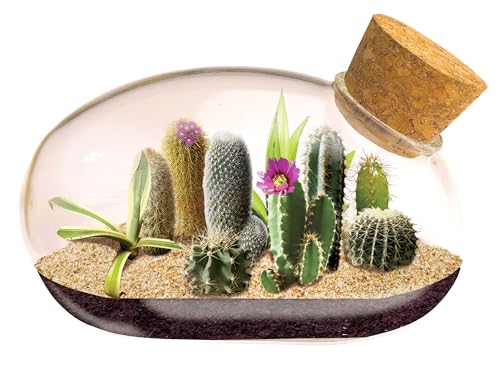
You’ll find the Mini Office Cactus Glass Terrarium Starter Kit ideal if you want a low-maintenance indoor garden that thrives with minimal intervention. I use it to grow desert cacti and succulents in a sealed, 360-degree glass enclosure measuring 6 inches wide and 8 inches tall. The transparent design offers clear visibility of root development and soil composition. It includes activated charcoal, porous gravel, and nutrient-rich planting medium. These layers support drainage and prevent mold. The plants require indirect sunlight and one tablespoon of water monthly. This self-contained ecosystem mimics arid climates. It’s perfect for desktops. I keep mine in my office. It needs no pruning.
Best For: Busy professionals and plant enthusiasts seeking a low-maintenance, compact indoor garden that fits seamlessly into office or home desktop spaces.
Pros:
- Includes all essential components for easy setup: glass enclosure, planting medium, gravel, and charcoal
- Requires minimal care with only monthly watering and indirect sunlight
- Offers 360-degree visibility for an attractive, self-contained desert ecosystem
Cons:
- Limited plant variety due to space and sealed environment constraints
- Potential for mold if overwatered, despite drainage layers
- Not suitable for those seeking fast-growing or large plants
DIY Terrarium Kit – Glass Ecosystem (1L)

This DIY Terrarium Kit – Glass Ecosystem (1L) is ideal for beginners seeking a simple, engaging introduction to indoor gardening, especially those with limited space or no prior experience. It includes a 34 fl oz (1-liter) glass jar, activated charcoal, soil, moss, and decorative elements. Tools like a shovel, rake, bamboo spoon, and tweezers simplify planting and maintenance. Clear instructions guide proper layering for a functional closed ecosystem. You can grow small plants such as Fittonia, ferns, or air plants-though they’re not included. The sealed environment recycles moisture, reducing watering needs. It’s a self-sustaining unit that doubles as a biophilic design accent, enhancing indoor well-being with minimal upkeep.
Best For: Beginners and urban dwellers seeking a low-maintenance, space-saving introduction to indoor gardening with a focus on natural aesthetics and biophilic design.
Pros:
- Includes all essential materials and tools for building a self-sustaining closed terrarium ecosystem
- Clear step-by-step instructions make assembly accessible even without gardening experience
- Doubles as a functional plant environment and an attractive, wellness-promoting home decor piece
Cons:
- Plants are not included, requiring separate purchase and research for compatibility
- Limited to small, humidity-tolerant plants due to the 1L enclosed design
- May require occasional monitoring for mold or condensation despite low maintenance claims
DIY Terrarium Kit for Plants

A complete DIY Terrarium Kit is ideal for hobbyists and beginners seeking a structured, all-in-one solution to build a self-sustaining closed ecosystem up to 68 oz (1–2 liters). I get everything I need: terrarium soil, activated charcoal, sphagnum moss, and decorative elements. The kit supports plants like succulents, air plants, ferns, Fittonia, and mini Begonias-but live plants aren’t included. Step-by-step instructions guide layering with precise quantities. I use the included bamboo spoon and tweezers for accurate placement. The design balances function and aesthetics, creating a low-maintenance, visually pleasing microenvironment.
Best For: Beginners and hobbyists looking for an all-in-one, guided solution to create a low-maintenance, decorative terrarium ecosystem at home.
Pros:
- Includes all essential materials and tools needed to build a self-sustaining terrarium
- Comes with clear step-by-step instructions and precise layering guidance
- Features functional bamboo tools and decorative elements for easy assembly and customization
Cons:
- Does not include live plants, requiring separate plant purchases
- Limited to small terrariums (up to 68 oz / 1–2 liters)
- Sphagnum moss and soil quantities may be insufficient for larger jars
Rolife DIY Miniature Greenhouse Kit (Cathy’s Greenhouse)

The Rolife DIY Miniature Greenhouse Kit (Cathy’s Greenhouse) stands as a refined choice for adults who value precision craftsmanship and botanical-inspired design. Its transparent, pointed-arch frame mimics classic Victorian greenhouses, scaled to tabletop dimensions. High-precision printing guarantees realistic wood grain and pre-colored panels, eliminating paint or cutting. The adhesive-free tab-and-slot assembly uses durable paperboard, requiring no tools. I found construction intuitive-each piece fits securely with minimal effort. At approximately 7.5 x 5.5 x 8.7 inches, it occupies minimal space yet commands visual attention. Ideal for display on shelves or desks, it suits year-round or seasonal decor. Perfect for crafters, plant enthusiasts, or as a thoughtful handmade gift. Customer support resolves issues promptly.
Best For: Adults who enjoy DIY crafts, appreciate botanical decor, and seek a relaxing, tool-free building experience.
Pros:
- Adhesive-free, tool-free assembly with precise tab-and-slot construction for easy building
- Realistic high-precision printing and pre-colored components eliminate need for paint or cutting
- Compact tabletop design doubles as year-round or seasonal decorative display
Cons:
- Small size may not satisfy those looking for a larger or more complex model
- Made of paperboard, which may be less durable than resin or wood alternatives
- Limited interactivity once assembled-purely decorative, not functional for real plants
Terrarium Kit with Tools & Decor

You’ll find exactly what you need if you’re a beginner or a teacher guiding a classroom project-this kit gives you every material and tool required to build a functional terrarium, minus only the glass container and live plants. It includes 5.3oz pumice for drainage, 3.5oz coconut activated charcoal to filter toxins, 12.3oz soil for root stability, 0.7oz dried moss for moisture retention, and 5.3oz white pebbles for top dressing. Two durable tools aid precise layering. Six mushroom ornaments add gentle whimsy. Hand-selected natural components support self-sustaining microclimates. Ideal for succulents, moss, or cacti. Step-by-step instructions guarantee reliable assembly.
Best For: Beginners, teachers, and DIY enthusiasts looking for a complete, easy-to-use terrarium building kit with natural materials and clear instructions.
Pros:
- Includes all essential materials and tools for creating a layered, self-sustaining terrarium
- Uses premium natural components like activated charcoal and pumice for optimal plant health
- Comes with step-by-step instructions, making it ideal for educational projects and first-time users
Cons:
- Glass container and live plants not included, requiring separate purchases
- Limited quantity of decorative elements (only six mushroom ornaments)
- Smaller material amounts may not suit larger terrarium projects
DUSPRO Recycle Terrarium Kit for Kids

When setting up a durable, self-sustaining terrarium with kids, simplicity and quality materials matter most-this is where the DUSPRO Recycle Terrarium Kit stands out. It includes potting soil, pumice, zeolite, green moss, sphagnum moss, decorative stone, mesh, care tools, and a detailed guide. The premium 5-blend soil mix enhances drainage, nutrient supply, and root oxygenation. A layered substrate system uses mesh to prevent compaction and root congestion. Sphagnum moss retains moisture and nutrients critical for air plants and succulents. You’ll need to supply your own glass container and live plants. Generous material volume matches larger commercial kits. It’s priced 30% lower without sacrificing quality. Attractive packaging makes it ideal for gifting.
Best For: Families and educators seeking an engaging, high-quality terrarium kit that’s easy for kids to assemble and maintain.
Pros:
- Premium, eco-conscious materials including a 5-blend soil mix and layered drainage system for optimal plant health
- Clear, kid-friendly instructions and generous material volume make it beginner-friendly and great for DIY projects
- Attractive packaging and 30% lower price point enhance value and gifting potential
Cons:
- Does not include a glass container, requiring additional preparation from the user
- Live plants not included, which may be inconvenient for first-time users
- Limited to certain plant types like air plants and succulents, reducing versatility for tropical setups
Creativity for Kids Mini Garden Mermaid Terrarium Kit

A mermaid-themed terrarium stands out for children drawn to imaginative play blended with hands-on science, and this kit delivers that fusion in a compact 5.25” h x 3” w egg-shaped container. I’ve found it ideal for kids ages 6–8+, functioning as a STEAM-focused activity with clear educational value. It includes vermiculite potting mix, U.S.-sourced chia seeds, colored sand, pearl accents, stickers, and under-the-sea ornaments. Chia sprouts emerge in 3–5 days, requiring minimal care. No gardening experience is needed. The kit fosters curiosity about marine life and plant growth, blending structured craft assembly with open-ended creativity in an intermediate-level project.
Best For: Children ages 6–8+ who enjoy imaginative, mermaid-themed play combined with hands-on science and nature exploration.
Pros:
- Combines STEAM learning with creative craft assembly for a well-rounded developmental activity
- Quick-growing chia seeds sprout in 3–5 days, providing immediate results and encouraging patience and responsibility
- Includes all necessary materials in a compact, egg-shaped terrarium for mess-free, no-garden-needed indoor gardening
Cons:
- Limited replay value after plants mature and project is completed
- Small components like stickers and pearl accents may be challenging for younger children to handle
- Long-term interest depends on child’s sustained engagement with plant care and under-the-sea theme
15-Piece Terrarium Kit with Live Moss

The 15-piece terrarium kit with live moss is ideal for individuals seeking a low-maintenance yet engaging indoor gardening project. It includes live moss, a 4.5-inch glass globe, spray bottle, stainless steel tweezers, wooden shovel, nutrient-rich soil, decorative crystal stones, sea shells, and printed care instructions. No prior experience is needed-assembly is intuitive and takes under 20 minutes. The sealed glass environment retains moisture, reducing watering frequency. I recommend misting the moss every 7–10 days to sustain hydration. Crystal stones enhance capillary action while improving drainage. This terrarium functions as a self-sustaining ecosystem, ideal for desks or shelves. It’s also gift-ready, with elegant packaging and an optional personalized message card.
Best For: Individuals seeking a low-maintenance, engaging indoor gardening project, including beginners and plant enthusiasts.
Pros:
- Includes all necessary components for easy, no-fuss terrarium assembly
- Requires minimal maintenance with infrequent misting and thrives indoors
- Elegant design with crystal stones and sea shells makes it a beautiful, gift-ready centerpiece
Cons:
- Limited to moss growth, which may not appeal to those seeking flowering or varied plants
- Glass globe is small (4.5 inches), restricting creative layout options
- Live moss may dry out if misting schedule is neglected, despite low maintenance claims
Succulent Planter Kit with Soil and Stones

This Succulent Planter Kit with Soil and Stones stands out for hobbyists who prioritize natural, biologically active growing media over sterile, imported alternatives. I trust this kit because it uses bioactive soil made in the USA, formulated with composted pine bark, U.S. pea gravel, activated charcoal, and preserved moss. Unlike sterilized soils, it retains beneficial microbes that support root health. Each component is pH balanced, additive-free, and designed for maximum drainage. TerraGreen Creations, the original terrarium kit maker since 2016, assembles every kit with precision. It’s ideal for succulents, indoor gardens, or snail habitats.
Best For: Hobbyists and plant enthusiasts who prefer natural, biologically active soil with high-quality, USA-made components for succulents, terrariums, or indoor gardens.
Pros:
- Contains bioactive, USA-made soil rich in composted pine bark and beneficial microbes for optimal root health
- Includes premium, pH-balanced components like U.S. pea gravel, activated charcoal, and preserved moss-ideal for drainage and sustainability
- Backed by a trusted brand with a proven track record since 2016 and a full satisfaction guarantee
Cons:
- May not suit growers who prefer completely sterile media for pest and pathogen control
- Preserved moss is not live, limiting long-term ecological development in certain terrarium setups
- Higher quality components may come at a premium price compared to basic imported kits
Factors to Consider When Choosing Mini Terrarium Kits
You should check the age appropriateness of mini terrarium kits, as some contain small parts unsuitable for children under 8. Look for kits that include essential components like soil, drainage stones, activated charcoal, and seedlings or seeds-omitting any can hinder plant health. Consider plant requirements and ease of assembly, since closed terrariums need humidity-tolerant species like mosses, while open ones suit succulents with low water needs.
Age Appropriateness
Why do some mini terrarium kits work better for kids than others? Because age-appropriate design aligns with developmental abilities. Kits labeled for ages 6 and up use simple assembly, quick-growing seeds like lentils or grass, and engaging decorations to sustain interest. They avoid small parts or sharp tools, eliminating choking hazards and enabling safe, independent use. Materials come pre-measured and non-toxic, reducing mess and complexity. Illustrated, step-by-step instructions support comprehension, especially for early readers. These features build fine motor skills, encourage responsibility, and introduce basic plant science. In contrast, kits for teens or adults may include live moss, delicate layering steps, or metal tools-requiring precision and reading comprehension beyond younger children’s capabilities. Always match kit complexity to cognitive and physical development. Following age guidelines guarantees safety, success, and meaningful learning.
Included Components
A well-designed mini terrarium kit simplifies setup by including all essential components in precise proportions. You’ll typically find pre-measured layers of soil, activated charcoal, and sphagnum moss, each serving a functional role. Activated charcoal filters toxins and recycles moisture, maintaining air and water quality within the enclosed environment. High-quality kits include tools like bamboo tweezers and mini spoons for accurate placement in tight spaces. Decorative elements-such as colored sand, river stones, shells, or figurines-let you personalize the landscape. Some kits provide live moss or fast-germinating seeds like chia or moss fern, delivering visible biological activity within 48 to 72 hours. Others require you to supply your own container or plants. Always verify contents beforehand. A complete kit minimizes guesswork and supports immediate, successful assembly of a self-sustaining micro-ecosystem.
Plant Requirements
When selecting plants for a mini terrarium, match species to the environment the container creates-closed systems maintain high humidity and favor moisture-loving plants like ferns and mosses, while open designs allow faster evaporation and suit arid-adapted succulents and cacti. Choose slow-growing, compact species to prevent overcrowding. Fast-sprouting seeds like chia germinate in 3–5 days, ideal for beginners. Use well-draining soil with pumice or perlite for succulents; this reduces root rot in low-drainage containers. In closed terrariums, add a ½-inch layer of activated charcoal beneath the soil to filter moisture and air, minimizing mold and odors caused by condensation. Light needs vary: ferns need indirect light, while succulents require 4–6 hours of bright, direct light daily. Always match plant needs to your space’s conditions. Scale matters-select specimens under 4 inches tall to maintain proportion.
Ease Of Assembly
A well-designed mini terrarium kit simplifies setup with clear, structured guidance and purpose-built components. You’ll want step-by-step instructions that include diagrams or photos, ensuring correct layering of drainage stones, activated charcoal, and soil. Choose kits with pre-measured materials to eliminate guesswork and maintain ideal moisture balance. Look for included tools like tweezers, mini spoons, or narrow shovels-these make planting mosses and small greens precise and mess-free. Avoid kits requiring glue, cutting, or complex assembly; instead, pick those with snap-together or adhesive-free designs that fit together logically. Most beginner-friendly kits also provide straightforward care details for light, watering, and maintenance. With the right tools and clear guidance, you can assemble your terrarium in under 30 minutes. A smart layout mimics professional horticultural layering, promoting healthy plant growth with minimal effort.
Educational Value
Though often marketed as decorative projects, mini terrarium kits offer substantial educational benefits that extend well beyond aesthetics. You engage directly with core biology concepts like photosynthesis, plant life cycles, and closed-loop water systems through hands-on assembly and observation. Building a terrarium integrates STEAM principles-science, technology, engineering, art, and math-into a single project, reinforcing interdisciplinary learning. You develop fine motor skills and cognitive coordination by handling small components and following precise instructions. Closed-system terrariums simulate sustainable ecosystems, demonstrating how plants recycle moisture and nutrients. You can test variables like light exposure or soil type, track plant growth, and record data, fostering scientific inquiry. These kits serve as functional models of environmental balance, letting you observe self-sustaining processes in a controlled, measurable environment. They’re effective, scalable tools for experiential education in classrooms or homes.
Frequently Asked Questions
How Long Do Mini Terrariums Typically Last?
You can expect your mini terrarium to last five to ten years with proper care. You maintain a stable microclimate by sealing the container, which recycles moisture through condensation and transpiration. You must use well-draining soil, typically a mix of potting soil, sand, and charcoal, to prevent root rot. You place it in bright, indirect light-direct sun overheats the environment. You prune plants monthly to control growth. You clean the glass every six months to prevent algae. You replace moss or dying plants as needed to sustain longevity.
Can I Use Artificial Plants in a Terrarium?
Yes, you can use artificial plants in a terrarium. They won’t grow or transpire, so humidity control isn’t needed. Choose UV-resistant, non-toxic plastic or silk models to avoid fading or leaching. Most artificial plants measure 2–6 inches tall, ideal for small enclosures. Unlike live plants, they don’t require substrate depth, drainage layers, or light cycles. Clean them occasionally with a damp cloth to prevent dust buildup. They’re low-maintenance but lack ecological function.
Are Mini Terrariums Safe for Pets?
Yes, mini terrariums can be safe for pets if you take precautions. You must secure the container to prevent breakage and ingestion of glass or soil. Avoid toxic plants like pothos or spider plants if your pet chews foliage. Use pet-safe species such as Boston fern or peperomia. Make sure the terrarium seal prevents mold spores from spreading, which could affect respiratory health in small animals.
Do Terrarium Kits Require Direct Sunlight?
No, terrarium kits don’t need direct sunlight. You expose them to intense light that can overheat plants and promote scorching. Instead, you position them in bright, indirect light-around 1,000 to 2,000 foot-candles-for 6 to 8 hours daily. Glass enclosures magnify sunlight, raising internal temperatures beyond 85°F, which damages foliage. Use north-facing windows or LED grow lights (5,000–6,500K) at 6–12 inches distance for best photosynthesis without thermal stress.
Can I Open the Terrarium After Assembly?
Yes, you can open the terrarium after assembly. Doing so allows gas exchange and prevents excess humidity buildup. Use this access to prune overgrown plants, remove debris, or adjust moisture levels. Open terrariums typically house plants like fittonia or nerve plants that prefer moderate humidity. Seal it only if cultivating closed-environment species. Opening periodically mimics natural airflow, reducing mold and rot risks. Guarantee clean hands or tools to avoid contamination during maintenance.