Best Microchip Pet Feeders That Keep the Right Pet Well-Fed
You can rely on microchip pet feeders like the SureFeed MPF001 to guarantee only your pet eats their food. It reads 9-, 10-, and 15-digit microchips, including ISO FDX-B and Avid Secure, within 2–4 inches. A sealed neoprene lid keeps 13.5 fl. oz. of food fresh. Models such as the PawsPik 16-cup feeder support long-term feeding with RFID recognition. Wi-Fi units like PETLIBRO’s offer app scheduling for up to 10 meals daily. Battery backup ensures operation during outages. Each system limits access to authorized pets using RFID or microchip detection. You’ll discover which model matches your pet’s chip type and your feeding needs.
We are supported by our audience. When you purchase through links on our site, we may earn an affiliate commission, at no extra cost for you. Learn more. Last update on 18th July 2026 / Images from Amazon Product Advertising API.
Notable Insights
- Microchip feeders use pet-specific IDs to ensure only authorized animals access food, preventing food stealing.
- Models like SureFeed and PawsPik support ISO 15-digit microchips and included RFID tags for reliable recognition.
- Sealed lids with freshness features keep dry and wet food fresh for up to two weeks.
- Wi-Fi connectivity allows app-based scheduling, portion control, and real-time feeding monitoring for multiple pets.
- Dual power options with battery backup ensure consistent operation during power outages, maintaining feeding routines.
SureFeed Microchip Pet Feeder (MPF001)
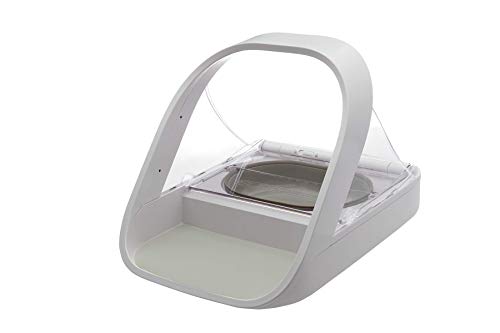
If you have multiple pets and struggle with food stealing or dietary conflicts, the SureFeed Microchip Pet Feeder (MPF001) is the best choice for maintaining mealtime order. I rely on my pet’s microchip to activate the feeder-no other pet can access the food. It supports 9-, 10-, and 15-digit microchip formats, including Avid Secure and FDX-B. I can also use the included RFID collar tag. The lid seals with a neoprene lip, keeping 13.5 fl. oz. of wet or dry food fresh. It opens automatically when my pet approaches and closes after they leave. I store up to 32 IDs. One-button programming works fast. Vets recommend it. I use one per pet. It’s backed by a three-year warranty from Sure Petcare.
Best For: Pet owners with multiple animals who need to prevent food stealing, manage portion control, and ensure dietary separation at mealtimes.
Pros:
- Automatically opens and closes using pet’s microchip or included RFID tag, preventing unauthorized access
- Sealing lid with neoprene lip keeps 13.5 fl. oz. of wet or dry food fresh and retains moisture
- Stores up to 32 unique ID numbers and supports various microchip formats, ideal for multi-pet households
Cons:
- Limited capacity may require frequent refilling for larger or more active pets
- Requires microchip or RFID setup, which may be inconvenient for pets without compatible IDs
- Higher upfront cost compared to traditional feeders, especially when purchasing additional RFID tags
PawsPik Automatic RFID Cat Feeder (16-Cup)
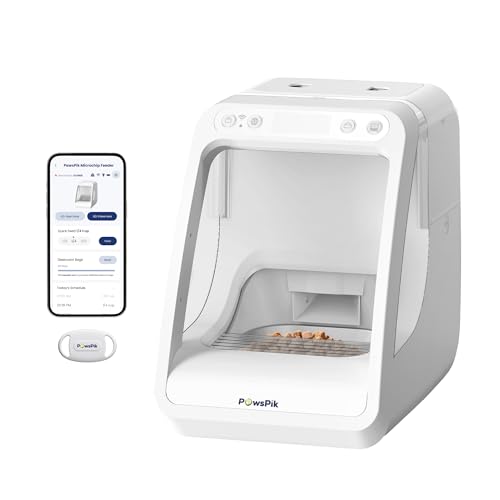
The PawsPik Automatic RFID Cat Feeder (16-Cup) is engineered for pet owners who demand precise, microchip-based access control to manage individual feeding schedules in single-pet households. It uses RFID and ISO microchip recognition, supporting 15-digit ISO-compliant chips. I pair one feeder per pet-it’s required for accurate access. Each unit works with one microchip or the included PawsPik RFID tag. In Closed Mode, only authorized pets open the lid; Open Mode allows access until unauthorized pets approach. For best results, outfit intruders with RFID tags. I schedule up to 10 meals daily via the PawsPik app, control portions precisely, and monitor feeding in real time. The 16-cup capacity suits cats of all sizes and small dogs. A built-in battery backup keeps feeding on track during outages.
Best For: Pet owners in single-pet households seeking precise, microchip-controlled feeding with remote scheduling and monitoring.
Pros:
- Uses RFID and ISO microchip recognition to ensure only authorized pets can access food
- Enables precise portion control and up to 10 scheduled meals daily via the PawsPik app
- Includes battery backup and 16-cup capacity, ideal for cats of all sizes and small dogs
Cons:
- Requires one feeder per pet in multi-pet homes, increasing cost and space needs
- Limited to one microchip or RFID tag per feeder, reducing flexibility
- Open Mode performance relies on unauthorized pets wearing RFID tags for optimal function
PETLIBRO RFID Cat Feeder with Wi-Fi

You’ll find the PETLIBRO RFID Cat Feeder ideal if managing multiple cats with distinct dietary needs is a daily challenge. Its RFID collar tag system activates the bowl only for your designated cat, preventing food theft. I rely on its dual-band Wi-Fi to schedule up to 10 meals per day, with portion control down to 48 total across 24 hours. The 3L stainless steel container holds about two weeks’ worth of dry kibble for one cat. Sealed silicone gaskets and a desiccant bag preserve freshness. I monitor intake using the Petlibro app, which logs who ate, when, and how much. It’s not microchip-compatible-only the included RFID tag works.
Best For: Cat owners managing multiple pets with different dietary needs who want precise, automated feeding and real-time diet tracking via app control.
Pros:
- RFID collar tag system ensures only the designated cat can access food, preventing food stealing in multi-cat households
- Dual-band Wi-Fi and app integration allow remote scheduling, portion control, and detailed feeding logs for each cat
- 3L airtight container with freshness features like silicone gaskets and desiccant bag keeps kibble fresh for up to two weeks
Cons:
- Requires use of included RFID tag only-does not work with pet microchips
- Not waterproof; base and RFID reader cannot be washed, limiting cleaning options
- Limited to dry kibble (2–15mm diameter), excluding wet or specialty foods
PETLIBRO RFID Automatic Cat Feeder

When managing multiple cats with distinct dietary needs, the PETLIBRO RFID Automatic Cat Feeder stands out as the best choice for households requiring precise, individualized feeding control. Each cat wears a unique RFID collar tag, and the feeder opens only for authorized pets. The RFID-controlled lid prevents food stealing. It supports multi-diet households with accurate portioning. A 3-liter container holds enough food for one cat up to two weeks. Dual-band Wi-Fi (2.4 GHz and 5 GHz) guarantees stable connectivity. The app tracks meal times, portions, and habits in real time. Backup battery operation maintains function during outages.
Best For: Cat owners managing multiple pets with different dietary requirements who need precise, personalized feeding control and real-time monitoring.
Pros:
- RFID technology ensures only authorized cats can access their designated meals, preventing food stealing
- Supports individualized meal plans with accurate portion control for multi-cat households
- Real-time feeding tracking and dual-band Wi-Fi enable reliable remote monitoring and management
Cons:
- Requires each cat to wear and consistently keep on an RFID collar tag for proper function
- Limited to dry food due to the mechanical dispensing design
- App dependency may pose challenges for users unfamiliar with smart pet devices
PETLIBRO RFID Cat Feeder 2-Pack

For multi-cat households struggling with food competition, this dual feeder system solves access control with precision. Each unit uses RFID technology to recognize individual collar tags, granting access only to authorized cats. I rely on this to prevent food stealing and enforce strict diet plans. The feeders operate independently, supporting up to 10 meals per day per cat, with 48 total daily portions. Custom schedules and portion sizes help manage weight or medical diets. The Petlibro app tracks eating habits in real time, using Pawsense tech and dual-band Wi-Fi for reliable updates. Five-layer freshness seals and removable stainless steel bowls maintain kibble quality and hygiene.
Best For: Multi-cat households needing precise feeding control to prevent food stealing and manage individual dietary requirements.
Pros:
- RFID technology ensures only authorized cats can access their designated feeder, eliminating food competition
- Customizable feeding schedules and portion sizes support weight management, medical diets, and special nutritional needs
- Real-time monitoring via the Petlibro app with dual-band Wi-Fi provides detailed eating habit insights and remote control
Cons:
- Requires consistent use of collar tags, which may be lost or cause discomfort for some cats
- Setup and app integration may be challenging for users unfamiliar with smart home devices
- Higher price point compared to single or non-RFID automatic feeders
Anifam Microchip Cat Feeder for Multi-Pet Homes
The Anifam Microchip Cat Feeder stands out as the best choice for multi-pet homes requiring precise dietary control across three cats-two with microchips or RFID tags and one without. It uses RFID technology to detect each pet’s unique microchip or collar tag. I register pets by holding the chip near the infrared sensor until the tray rotates, confirming pairing. Three 5oz stainless steel bowls rotate silently: Trays A and B serve chipped pets only; Tray C stays open for unchipped cats or shared meals. After feeding, it returns to Tray C, securing specialized diets. Two included RFID tags support seamless setup. In single-cat homes, it blocks dogs. Bowls are dishwasher-safe.
Best For: Multi-pet households needing precise diet management for up to three cats, including those with and without microchips or RFID tags.
Pros:
- Uses RFID technology to accurately identify microchipped or tagged pets, enabling selective feeding with dedicated trays for individual dietary needs
- Features a rotating system with three stainless steel bowls, including an open tray for unchipped pets or shared meals, ideal for multi-cat homes
- Dog-resistant design and dishwasher-safe bowls enhance convenience, hygiene, and species-specific feeding control
Cons:
- Limited to two registered pets, which may restrict use in larger multi-cat households requiring individualized access
- Tray capacity is only 5oz per bowl, which may require frequent refilling for cats with higher food intake
- Relies on proper microchip or tag placement near the sensor for registration, which could be challenging for uncooperative pets
Stainless Steel Cat Feeder Bowl & Mat
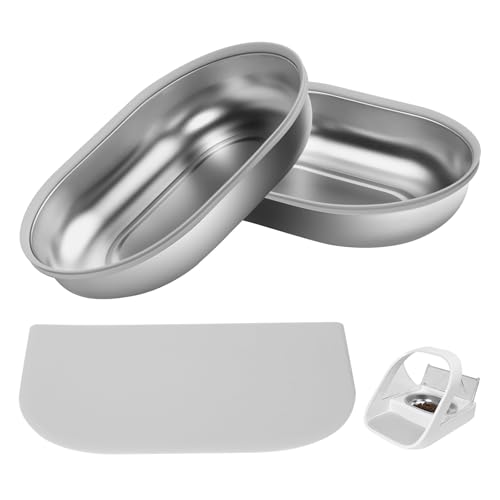
A stainless steel cat feeder bowl and mat combo stands out for owners prioritizing hygiene and durability in their microchip feeding setup. I include two SUS 304 food-grade stainless steel bowls and one grey mat for stability and mess control. The non-porous surface resists stains, odors, and scratches, staying safe and BPA-free for long-term pet use. Each bowl features an integrated sealing ring that works like a refrigerator gasket, reducing spills and preserving food freshness. This setup is fully compatible with all SureFeed models, including Connect and Sealed Bowl systems. It withstands heat up to 70℃. I clean easily with warm water and mild soap. If you receive only one bowl, contact the seller directly-do not use Amazon support-for a partial refund or replacement. Customer service is available for technical help or product questions.
Best For: Cat owners seeking a durable, hygienic, and compatible feeding solution for use with SureFeed microchip feeders.
Pros:
- Made from food-grade SUS 304 stainless steel, ensuring safety, durability, and resistance to stains, odors, and scratches
- Includes two bowls and a non-slip mat for stability and mess control, with sealing rings to reduce spills and preserve food freshness
- Fully compatible with all SureFeed models, including Connect and Sealed Bowl systems, and easy to clean with warm water and mild soap
Cons:
- Maximum heat resistance limited to 70℃, which may restrict use with hot foods or sterilization methods
- Missing items (such as a second bowl) must be reported directly to the seller-Amazon support cannot assist
- Potential inconvenience if one bowl is missing upon delivery, requiring direct seller communication for resolution
SureFeed Microchip Pet Feeder Connect – Requires Hub (Sold Separately)

When managing multiple pets or specific dietary needs, the SureFeed Microchip Pet Feeder Connect stands out by granting access only to your pet’s unique microchip or RFID collar tag, blocking others from stealing meals. It reads implanted microchips or Sure Petcare RFID tags instantly. The feeder locks when closed, sealing food inside. A Hub-sold separately-connects it to the Sure Petcare app via Wi-Fi. You’ll monitor feeding times, portion size, and patterns on your phone. Built-in scales measure food down to 1 gram. LEDs guide accurate refills based on app settings. The 13.5 fl. oz. container suits wet or dry food. A neoprene seal locks in freshness and moisture. It’s ideal for pets on prescription diets needing precise feeding control.
Best For: Pet owners managing multiple animals or those requiring strict dietary control through microchip-activated, portion-controlled feeding.
Pros:
- Uses microchip or RFID tag to allow only authorized pets to access food, preventing meal theft
- Connects to the Sure Petcare app via Hub for real-time monitoring of feeding times, portions, and patterns
- Built-in 1 g accuracy scales and LED-guided refills ensure precise portion control and support prescription diets
Cons:
- Hub required for app connectivity and sold separately, increasing overall cost
- Limited 13.5 fl. oz. capacity may necessitate frequent refills for larger or more active pets
- Only compatible with Sure Petcare RFID tags and microchips, limiting third-party accessory options
PETLIBRO RFID Automatic Cat Feeder with Wi-Fi

Microchip identification isn’t just for lost pets-this feeder uses RFID technology to activate personalized feeding for each cat. It reads only the included RFID collar tag, triggering the locking bowl lid to open. The lid’s speed is adjustable, reducing intimidation for timid cats. Pawsense technology logs every meal in the Petlibro app, tracking who ate, how much, and when. You can schedule up to 10 meals daily, with portion control across 48 settings. Dual-band Wi-Fi (2.4 GHz and 5 GHz) guarantees reliable remote access. A 3-liter airtight container uses silicone gaskets and a desiccant bag to preserve kibble freshness for up to two weeks.
Best For: Cat owners in multi-cat households who need personalized feeding schedules and portion control to manage different dietary needs.
Pros:
- RFID technology ensures only the designated cat can access its meal, preventing food stealing
- Detailed feeding logs via the Petlibro app help monitor each cat’s eating habits and intake
- Dual-band Wi-Fi connectivity provides reliable remote access and real-time alerts
Cons:
- Only works with the included RFID tag, limiting compatibility with existing microchips or other tags
- Requires app setup and stable Wi-Fi, which may be challenging for less tech-savvy users
- Limited to dry kibble; not suitable for wet or fresh food diets
Automatic Pet Feeder with RFID (White)

If you manage a multi-pet household and need precise dietary control, the Automatic Pet Feeder with RFID (White) is your best choice. It uses active RFID technology to lock access unless an authorized pet’s tag is detected. Two RFID tags are included for collar attachment. This prevents food stealing and guarantees each pet eats only their prescribed diet. You can program up to four meals daily, with serving windows from 5 to 30 minutes. The LED interface makes scheduling intuitive. It runs on USB or batteries, maintaining function during outages. A sealed lid keeps food fresh. It works with dry or wet food and suits cats and dogs.
Best For: Pet owners in multi-pet households who need precise dietary control and portion management for pets without microchips.
Pros:
- RFID access control prevents food stealing and ensures only authorized pets can eat
- Customizable feeding schedules with up to 4 meals per day and adjustable meal durations
- Dual power options (USB and batteries) ensure uninterrupted operation during power outages
Cons:
- Limited to 4 meals per day, which may not suit pets requiring more frequent feeding
- RFID tags only work when attached to collars, risking access issues if collars are removed
- Sealed lid may not fully preserve wet food freshness over extended periods
Factors to Consider When Choosing a Microchip Pet Feeder
You need to check microchip compatibility first-most feeders work with 15-digit ISO standard RFID chips, but some won’t recognize older or non-standard models. Food capacity matters whether you’ve got a small cat or a big dog, with hoppers ranging from 4 to 24 cups, so pick one that matches your pet’s daily intake. Look for models with battery backup, strong app integration, and secure access doors that only open when your pet’s microchip is verified.
Microchip Compatibility Requirements
Since not all microchip pet feeders work with every type of implanted chip, verifying compatibility between your pet’s microchip format and the feeder’s reader is essential. Your pet’s chip is likely 9-digit Avid Secure, 10-digit FDX-A, or 15-digit FDX-B-match this to the feeder’s supported standards. Feeders often support ISO-compliant 15-digit FDX-B chips; pets with non-ISO chips may not be recognized. Some units read only specific formats, so check specs carefully. If your pet isn’t microchipped, RFID collar tags offer an alternative, though these rely on external detection, not implanted tech. The reader requires proximity-usually within 2–4 inches-for reliable activation. Most feeders store multiple IDs, so you can register several pets. This guarantees only authorized animals access meals. Confirm your pet’s chip type before purchasing. Matching formats guarantees consistent, accurate recognition and prevents feeding disruptions.
Food Capacity Options
A range of food capacity options guarantees you can match a microchip pet feeder to your pet’s dietary needs and your lifestyle. Units hold between 13.5 fluid ounces and 16 cups of food. Larger 16-cup reservoirs store enough dry kibble to feed one pet for up to two weeks, minimizing refills. This suits busy owners or those taking extended trips. Smaller 13.5 fl. oz. compartments work best for wet food or strict portion control, though they require daily refilling. Capacity directly affects feeding frequency and food freshness. Airtight seals and moisture-resistant lids help preserve kibble during long storage. You must match capacity to your pet’s daily intake, feeding schedule, and food type. Dry food lasts longer in bulk loads, while wet food needs smaller, frequent portions. Choosing the right size secures reliable, hygienic feeding without waste or spoilage.
Power And Backup Features
Power and backup features determine how consistently a microchip pet feeder operates during unexpected outages or electrical disruptions. You need reliable power resilience, especially if your pet depends on strict meal timing for medical or dietary reasons. Many feeders offer dual power options, like AC adapters with USB ports and battery backups, so the unit keeps running when wall power fails. Battery backup systems typically use 4–6 D-cell batteries, preserving programmed schedules and portion control for up to 24–48 hours. This uninterrupted operation guarantees your pet receives meals on time, even during blackouts. Feeders without backup require manual feeding during outages, which undermines automated regimens. Choose a model with seamless power switching-it instantly shifts to battery without resetting settings. Reliable backup support means your feeder won’t skip a beat, maintaining feeding integrity without your intervention.
App Connectivity Support
How confident are you that your pet is eating the right amount at the right time when you’re not home? App-connected microchip feeders give you full control through your smartphone. You can adjust feeding schedules and portion sizes remotely via Wi-Fi. Dual-band connectivity (2.4 GHz and 5 GHz) guarantees stable, reliable communication with fewer dropouts. Real-time logs track each meal’s exact time, date, and quantity consumed per pet. Some models feature built-in scales with 1-gram precision, letting you monitor food weight down to the smallest increment. The app sends instant alerts for low food levels, missed meals, or unauthorized access attempts. You maintain oversight even while traveling. These feeders often rely on a hub or direct Wi-Fi pairing for seamless data transmission. App integration transforms basic feeding into a data-driven, responsive system tailored to your pet’s needs.
Pet Access Control Design
You’ve seen how app connectivity keeps you informed and in control remotely, but access design determines who actually gets to eat. RFID-controlled lids activate only when your pet’s microchip or collar tag is detected, blocking unauthorized pets. Some models use infrared sensors or proximity detection, guaranteeing reliable recognition within inches. Closed-mode operation locks out unregistered animals completely, while open-mode allows general access until an unfamiliar pet approaches. Rotating tray systems support multiple bowls-one can stay open for community use while others stay restricted. You can register up to 32 unique IDs, ideal for homes with several pets or strict dietary plans. This level of control prevents food theft and guarantees medical diets stay enforced. Access precision is critical when managing weight, allergies, or medication. Choose based on your pet count, feeding rules, and household setup.
Frequently Asked Questions
Can I Use These Feeders for Dogs Too?
Yes, you can use these feeders for dogs. They recognize your dog’s microchip or collar tag instantly. Most models handle portions from 1/8 to 4 cups per meal. Units have wide openings-typically 4.7 inches-that fit kibble up to 0.8 inches in diameter. Motors are strong enough to dispense dry or semi-moist food. Weight limits usually cap at 100 lbs, but check specs. Power options include AC adapters with battery backups.
Do Microchip Feeders Work With All Chip Types?
No, microchip feeders don’t work with all chip types. They typically read ISO 11784/11785 compliant 15-digit FDX-B chips, the global standard. Many U.S. pets have AVID chips, which use FDX-A and may not register. Always check your pet’s chip format before buying. Match the feeder’s specs to your pet’s implant type. Incompatible chips won’t trigger access, defeating the purpose. Verify compatibility with your vet or microchip registry for reliable, automated feeding control.
How Often Should I Clean the Feeder?
Clean the feeder weekly to prevent bacteria buildup and maintain peak function. You must disassemble all removable parts, including the food tray and hopper, and wash them with warm, soapy water. Dry components thoroughly before reassembling. For models with internal mechanisms, use a damp cloth to wipe accessible areas monthly. Avoid submerging the main unit. Regular cleaning preserves food freshness and guarantees reliable microchip recognition-critical for accurate pet feeding.
What Happens if the Power Goes Out?
You lose power, and the feeder stops dispensing meals automatically. Most models run on AC adapters but include battery backup-typically 3–6 AA batteries-that keep the timer and microchip sensor active. Without power, the motor won’t operate, so pets aren’t fed until power returns or batteries die. Some units alert you via sound or app notification. Battery life lasts 8–12 hours during outage. Always check your model’s specs for runtime and compatibility.
Can Multiple Pets Use One RFID Feeder?
Yes, multiple pets can use one RFID feeder if each has a registered microchip or RFID collar tag. The feeder scans each pet’s unique ID before dispensing food. Most models store 10–30 profiles, allowing precise portion control per pet. Units like the SureFeed Microchip Pet Feeder seal after each use, preventing non-registered animals from accessing food. Battery backups maintain data during outages, ensuring consistent multi-pet operation without interference or feeding errors.