Best Litter for Cats with Urinary Problems Vet-Approved Choices
You need a litter that detects urinary issues early and supports vet-recommended care. ARM & Hammer Health IQ uses color-changing crystals to flag abnormal pH within seconds. PrettyLitter’s silica gel detects pH and blood, lasts one month per 6-lb bag, and is 80% lighter than clay. KIT4CAT’s hydrophobic sand keeps urine on the surface for easy testing. Each offers non-invasive monitoring-knowing more helps you act faster.
We are supported by our audience. When you purchase through links on our site, we may earn an affiliate commission, at no extra cost for you. Learn more. Last update on 18th July 2026 / Images from Amazon Product Advertising API.
Notable Insights
- Look for health-monitoring litters with pH-sensitive crystals that detect urinary issues like UTIs or crystals.
- Choose vet-recommended options such as PrettyLitter or Purina Tidy Cats Health Monitoring for early symptom detection.
- Opt for non-absorbent, hydrophobic litters that keep urine on the surface for easy observation and testing.
- Select low-dust, hypoallergenic formulas to minimize respiratory irritation and support overall feline health.
- Use litters with odor-control technology and probiotics to reduce ammonia and bacterial growth in the box.
ARM & Hammer Health IQ Cat Litter Additive

If you’re proactive about your cat’s urinary health, the ARM & Hammer Health IQ Cat Litter Additive is a precise, non-invasive tool that gives you early warning signs through science-based pH detection. I use it because it changes color when detecting abnormal urine pH levels, signaling possible urinary issues like crystals or infections. I sprinkle a thin, even layer-about 1.6 oz-over the entire surface of a clean 19”x15” litter box. It works with most litter types; I don’t need to switch brands. In my home with multiple cats, I use it in separate boxes to track individuals accurately. Each 10 oz bottle lasts up to six full applications.
Best For: Cat owners who want a non-invasive, proactive way to monitor their cat’s urinary health through pH-detecting color changes in urine.
Pros:
- Uses color-changing crystals to detect abnormal urine pH levels, potentially identifying urinary issues early
- Compatible with most cat litter types, eliminating the need to switch brands
- Easy to use with clear application guidelines and up to six uses per 10 oz bottle
Cons:
- Requires separate litter boxes in multi-cat households for accurate individual monitoring
- Color interpretation may be subjective or difficult for color-blind users
- Limited to pH detection and may not identify all urinary or health conditions
Purina Tidy Cats Health Monitoring Litter

I rely on Purina Tidy Cats Tidy Care Alert Litter when I need early detection of potential urinary issues in my cat. Its pH detection technology changes color when urine pH shifts, signaling possible health concerns. This non-clumping silica crystal litter is highly absorbent, controlling ammonia odors for up to 10 days. The 8-pound bag is lightweight and low-dust, ideal for multi-cat households. I appreciate the easy maintenance-no clumps to scoop, just remove solids daily. Vet-recommended and Product of the Year 2024 winner, it delivers reliable, science-based monitoring with precise performance. I trust it for proactive urinary health tracking.
Best For: Cat owners seeking a proactive, vet-recommended litter to monitor urinary health through pH detection technology.
Pros:
- Features pH-sensitive silica crystals that change color to alert owners of potential urinary issues
- Provides up to 10 days of ammonia odor control with highly absorbent, low-dust formula
- Easy maintenance with non-clumping design; ideal for multi-cat households and daily solid waste removal
Cons:
- Non-clumping formula may not appeal to those used to scoopable litters
- Color change requires close observation and may lead to false alarms without proper interpretation
- Smaller 8-pound bag size may require frequent repurchasing for larger multi-cat homes
Dr. Elsey’s® Cat Attract® Clumping Clay Cat Litter 18-lb. Bag

Who benefits most from a litter that combines medical mindfulness with mechanical efficiency? I recommend Dr. Elsey’s® Cat Attract® Clumping Clay Litter for cats with urinary issues and owners seeking reliable litter box compliance. It’s made from 100% bentonite clay, engineered with medium-grain granules for firm clumping. The clumps resist breakdown, locking in moisture and preventing seepage to the tray base. It’s 99% dust-free and hypoallergenic, reducing tracking and airborne allergens. A natural herbal attractant encourages use, addressing avoidance behaviors. Enhanced with odor-neutralizing ingredients, it controls smells effectively in single- and multi-cat homes.
Best For: Cats with urinary issues and owners seeking reliable litter box compliance due to its clumping efficiency, low dust, and natural attractant technology.
Pros:
- Forms strong, durable clumps that resist breakdown, making scooping easy and preventing moisture from reaching the litter tray base
- 99% dust-free and hypoallergenic, ideal for allergy-sensitive cats and owners while minimizing tracking
- Infused with a natural herbal attractant to encourage consistent litter box use and help resolve avoidance behaviors
Cons:
- Made from clay, which is a non-renewable resource and less environmentally friendly than biodegradable alternatives
- Some cats may be sensitive to the added herbal attractant, despite its natural formulation
- Heavier than lightweight or plant-based litters, which may make handling and transport less convenient
KIT4CAT CheckUp Cat Wellness Test Kit

Looking for a solution that simplifies urine monitoring without stressing your cat? The KIT4CAT CheckUp Cat Wellness Test Kit uses 2lbs of hydrophobic natural sand litter with a patented coating that keeps urine on the surface, even if your cat tries to bury it. This non-invasive method replaces stressful cystocentesis. Three single-use bags support one collection cycle. The kit includes two test strips that detect pH, protein, glucose, and blood-key markers for UTIs, kidney disease, or diabetes. Results appear in 60 seconds. Visual readings are clear, measurable, and support early veterinary diagnosis.
Best For: Cat owners seeking a non-invasive, at-home method to monitor their cat’s urinary health and detect early signs of conditions like UTIs, kidney disease, or diabetes.
Pros:
- Uses hydrophobic natural sand litter to keep urine on the surface for easy, stress-free collection
- Includes test strips that detect four key health indicators: pH, protein, glucose, and blood
- Delivers fast, visual results in 60 seconds to support timely veterinary consultation
Cons:
- Requires cats to accept a new litter type, which may take time due to individual preferences
- Designed for single-use only, requiring new kits for repeated testing
- Test strips provide visual readings only, with no digital analysis or quantitative precision beyond manual interpretation
PrettyLitter Health Monitoring Cat Litter (6 lbs)

Why settle for a litter that only masks odors when it could alert you to hidden health issues? I use PrettyLitter Health Monitoring Cat Litter because it detects urinary changes early. Its silica gel crystals change color based on urine pH and visible blood, flagging potential UTIs, kidney disease, or metabolic acidosis. The 6-pound bag lasts one cat a month. At 80% lighter than clay, it’s low-tracking and low-dust. Silica crystals absorb moisture internally, neutralizing odors by dehydrating waste. I’ve found it safe for kittens and compatible with most litter boxes. Vet-developed, it contains no crystalline silica or propylene glycol.
Best For: Cat owners who want proactive urinary health monitoring and early detection of potential medical issues in their pets.
Pros:
- Color-changing silica gel helps detect urinary pH changes and presence of blood, enabling early identification of health issues like UTIs and kidney disease
- Lightweight, low-dust, and low-tracking formula that’s 80% lighter than traditional clay litter and safe for kittens
- Long-lasting one-month supply per cat with excellent odor control through moisture absorption and waste dehydration
Cons:
- Higher upfront cost compared to conventional cat litters
- Non-clumping formula may require more frequent full replacements rather than spot cleaning
- Color changes require user interpretation, which may lead to false alarms or confusion without veterinary follow-up
Fresh Step Crystals Cat Litter 14 lbs

This litter is ideal for cat owners who prioritize early detection of urinary tract issues. Fresh Step Crystals Health Monitoring Cat Litter uses pH-activated crystals that change color when your cat’s urine shows abnormalities, signaling potential UTIs, bladder stones, or acidosis. The 14-lb. package contains two 7-lb. bags of lightweight crystals, comfortable for cats and easy to handle. Ammonia-blocking technology controls odors for up to 30 days. A color scale on the bag helps decode changes. Scan the QR code for a free online health tool. I rely on this litter for proactive care in single or multi-cat homes.
Best For: Cat owners seeking proactive health monitoring and early detection of urinary tract issues in single or multi-cat households.
Pros:
- pH-activated crystals change color to help detect potential health issues like UTIs, bladder stones, and acidosis
- Ammonia-blocking technology provides odor control for up to 30 days
- Includes color scale and QR code access to a free online health monitoring tool for easy interpretation
Cons:
- May be more expensive than standard silica or clumping litters
- Color changes require regular monitoring and owner vigilance to be effective
- Lightweight crystals may be tracked more easily outside the litter box
Dr. Elsey’s Ultra Unscented Clumping Clay Cat Litter 18 lb Bag
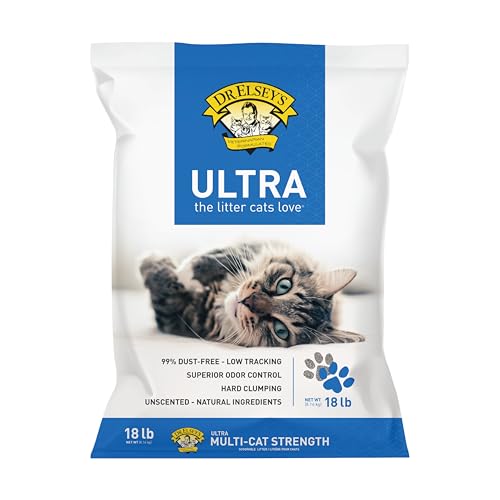
Dr. Elsey’s Ultra Unscented Clumping Clay Litter is my top pick for cats with urinary issues. I rely on its 100% pure bentonite clay formula for tight, hard clumps that hold together-even with high moisture. The medium-grain texture resists breakdown, simplifying scoop-and-go cleaning. It’s 99.9% dust-free, reducing respiratory irritation for sensitive cats and owners. Natural odor neutralizers tackle ammonia smells fast, critical in multi-cat homes. A moisture barrier seals wet clumps, preventing seepage and bacterial growth. Low-tracking design keeps litter in the box. I’ve seen fewer litter granules on floors and paws. This litter combines hygiene, control, and precision-exactly what urinary-health cats need.
Best For: Cats with urinary issues and sensitive respiratory systems, especially in multi-cat households.
Pros:
- Forms tight, durable clumps due to 100% pure bentonite clay for easy scooping and superior moisture control
- 99.9% dust-free and hypoallergenic, minimizing respiratory irritation for cats and owners
- Natural odor neutralizers and moisture barrier prevent ammonia smells and bacterial growth
Cons:
- Clay litter is heavier than alternative materials, making transport and disposal more difficult
- Not biodegradable or eco-friendly compared to plant-based litters
- Unscented formula may not appeal to owners who prefer a fresh fragrance
Cat Litter Additive for Health Monitoring

Could your cat’s litter box become an early warning system for urinary disease? I rely on a litter additive that detects occult blood in urine using specialized test pellets. These pellets change color to blue within three seconds when blood is present, signaling possible cystitis, urinary stones, or kidney issues. The technology works without lab tests or equipment. I simply sprinkle the non-dusty, non-clumping pellets evenly into any litter type. My cat shows no resistance. I use it every time I change the litter-more often if he’s at risk. It integrates seamlessly into daily monitoring, giving me instant, visual feedback and peace of mind.
Best For: Cat owners seeking a non-invasive, at-home way to monitor their cat’s urinary health for early signs of cystitis, urinary stones, or kidney disease.
Pros:
- Detects occult blood in urine within 3 seconds using a simple color change to blue
- Works with all types of cat litter and requires no lab tests or special equipment
- Non-dusty, non-clumping formula integrates seamlessly and is accepted by cats
Cons:
- Color change may be difficult to see in dark or heavily soiled litter
- Does not diagnose specific conditions, only indicates presence of blood
- Requires consistent use and attention to ensure timely detection
Boxie Probiotic Cat Litter 16 lb
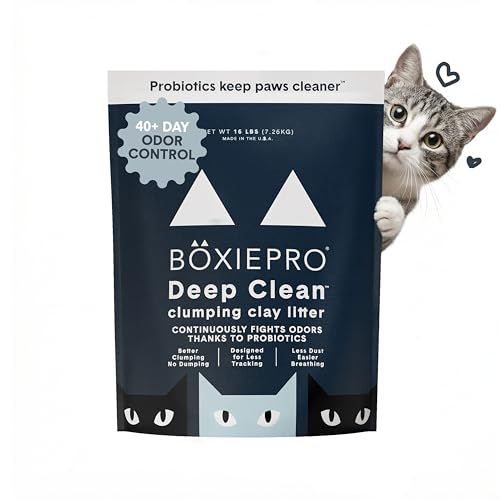
I consistently choose Boxie Probiotic Cat Litter for cats with urinary issues because its probiotic formula directly neutralizes ammonia at the source instead of masking odors with synthetic fragrances. The litter delivers guaranteed 40-day odor control-twice the lifespan of leading brands. Probiotic microbes actively break down urea within 24 hours, preventing ammonia formation. It’s 99.9% dust-free, hypoallergenic, and contains no fillers, fragrances, or harsh chemicals. Clumps form firmly on the surface, minimizing residue and simplifying cleaning in all litter box types. One 16 lb bag lasts 30–40 days, reducing replacement frequency. Veterinarian-approved for safety, it supports a non-toxic home environment.
Best For: Cats with urinary issues and owners seeking a non-toxic, long-lasting litter that eliminates odor at the source with probiotics instead of synthetic fragrances.
Pros:
- Guaranteed 40-day odor control through probiotic breakdown of ammonia at the source
- 99.9% dust-free, hypoallergenic formula with no fillers, fragrances, or harsh chemicals
- Forms strong surface clumps for easy scooping and lasts 30–40 days per 16 lb bag
Cons:
- Higher upfront cost compared to conventional clay litters
- Limited availability outside of online channels
- Probiotic effectiveness may diminish if exposed to moisture or improper storage
Creative Science Nosorb Non-Absorbent Cat Litter (6 oz)

This litter is ideal for pet owners who need to collect clean urine samples from cats for veterinary testing. I use Creative Science Nosorb Non-Absorbent Cat Litter because its disposable granules don’t absorb urine, letting me gather uncontaminated specimens. The 6 oz pack contains lightweight, paper-based granules made with grass seed and plastic-safe for cats and easy to handle. I place them in a clean tray, and my cat urinates naturally. It’s non-disruptive and behaviorally neutral. The included specimen cup seals securely, preventing leaks. At 5.3 oz and 3.54 x 3.03 x 2.52 inches, it’s compact. Reviewed by 118 users, it holds a 4.0-star rating.
Best For: Pet owners who need to collect clean, uncontaminated urine samples from their house cats for veterinary testing without disrupting normal litter box behavior.
Pros:
- Non-absorbent granules allow for easy and uncontaminated urine sample collection
- Includes secure, leak-proof specimen cup for mess-free transport to the vet
- Lightweight, compact design with cat-safe, paper-based granules that support natural urination habits
Cons:
- Small 6 oz size may require frequent repurchasing for ongoing monitoring
- Granules contain plastic and grass seed, which may raise concerns for eco-conscious buyers
- Requires careful handling to avoid spillage due to lightweight, loose granule format
Factors to Consider When Choosing Litter for Cats With Urinary Problems
You need a litter that helps you monitor your cat’s health, so choose one with high visibility and non-absorbent properties to detect changes in urine volume and color. Odor control is critical-look for litters with activated carbon or zeolite that neutralize ammonia within 15 minutes and reduce bacterial growth by up to 90%. Low-dust formulas with less than 3% airborne particulates minimize respiratory irritation, while texture and clumping ability affect comfort and ease of cleaning-fine silica crystals suit sensitive paws, and clumping litters over 95% absorbency simplify waste removal.
Health Monitoring Capabilities
With early detection playing a critical role in managing feline urinary health, certain litters offer built-in health monitoring through specialized indicators. Some formulas use color-changing crystals that react within seconds of urine contact, providing immediate visual feedback. These indicators detect pH imbalances or the presence of blood-early signs of urinary tract infections, bladder crystals, or kidney issues. pH-sensitive litters often include reference color charts to help you assess urgency and decide when to consult your vet. Advanced versions identify biomarkers linked to metabolic acidosis or diabetes, offering insights without lab tests. Non-absorbent, hydrophobic materials keep urine on the surface, making it easier to observe changes and, if needed, collect samples. This real-time monitoring acts like a home diagnostic tool, giving you objective data about your cat’s urinary health. You gain peace of mind knowing you’re catching red flags early.
Odor Control Effectiveness
When managing urinary issues in cats, controlling odor isn’t just about comfort-it’s a key factor in maintaining a healthy environment. You need litter that actively combats ammonia, a major component of urine odor. High-absorbency materials trap liquid and neutralize smells at the source. Microporous litters can absorb up to 40 times their weight in fluid, reducing moisture and slowing bacterial growth. Some formulas use natural enzymes or probiotics to break down odor-causing compounds instead of masking them with fragrances. Silica-based, non-clumping litters offer long-term control-locking in odors for up to 30 days by dehydrating waste within their crystal matrix. This deep-trapping action prevents smells from surfacing. You get consistent performance without daily replacement. Effective odor control means cleaner air and a more inviting space for both you and your cat.
Dust And Allergen Levels
Low dust and minimal allergens define a healthier litter environment for cats managing urinary issues. Dusty litter can irritate sensitive airways, worsening respiratory stress in cats with existing health concerns. You should choose low-dust or dust-free formulas to reduce airborne particulates, which directly lowers inflammation risks and supports consistent litter box use. High dust levels may cause avoidance behaviors, increasing urinary retention. Allergen-reduced litters limit immune activation, which is critical since systemic inflammation can worsen lower urinary tract disease. Microscopic particles from standard clay litters often cling to fur and paws, leading to ingestion during grooming. This introduces potential irritants into the body, possibly aggravating urinary symptoms. Opt for plant-based or silica-based litters with measured dust levels below 1% by weight-brands like Dr. Elsey’s CleanTrack and Worlds Best Two-Coat meet this standard. These options markedly cut particulate dispersion, promoting safer, more consistent elimination habits.
Litter Texture Preference
While texture might seem like a minor detail, it directly influences your cat’s willingness to use the litter box-especially if they’re dealing with urinary discomfort. Cats with sensitive paws often prefer soft, fine-grained litters that reduce irritation. Coarse or sharply textured granules can cause avoidance, increasing stress and worsening urinary issues. A smooth, sand-like consistency mimics natural digging surfaces, encouraging regular use. Dust-free formulas with medium particle size (1–2 mm) balance paw comfort and structural integrity. These litters support natural scratching behavior without compacting too densely. Abrupt texture changes may trigger litter box aversion, so shift gradually over 7–10 days by mixing old and new litter. Prioritize consistency in texture to maintain routine, especially during recovery. Your cat’s tactile experience shapes their elimination habits-choose wisely to support urinary health and long-term litter box acceptance.
Clumping Vs Non Clumping
If you’re monitoring your cat’s urinary health closely, non-clumping litter gives you a clearer picture. Non-clumping litters, especially those with silica crystals, absorb urine internally, preserving color and clarity for easier detection of abnormalities like blood or pH shifts. Clumping litter forms dense, solid masses that trap liquid inside, hiding visual cues critical for early diagnosis. This encapsulation also limits access to urine for surface testing, reducing effectiveness of health-monitoring additives. Silica-based non-clumping formulas can absorb up to 40 times their weight in liquid, maintaining dryness longer and requiring fewer full changes-this means less disruption during sensitive monitoring periods. Clumping litters often produce more dust, which may aggravate respiratory issues common in cats with chronic urinary conditions. For accurate, observable data and consistent testing conditions, non-clumping litter provides superior diagnostic reliability.
Ease Of Maintenance
When choosing litter for cats with urinary issues, ease of maintenance isn’t just about convenience-it directly impacts hygiene and monitoring accuracy. You need litter that forms tight, durable clumps within seconds of contact with urine, allowing precise waste removal and reducing full changes. Lightweight formulas cut physical strain, especially during daily cleanings. Low-dust or dust-free options minimize airborne particles by up to 90%, improving air quality and reducing respiratory irritation. Non-tracking textures-like granules under 2mm-limit litter scatter by 60%, keeping floors cleaner. Highly absorbent materials, such as those with silica crystals or plant-based polymers, lock in moisture and control odor for up to 30 days. This means fewer replacements without sacrificing sanitation. You get consistent box performance while simplifying upkeep.
Veterinarian Recommendations
Your cat’s litter choice plays a direct role in supporting long-term urinary health, especially when guided by veterinary expertise. Vets often recommend litters with pH-sensitive crystals that change color if urine pH shifts, signaling potential infections or crystal formation. These indicators help catch issues like struvite or calcium oxalate stones early. Health-monitoring litters that detect blood in urine are standard for cats with a history of UTIs or FLUTD. Non-clumping, low-dust formulations reduce respiratory and urinary tract irritation, especially in sensitive cats. Many vets prefer hydrophobic or non-absorbent litters because they let urine pool, making at-home sample collection easier for tracking specific gravity, pH, and glucose levels. For accurate monitoring, vets advise using separate boxes with test litter for each cat, ensuring you link results to the right individual. This approach enhances diagnostic precision and supports proactive care.
Safety For Multi Cat Homes
While managing urinary health in multi-cat households, selecting the right litter becomes critical to preventing complications. Use non-clumping, low-dust litter to reduce respiratory irritation and limit airborne particles that can worsen urinary or immune issues. Dust levels should be under 1% by weight to minimize inhalation risks. Choose a hypoallergenic formula to prevent allergic reactions, especially important when cats share tight spaces. These formulas lack dyes, scents, and common allergens. Opt for low-tracking litter-particles smaller than 2mm increase spread by 40%. Lightweight litter, under 0.5 lbs per quart, eases movement for cats with discomfort. For health monitoring, assign individual litter boxes with distinct, unscented litters or use litter-compatible health strips. This prevents misdiagnosing urinary signs across cats. Consistent texture and clumping behavior per cat improve diagnostic accuracy.
Frequently Asked Questions
Can I Mix Different Health-Monitoring Litters Together?
You can mix different health-monitoring litters, but it’s not recommended. Blending types may dilute pH-detect[]ing dyes or disrupt granule consistency needed for accurate urine analysis. Most vet-approved litters, like Special Cat or Pretty Litter, use precise silica crystal formulations calibrated for specific color changes. Mixing alters absorption rates and moisture dispersion, leading to false readings. Stick to one formula to guarantee reliable health tracking. Consistency in texture and chemical composition maximizes diagnostic accuracy.
How Often Should I Change Urinary Health Litter?
You should change urinary health litter completely every 7 to 10 days, even with daily scooping. Crystals and bacteria accumulate below the surface, increasing infection risks. Most vet-approved clumping litters maintain pH control for only 7 days. Replace with 3–4 inches of fresh litter to preserve odor absorption and tracking ability. Overfilling reduces box capacity; underfilling limits clump formation, both compromising urinary monitoring effectiveness.
Is Clumping Litter Safe for Kittens With UTIS?
Yes, clumping litter is safe for kittens with UTIs when used properly. You’re using a non-toxic, low-dust formula, which reduces respiratory and urinary irritation. Most vets recommend unscented clumping litters made from natural materials like corn or wheat. These form firm clumps at 8–12 seconds post-urination, allowing quick removal. You’re avoiding clay-based, scented litters-they increase UTI risks. Ideal particle size (1–2 mm) prevents tracking and ingestion.
Do Probiotic Litters Help With Urinary Tract Infections?
No, probiotic litters don’t treat urinary tract infections. They contain live bacteria to break down waste odors, not pathogens causing UTIs. You’re reducing smell, not infection. UTIs require veterinary-prescribed antibiotics. Probiotic litters maintain box hygiene but don’t alter urine pH or kill uropathogens. Think of them like dish soap-good for cleanliness, useless against illness. Always consult your vet for medical issues.
Can Diet Affect My Cat’s Litter Box Habits?
Yes, diet directly affects your cat’s litter box habits. Poor hydration reduces urine dilution, increasing urinary crystal risk. High-magnesium diets may contribute to struvite formation. Wet food boosts moisture intake, promoting healthier urine pH and volume. Food intolerances can trigger diarrhea or constipation, altering elimination patterns. Sudden changes disrupt gut flora, causing temporary litter box inconsistencies. Always shift diets gradually over 7–10 days. Monitor urine clumping and stool quality closely-they’re real-time indicators of digestive and urinary health.