Best Foods for Cats With Sensitive Stomachs (Vets Recommend These)
You need a highly digestible, vet-recommended cat food to manage your cat’s sensitive stomach. Hill’s Science Diet Sensitive Stomach & Skin uses hydrolyzed chicken protein and prebiotic fiber for predictable digestion and skin health. Purina ONE features real turkey, four antioxidant sources, and no artificial additives. Purina Pro Plan Lamb & Rice delivers 1.5 billion CFUs of probiotics per pound. Look for balanced fiber ratios, single proteins, and AAFCO-compliant nutrition-key details follow.
We are supported by our audience. When you purchase through links on our site, we may earn an affiliate commission, at no extra cost for you. Learn more. Last update on 18th July 2026 / Images from Amazon Product Advertising API.
Notable Insights
- Hill’s Science Diet Sensitive Stomach & Skin is vet-recommended, featuring highly digestible chicken and rice with prebiotic fiber and omega-6 fatty acids.
- Purina Pro Plan Lamb & Rice includes real lamb and 1.5 billion CFUs of live probiotics per pound to support digestive health.
- IAMS Proactive Health uses turkey as the first ingredient, natural fiber, and prebiotics for digestive and immune support.
- Blue Buffalo Tastefuls contains real chicken, LifeSource Bits, and no poultry by-product meals, corn, wheat, or soy.
- Natural Balance L.I.D. offers single-protein, limited-ingredient diets to minimize food sensitivities and support sensitive stomachs.
Purina ONE Sensitive Skin & Stomach Cat Food
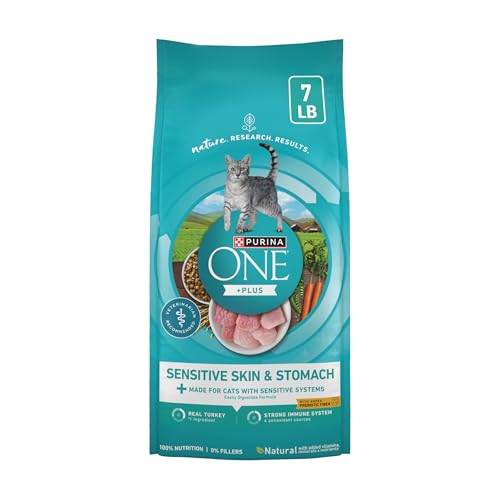
For cats struggling with gastrointestinal upset and skin sensitivities, Purina ONE Sensitive Skin & Stomach Cat Food is my top pick. Real turkey leads the ingredient list, providing high-quality protein to maintain muscle mass and support cardiac function. The formula uses an easily digestible blend enhanced with prebiotic fiber to promote beneficial gut bacteria and aid nutrient absorption. A crunchy kibble texture helps reduce plaque accumulation, supporting dental health through mechanical cleaning. Four sources of antioxidants-including vitamins E and C-bolster immune defenses. Made in Purina-owned U.S. facilities, it contains no artificial flavors or preservatives. Comes in a 7 lb. resealable bag for freshness.
Best For: Cats with sensitive stomachs and skin sensitivities who need a highly digestible, natural diet with real turkey as the primary protein source.
Pros:
- Made with real turkey as the first ingredient to support strong muscles and a healthy heart
- Formulated with prebiotic fiber and easily digestible ingredients to aid digestive and skin health
- Crunchy kibble texture helps clean teeth and reduce plaque, while antioxidants support immune health
Cons:
- Contains no fish-based proteins, which may limit appeal for cats with a preference for fish
- Some cats may be sensitive to turkey, though it’s generally well-tolerated
- Limited bag size option mentioned (only 7 lb. bag), which may not suit larger households or long-term storage needs
Purina ONE Sensitive Stomach Cat Food 16 lb

I rely on Purina ONE Sensitive Stomach Cat Food 16 lb when my cat needs a nutritionally complete diet that’s gentle on digestion without sacrificing protein quality. Real turkey is the first ingredient, delivering high-quality protein for strong muscles and a healthy heart. The formula is designed for cats with sensitive stomachs and skin, featuring easily digestible ingredients and prebiotic fiber to support gut health. Crunchy kibble textures help clean teeth naturally, while calcium strengthens gums. Four antioxidant sources bolster the immune system. There are no artificial flavors or preservatives. It’s made in Purina-owned U.S. facilities using natural ingredients for reliable, consistent nutrition.
Best For: Cats with sensitive stomachs or skin that need a high-protein, easily digestible diet made with natural ingredients.
Pros:
- Real turkey is the first ingredient, providing high-quality protein for muscle and heart health
- Formulated with prebiotic fiber and easily digestible ingredients to support sensitive digestive systems
- Contains natural antioxidants, no artificial flavors or preservatives, and is made in U.S.-owned facilities
Cons:
- Some cats may be picky about the taste or texture of the kibble
- Limited protein variety for cats requiring rotational diets or with poultry sensitivities
- Larger 16 lb bag may not be ideal for households with single cats or limited storage space
Purina ONE Sensitive Skin & Stomach Cat Food

Real turkey leads the ingredient list in Purina ONE Sensitive Skin & Stomach Cat Food, making it an ideal choice for adult cats needing a high-protein, easily digestible diet. I rely on this formula to support muscle maintenance and heart health. It’s crafted with prebiotic fiber to nourish beneficial gut bacteria, easing digestion for sensitive systems. The kibble’s crunchy texture helps reduce plaque buildup, while added calcium strengthens teeth. I appreciate the inclusion of four antioxidant sources, which aid immune function. It contains no artificial flavors or preservatives. Made in Purina-owned U.S. facilities, it meets strict ingredient and nutritional standards for consistent quality.
Best For: Adult cats with sensitive skin and stomachs needing a high-protein, easily digestible diet.
Pros:
- Real turkey is the first ingredient, supporting strong muscles and a healthy heart
- Formulated with prebiotic fiber and easy-to-digest ingredients for sensitive stomachs
- Crunchy kibble with calcium and antioxidant support promotes dental and immune health
Cons:
- Limited protein source variety may not suit cats needing rotational diets
- Kibble size or texture may not appeal to all cats
- Contains grains, which may not align with grain-free preferences
Hill’s Science Diet Sensitive Stomach Cat Food

Hill’s Science Diet Adult 1-6 Sensitive Stomach & Skin Dry Cat Food stands out as a top-tier choice for cat owners tackling digestive sensitivities in adult felines aged 1 to 6. I rely on its highly digestible chicken and rice formula to minimize gastrointestinal upset. It contains prebiotic fiber that fuels beneficial gut bacteria, supporting a balanced microbiome. Omega-6 fatty acids and vitamin E strengthen skin barriers and promote a shiny coat. Made in the USA with global ingredients, it guarantees traceability and quality control. It’s the #1 veterinarian-recommended brand for cats with sensitive stomachs and skin.
Best For: Cats aged 1–6 with sensitive stomachs and skin needing highly digestible nutrition and support for digestive and skin health.
Pros:
- Formulated with highly digestible chicken and rice to reduce gastrointestinal upset
- Contains prebiotic fiber to support a healthy gut microbiome
- Enriched with Omega-6 fatty acids and vitamin E for skin health and a shiny coat
Cons:
- May not be suitable for cats with chicken allergies
- Some cats may find the kibble texture less appealing
- Premium price point compared to non-prescription cat foods
IAMS Proactive Health Cat Food (3 lb)

Because my adult cat has a history of digestive upset, I consider IAMS Proactive Health Cat Food (3 lb) a reliable choice for managing sensitive stomachs. It delivers complete, balanced nutrition without fillers. Natural fiber and prebiotics support gut health by fueling beneficial bacteria. The formula contains 0% fillers and 100% essential nutrients, including antioxidants like vitamin E to strengthen immunity. Omega 6:3 fatty acids in a suitable ratio nourish skin and boost coat shine. Taurine, calcium, and potassium promote strong heart function. Veterinarians recommend IAMS for its science-based, consistent digestibility and nutrient bioavailability.
Best For: Adult cats with sensitive stomachs and digestive concerns seeking complete, balanced nutrition with high-quality, science-backed ingredients.
Pros:
- Supports digestive health with natural fiber and prebiotics to nourish beneficial gut bacteria
- Promotes skin health and coat shine with optimal Omega 6:3 fatty acid ratio
- Veterinarian-recommended formula with essential nutrients for heart, immune, and overall health
Cons:
- Only available in a 3 lb bag, which may require frequent repurchasing for larger households
- Contains chicken as the primary ingredient, which may not suit cats with poultry sensitivities
- Some cats may need a transition period to adjust to the new formula to avoid digestive disruption
IAMS Proactive Health Cat Food (Turkey, 6 lb)

This IAMS Proactive Health Cat Food (Turkey, 6 lb) stands out as a reliable choice for adult cats struggling with digestive sensitivities. I rely on its balanced formula, which delivers 100% complete nutrition without fillers. Turkey is the first ingredient, supporting muscle maintenance. It contains natural fiber and prebiotics to aid digestion and stabilize gut flora. The Omega 6:3 fatty acid ratio promotes healthy skin and a shiny coat. Nutrients like calcium and potassium support heart function. IAMS is a vet-recommended brand, and this formula is crafted specifically for adult cats’ whole-body health.
Best For: Adult cats with sensitive stomachs and digestive issues who need a high-quality, balanced diet with turkey as the primary protein source.
Pros:
- Contains natural fiber and prebiotics to support healthy digestion and gut balance
- Features an optimal Omega 6:3 fatty acid ratio for skin and coat health
- Formulated with essential nutrients like calcium and potassium to support heart health
Cons:
- Limited to a single protein source (turkey), which may not suit cats needing variety or rotation
- Some cats may be picky about the taste or texture of dry kibble
- Available only in a 6 lb bag, which may not be ideal for long-term bulk buyers
Hill’s Science Diet Cat Food Chicken & Rice
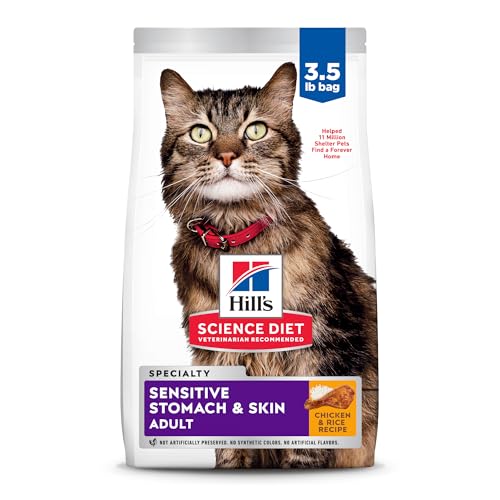
If your adult cat between 1 and 6 years old struggles with digestive upsets or skin irritations, Hill’s Science Diet Adult 1-6 Sensitive Stomach & Skin Dry Cat Food offers targeted nutritional support. I rely on its highly digestible ingredients and prebiotic fiber to promote nutrient absorption and nourish beneficial gut bacteria. The balanced microbiome supports consistent digestion. Omega-6 fatty acids and vitamin E maintain skin integrity and produce a lustrous coat. This precise nutrient profile is designed specifically for cats with sensitivities. The formula features chicken and rice for easy digestion. It’s made in the USA with globally sourced ingredients. Hill’s is the #1 veterinarian-recommended brand for sensitive cats.
Best For: Adult cats between 1 and 6 years old with sensitive stomachs or skin issues.
Pros:
- Formulated with highly digestible chicken and rice to support gentle digestion
- Contains prebiotic fiber to nourish beneficial gut bacteria and promote a balanced microbiome
- Fortified with omega-6 fatty acids and vitamin E to support healthy skin and a shiny coat
Cons:
- Limited to cats aged 1–6 years, not suitable for kittens or senior cats
- Some cats may be sensitive to chicken as a primary protein source
- Premium pricing compared to non-veterinary therapeutic diets
Purina ONE Sensitive Stomach Cat Food 22 lb
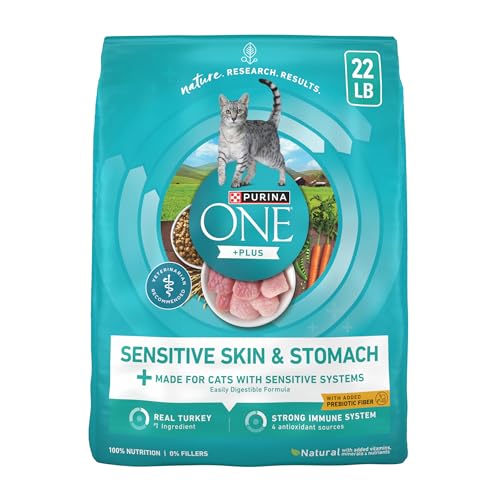
Real turkey leads the ingredient list in Purina ONE Sensitive Stomach Cat Food, making it an ideal choice for adult cats prone to digestive upset and skin sensitivities. This high-protein, natural dry formula contains no artificial flavors or preservatives. Prebiotic fiber supports digestive health by fueling beneficial gut bacteria. Four antioxidant sources strengthen the immune system. The crunchy kibble promotes dental health; its texture helps reduce plaque buildup. Calcium reinforces strong teeth and healthy gums. Each 22 lb. bag is crafted in Purina-owned U.S. facilities, ensuring traceability. It’s part of the Purina ONE Plus Sensitive Skin & Stomach line, developed specifically for cats with sensitive systems.
Best For: Adult cats with sensitive stomachs and skin sensitivities seeking a high-protein, natural diet.
Pros:
- Real turkey is the first ingredient, providing a high-protein, natural formula with no artificial flavors or preservatives
- Contains prebiotic fiber and four antioxidant sources to support digestive and immune health
- Crunchy kibble texture and calcium content promote dental health and strong teeth
Cons:
- Large 22 lb. bag may not be suitable for households with one cat or limited storage space
- Turkey-based formula may not suit cats with specific poultry sensitivities
- Some cats may prefer softer textures, as the crunchy kibble may be less palatable to certain individuals
Blue Buffalo Tastefuls Cat Food (3lb)

Blue Buffalo Tastefuls Natural Dry Food is my top pick for adult cats struggling with digestive sensitivities who need a clean, ingredient-conscious diet. Real chicken is the first ingredient, ensuring high-quality protein. It contains no poultry by-product meals, corn, wheat, or soy-common allergens that can trigger stomach issues. I appreciate the inclusion of prebiotic fiber, which supports digestive health by fueling beneficial gut bacteria. The kibble also features LifeSource Bits: small, antioxidant-rich pieces that boost immune function. Each 3-lb resealable bag maintains freshness and houses natural ingredients formulated in the USA. Packaging may vary slightly from digital images, but nutritional integrity remains consistent.
Best For: Adult cats with sensitive stomachs who need a natural, ingredient-conscious diet free from common allergens.
Pros:
- Real chicken is the first ingredient, providing high-quality protein
- Contains no poultry by-product meals, corn, wheat, or soy, reducing allergy and digestive risks
- Includes LifeSource Bits and prebiotic fiber to support immune and digestive health
Cons:
- Limited to a 3-lb bag size, which may not be cost-effective for large households
- Packaging may vary from digital images, potentially causing confusion
- Higher price point compared to mainstream dry cat food brands
Purina Pro Plan Lamb & Rice Cat Food (7 lb)

Purina Pro Plan Lamb & Rice Cat Food (7 lb) is a superior choice for cats with sensitive stomachs who require a highly digestible, premium diet. Real lamb is the first ingredient, offering a high-protein foundation that supports lean muscle and overall feline health. The formula uses easily digestible rice and oat meal, minimizing gastrointestinal irritation. I rely on its guaranteed live probiotics-1.5 billion CFUs per pound-to promote balanced gut flora, enhancing both digestive and immune function. Omega-6 fatty acids and vitamin A nourish skin and maintain a lustrous coat. Formerly sold as FOCUS Sensitive Skin and Stomach, this rebranded 7 lb. bag delivers consistent, vet-trusted performance.
Best For: Cats with sensitive stomachs and skin sensitivities who thrive on a highly digestible, high-protein lamb and rice formula.
Pros:
- Real lamb as the first ingredient supports lean muscle and overall feline health
- Easily digestible rice and oat meal help minimize gastrointestinal upset
- Fortified with live probiotics (1.5 billion CFUs per pound) to support digestive and immune health
Cons:
- Limited to a single protein source, which may not suit all dietary rotations
- Some cats may be allergic to lamb despite its hypoallergenic reputation
- Rebranded formula may cause confusion for loyal customers of the original FOCUS line
Factors to Consider When Choosing Food for Sensitive Stomach Cats
You need to prioritize high-quality protein sources when selecting food for your cat’s sensitive stomach-look for named meats like chicken or salmon listed as the first ingredient, since poorly digested proteins can trigger gastrointestinal issues. Include diets with added fiber such as psyllium or prebiotics like chicory root, which support digestion and help maintain healthy gut flora, while avoiding artificial colors, flavors, or preservatives that offer no nutritional benefit and may worsen sensitivities. Always check that the formula matches your cat’s life stage and consider grain-inclusive options only if your cat doesn’t have a confirmed grain intolerance, as carbohydrates like rice provide energy and can aid in stool formation.
Protein Source Quality
When selecting food for a cat with a sensitive stomach, prioritizing high-quality protein sources makes a critical difference in digestive tolerance and nutrient uptake. Look for named animal proteins like turkey or lamb listed first on the ingredient panel. These provide essential amino acids and are more biologically appropriate for obligate carnivores. Premium proteins are minimally processed, free of by-products, fillers, and artificial additives-common irritants for delicate digestive systems. Opt for whole meat sources over generic meat meals or plant-based proteins, which are less digestible and less aligned with feline nutritional needs. Easily digestible animal proteins reduce gastrointestinal stress and enhance nutrient absorption. High digestibility means less undigested material reaches the colon, lowering the risk of fermentation, gas, and discomfort. Choosing foods with clean, identifiable protein sources supports long-term gut health and overall liveliness.
Digestive Support Ingredients
While not all cats digest food the same way, choosing formulas with targeted digestive support ingredients can make a measurable difference in gastrointestinal comfort and function. Prebiotic fiber feeds beneficial gut bacteria, supporting a balanced microbiome essential for healthy digestion. You’ll want foods with guaranteed live probiotic strains-look for those stable through expiration, like Enterococcus faecium, to enhance nutrient breakdown. Highly digestible ingredients, such as hydrolyzed proteins or lean meats, reduce gut irritation and boost nutrient absorption. Soluble and insoluble fiber, ideally in a balanced 1:1 to 3:1 ratio, regulate stool consistency and maintain bowel regularity. Controlled animal-based protein levels support amino acid needs without overloading the digestive system. These components work synergistically to stabilize digestion and minimize GI upset. Always check labels for specific inclusions and guaranteed analysis to guarantee effectiveness.
Grain Inclusion Considerations
Many cats with sensitive stomachs tolerate grain-inclusive diets well, and in some cases, benefit from them. Grains like brown rice and oatmeal provide easily digestible carbohydrates that support energy needs without irritating the gut. Contrary to popular belief, grain sensitivities are rare-most digestive issues stem from protein intolerances, not grains. When present, grains such as barley offer soluble and insoluble fiber, promoting regular bowel movements and supporting beneficial gut microbiota. Rice is frequently used in veterinary-formulated diets due to its low allergenic potential and digestibility exceeding 90%. These ingredients contribute to firm, consistent stool, a primary marker of digestive health. Grain-free formulas don’t inherently improve gut function and may replace grains with legumes that are harder to digest. You should evaluate the overall ingredient profile, not just grain content. High-quality, digestible grains can be functional and beneficial, not filler.
Life Stage Appropriateness
Choosing the right diet for a cat with a sensitive stomach involves more than ingredient selection-it requires matching the formula to your cat’s life stage. Adult cats (1–6 years) need balanced levels of protein, fat, and fiber to support digestion, skin health, and immunity. Kitten, adult, and senior stages have distinct metabolic demands. Feeding a life stage–appropriate diet guarantees your cat gets the right nutrient profile. Kittens need higher calories and protein for growth; adults require maintenance-level energy and nutrients. Seniors (7+ years) often need reduced fat, adjusted fiber, and highly digestible protein due to slower metabolism and reduced nutrient absorption. Using a non–life stage-specific food risks deficiencies or excesses. For example, adult food lacks the critical nutrients kittens need, while senior cats may get too much protein. AAFCO-compliant diets meet precise nutritional standards for each life phase. Always check the label for life stage designation to support your cat’s digestive and overall health effectively.
Artificial Additives Avoidance
Look for cat food free of artificial additives when managing a sensitive stomach. Synthetic preservatives, colors, and flavors offer no nutritional benefit and may trigger digestive irritation. High-quality formulas use natural ingredients to reduce gastrointestinal stress. Avoid products containing BHA, BHT, or ethoxyquin-common artificial preservatives linked to gut imbalance. Instead, choose foods preserved with mixed tocopherols or citric acid, which are safer and effective. Natural antioxidant sources like vitamin E and rosemary extract support immune and digestive health without synthetic inputs. Prebiotic fiber, such as FOS from chicory root, maintains gut flora without artificial digestive aids. Artificial fillers like corn syrup or dyes serve no biological function and increase the risk of upset. Dry formulas designed for sensitive digestion exclude these additives to minimize dietary irritants. Always check the ingredient panel-clean labels with recognizable components typically indicate a safer, more digestible option for your cat’s digestive system.
Veterinary Recommendation Value
Why trust a veterinarian’s food recommendation for your cat’s sensitive stomach?
Veterinary-recommended diets are formulated with clinically proven ingredients to target gastrointestinal sensitivity. These foods undergo rigorous testing for digestibility and nutrient absorption. They’re designed to support cats with chronic digestive issues, using highly digestible proteins like hydrolyzed chicken or novel sources such as duck. Prebiotic fibers (e.g., fructooligosaccharides) promote beneficial gut bacteria. Probiotics such as *Enterococcus faecium* help stabilize intestinal flora. Antioxidants like vitamin E support immune function. These formulas exclude common allergens-wheat, dairy, soy-and avoid unnecessary fillers. Nutrient levels are precisely balanced to meet AAFCO guidelines for digestive health. Vets rely on peer-reviewed research and clinical outcomes, not marketing claims. Choosing a vet-endorsed food means relying on science-backed solutions that actively reduce vomiting, gas, and diarrhea. It’s preventive nutrition engineered for fragile systems.
Manufacturer Transparency
A veterinarian’s recommendation carries weight because it’s grounded in clinical evidence and digestive science, but your ability to verify those benefits depends heavily on the manufacturer’s openness. You need clear, detailed ingredient lists that name specific protein sources like “deboned salmon” instead of vague terms like “meat.” Transparent brands disclose processing methods, including whether foods are made in facilities that handle common allergens like dairy or soy. They explain why each additive is included-such as taurine for heart health or psyllium for fiber balance. Quality manufacturers share batch-testing results and safety protocols to confirm consistency and contaminant control. Full labeling reveals artificial preservatives, by-products, or fillers like corn gluten, which may irritate sensitive stomachs. When companies openly provide this data, you can make informed choices based on your cat’s digestive needs, not marketing claims. Transparency isn’t just helpful-it’s essential for ideal feline gastrointestinal health.
Dental Health Benefits
Crunchy kibble acts as nature’s toothbrush, mechanically scrubbing plaque from your cat’s teeth with every bite. The firm texture increases chewing time, creating physical abrasion that reduces tartar buildup. Dry food with a specially designed kibble size and shape encourages proper jaw motion, enhancing plaque removal. Some formulas contain added calcium to support stronger enamel and healthier gums. These nutrients integrate into your cat’s diet without irritating a sensitive stomach. Regular consumption of dental-friendly kibble can lower the risk of periodontal disease. Look for foods with a kibble diameter of 8–12 mm, proven to optimize chewing efficiency. Clinical studies show cats eating textured dry food have up to 30% less plaque. Choose formulas developed with veterinary dental standards. This dual benefit supports digestion and oral health. You’re not just feeding-you’re preventing.
Frequently Asked Questions
What Causes a Cat to Develop a Sensitive Stomach?
You trigger a cat’s sensitive stomach when dietary indiscretion, abrupt food changes, or low-quality ingredients irritate the gastrointestinal lining. You introduce allergens like beef, dairy, or artificial additives that provoke immune responses. You overlook underlying conditions such as pancreatitis, inflammatory bowel disease (IBD), or bacterial overgrowth like *Clostridium*. You fail to provide consistent, digestible proteins and fiber-balanced meals, disrupting gut motility and microbiome stability essential for feline digestive health.
Can I Mix Wet and Dry Food for My Cat?
Yes, you can mix wet and dry food for your cat. Doing so boosts hydration and improves texture appeal. Use a 50:50 ratio by volume for balanced intake-approximately ¼ cup dry and 3 oz wet daily per 10 lbs body weight. Guarantee both formulas share core ingredients and digestibility profiles. Gradually introduce the mix over 7 days to avoid GI upset. Monitor stool quality and adjust ratios as needed for maximum digestion and nutrient absorption.
How Long Does It Take for New Cat Food to Work?
It usually takes 7 to 10 days for new cat food to show effects. You’ll notice reduced vomiting or firmer stools by day 5 if the diet suits your cat. Full digestive adaptation typically completes by day 10. Shift gradually over 7 days: mix increasing portions of new food with the old. Sudden changes disrupt gut flora. Monitor stool consistency and energy levels closely-they’re key indicators of tolerance and efficacy.
Should I Consult a Vet Before Changing My Cat’s Diet?
Yes, you should consult a vet before changing your cat’s diet. Sudden dietary shifts can worsen gastrointestinal issues or mask underlying conditions like pancreatitis or food allergies. A vet confirms nutritional adequacy, checks for metabolic disorders, and recommends formulations with hydrolyzed proteins or novel ingredients. They guide shift timelines-typically 7 to 10 days-and specify calorie density, fiber content, and moisture levels tailored to your cat’s physiology and health status.
Are Grain-Free Diets Better for Cats With Sensitive Stomachs?
No, grain-free diets aren’t inherently better for cats with sensitive stomachs. You should focus on digestibility, not grain content. Many cats tolerate grains like rice or barley well. More often, sensitivities stem from specific animal proteins or fillers. Choose limited-ingredient diets with hydrolyzed or novel proteins, such as duck or venison. Look for foods with a high moisture content and moderate fat-around 12–18% on a dry matter basis.