Best Fish Food for Goldfish That Keeps Them Healthy and Vibrant
You should choose a high-digestibility goldfish food with natural color enhancers and immune-supporting nutrients. Tetra Goldfish Flakes (2.2 oz) reduce waste by up to 30% and contain Vitamin C, omega-3s, and carotenoids for health and color. ProCare technology boosts long-term resilience. For ponds, TetraPond Flakes improve water clarity above 50°F. Foods with astaxanthin and spirulina enhance red and gold tones within weeks. Many top formulas include probiotics for better digestion. You’ll find further advantages in specific product features just ahead.
We are supported by our audience. When you purchase through links on our site, we may earn an affiliate commission, at no extra cost for you. Learn more. Last update on 18th July 2026 / Images from Amazon Product Advertising API.
Notable Insights
- Look for goldfish food with omega-3 fatty acids and Vitamin C to support immune health and vitality.
- Choose formulas containing astaxanthin and spirulina to enhance natural red and gold coloration.
- Opt for foods with probiotics and prebiotics to improve digestion and reduce waste for cleaner water.
- Select high-quality, natural ingredients without fillers or artificial additives for optimal nutrition.
- Match pellet or flake type-floating or slow-sinking-to your goldfish variety’s feeding behavior.
Tetra Goldfish Flakes 2.2 oz

If you’re looking for a reliable daily food that supports long-term health and clean water conditions, Tetra Goldfish Flakes 2.2 oz is an excellent choice for adult goldfish and small koi. I rely on its nutritionally balanced formula, enriched with Vitamin C and omega-3 fatty acids, to meet the dietary needs of cold-water fish. Its ProCare blend strengthens immunity, boosting resilience and long-term energy. The easily digested ingredients reduce waste output by up to 30%, minimizing clouding and maintaining clear water. Flakes hold their structure upon impact, limiting disintegration. This stability cuts excess nutrients that fuel algae. Enhanced coloration results from carotenoid-rich components, supporting natural pigmentation without artificial dyes.
Best For: Adult goldfish and small koi owners seeking a nutritionally complete, clean-water promoting staple flake food.
Pros:
- Nutritionally balanced with Vitamin C and omega-3 fatty acids to support immune health and vitality
- Easily digested formula reduces waste by up to 30%, helping maintain clear water and reduce algae growth
- Enhances natural coloration and features durable flakes that resist disintegration upon impact
Cons:
- Flakes may lose nutritional value if stored improperly due to exposure to air or moisture
- Some picky eaters may prefer pellet or freeze-dried alternatives
- Contains fish meal, which may be a concern for those seeking plant-based or highly sustainable ingredients
Tetra Goldfish Flakes 7.06 oz

I recommend Tetra Goldfish Flakes 7.06 oz for goldfish keepers who prioritize balanced nutrition and vibrant color enhancement. This formula uses a 4-flake blend fortified with Vitamin C to support immune health. It’s designed specifically for GloFish but works well for all tropical community fish. Made in the USA, it contains no fillers or fabric materials. The flakes enhance natural fluorescence, especially under blue or black cycle lighting. I feed mine 2–3 times daily, offering only what they consume within one minute to prevent overfeeding and maintain water quality.
Best For: Goldfish and tropical community fish owners seeking nutritious, color-enhancing flake food that supports immune health and vibrant fluorescence.
Pros:
- Nutritionally balanced 4-flake blend fortified with Vitamin C to support immune system health
- Enhances natural fluorescent colors, especially under blue or black cycle lighting
- Made in the USA with no fillers or fabric materials, suitable for GloFish and other tropical community fish
Cons:
- May not be ideal for bottom-feeding fish due to floating flake format
- Color-enhancing claims primarily optimized for GloFish, less impactful for non-fluorescent species
- Requires careful portion control to avoid overfeeding, though this is common with flake foods
Tetra Goldfish Flakes 2.2 lbs

Tetra Goldfish Flakes 2.2 lbs stands out as the best choice for goldfish keepers who prioritize long-term health, vibrant coloration, and water quality. I rely on its precise blend of immunostimulants, vitamin C, biotin, and Omega-3 fatty acids to support immune function and cellular health. The added prebiotics enhance digestion, reducing waste and improving water clarity. High-quality proteins fuel growth, while antioxidants combat oxidative stress. Its Cleaner and Clearer Water formula minimizes cloudiness. ProCare technology integrates nutrients for disease resistance. The resealable bag with a dispenser lid allows mess-free, hands-free feeding. This 2.2-pound supply guarantees long-term use without nutrient degradation.
Best For: Goldfish and small koi keepers seeking a nutritious, long-lasting flake food that supports immune health, vibrant coloration, and clean water.
Pros:
- Contains immunostimulants, vitamins, and Omega-3s to boost immunity and overall health
- Includes prebiotics and highly digestible ingredients to reduce waste and improve water clarity
- Features a resealable bag with a dispenser lid for convenient, mess-free feeding
Cons:
- Large 2.2 lb size may be excessive for owners of a few small goldfish
- Flakes may lose nutritional potency if not stored properly over long periods
- Some users may prefer pellet formats for larger goldfish or to reduce surface feeding issues
Aqueon Goldfish Fish Food Slow Sinking Granules, 5.8 Ounce, 100106053
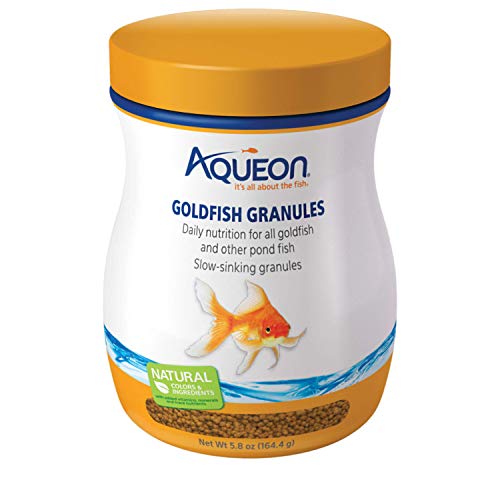
Aqueon Goldfish Fish Food Slow Sinking Granules are my top choice for goldfish owners who prioritize digestive health and water clarity. These 1.5mm granules sink slowly, reducing surface feeding and minimizing air ingestion. The formula uses natural ingredients with added vitamins, minerals, and trace nutrients for ideal nutrition. High nutrient absorption means less waste, helping maintain clean tank conditions. I’ve seen improved digestion in common and fancy goldfish, including Orandas, Lionheads, and Ryukins. The food supports small koi, too. It won’t cloud water when used as directed. Great for balanced diets.
Best For: Goldfish owners seeking a nutritious, slow-sinking food that supports digestive health and maintains water clarity for both common and fancy goldfish varieties.
Pros:
- Slow-sinking 1.5mm granules reduce air ingestion and promote healthy digestion
- Formulated with natural ingredients, added vitamins, and high nutrient absorption to minimize waste
- Suitable for a wide range of goldfish types and small koi, without clouding the water
Cons:
- Small pellet size may not be ideal for larger or more mature goldfish
- Limited protein source transparency in ingredient listing
- Some users may prefer floating pellets for observation of surface-feeding behavior
TetraFin Plus Goldfish Flakes 7.06 oz

This flake food works best for goldfish owners seeking a complete daily diet that supports vibrant coloration, strong immunity, and clean aquarium conditions. I rely on TetraFin Plus Goldfish Flakes because it’s formulated with high-protein fish meal and algae flakes for balanced, plant-inclusive nutrition. Its ProCare Formula delivers essential vitamins, minerals, and trace nutrients that strengthen immune function. The flakes are highly digestible, reducing waste and helping keep water clear. Each 7.06 oz container (3.63 x 3.63 x 7 in) lasts weeks with daily feedings. I feed small amounts two to three times daily, ensuring my goldfish consume it fully within minutes.
Best For: Goldfish owners seeking a nutritious, daily diet that supports vibrant coloration, immune health, and clean aquarium water.
Pros:
- Specially formulated with high-protein fish meal and algae flakes for balanced, easily digestible nutrition
- Contains ProCare Formula to boost immunity, health, and longevity
- Promotes clear water by minimizing waste through optimal digestion
Cons:
- May not be ideal for larger pond fish due to flake size and breed recommendation for small breeds
- Some users may prefer pellet options for less water cloudiness
- Contains artificial colors, which may concern natural-food-focused aquarists
Floating Goldfish Food Pellets 12oz

If you’re feeding goldfish in a pond or aquarium, these 1.5mm floating pellets deliver balanced nutrition in a form that matches their natural surface-feeding behavior. I rely on this 12oz formula because it’s made with fresh fish, Antarctic krill, spirulina, and deep-sea fish oil-no artificial additives or preservatives. Astaxanthin and spirulina enhance reds and golds visibly within weeks. High-quality protein and calcium support steady growth, while vitamins A through B12 strengthen immunity. The 1.5mm size guarantees easy ingestion, promoting better digestion. Probiotics reduce waste, helping maintain clearer water. It’s highly palatable, even for picky eaters.
Best For: Goldfish owners seeking a nutritious, additive-free floating pellet that supports vibrant coloration, healthy growth, and clean water in ponds or aquariums.
Pros:
- Formulated with high-quality natural ingredients like fresh fish, Antarctic krill, and spirulina for optimal nutrition
- Enhances coloration with astaxanthin and supports digestion with probiotics and 1.5mm floating pellets
- Promotes water clarity by reducing waste and uneaten food residue
Cons:
- Floating pellets may not suit goldfish that prefer sinking food
- 1.5mm size might be too large for very small or juvenile goldfish
- Contains fish-derived ingredients, making it unsuitable for vegan or allergy-sensitive households
Ultra Fresh Goldfish Food 1.87 oz

When choosing Ultra Fresh Goldfish Food 1.87 oz, serious goldfish keepers focused on digestive health and water clarity get measurable results. I rely on its all-natural blend-wild sword prawns, akiami shrimp, fresh squid, garlic, spirulina, and seaweed-because it contains zero additives or artificial ingredients. The 6:4 meat-to-vegetable protein ratio supports balanced nutrition. Each gram delivers 3 million CFUs of probiotics, improving digestion and reducing waste. Slow-sinking 1.6 x 2mm pellets suit bottom feeders like orandas and ranchus. I feed them 2–3 times daily, only what my fish finish in 3 minutes. Vitamins A, C, D3, E, and B-complex boost immunity and color.
Best For: Serious goldfish owners seeking optimal digestive health, clean water, and vibrant coloration in their bottom-feeding goldfish.
Pros:
- Contains all-natural ingredients with no artificial additives, colors, or fillers
- Includes 3 million CFUs/g of probiotics to support digestion, immunity, and water clarity
- Slow-sinking pellets and balanced 6:4 protein ratio tailored for orandas, ranchus, and other bottom-feeding goldfish
Cons:
- Small 1.87 oz size may require frequent repurchasing for larger tanks or multiple fish
- Higher price point compared to conventional goldfish foods
- Pellet size may be too large for very small or juvenile goldfish
Ultra Fresh Goldfish Food Pellets (4.6 oz)

Ultra Fresh Goldfish Food Pellets (4.6 oz) stand out as the best choice for aquarium owners who prioritize natural nutrition and water quality, especially when feeding delicate varieties like Ryukin, Bubble Eye, and Butterfly telescope goldfish. I rely on its all-natural blend of wild sword prawns, akiami shrimp, squid, garlic, vegetables, seaweed, and spirulina. It maintains a precise 5:5 meat-to-vegetable protein ratio. The formula delivers calcium, vitamin D, and full-spectrum vitamins (A, C, D3, E, B1, B2, B6, B12) to support growth, immunity, and color. Floating 3.1mm pellets aid digestion and reduce waste. With 3 million CFUs/g of probiotics, it improves water clarity and feed efficiency. I never feed artificial additives-only clean, highly palatable nutrition.
Best For: Discerning aquarium owners seeking natural, additive-free nutrition that supports vibrant color, healthy growth, and water clarity in delicate goldfish varieties.
Pros:
- Contains all-natural ingredients with a balanced 5:5 meat-to-vegetable protein ratio for optimal goldfish health
- Includes 3 million CFUs/g of probiotics to improve digestion, reduce waste, and maintain clean water
- Enriched with calcium, vitamin D, and full-spectrum vitamins to support skeletal development, immunity, and color enhancement
Cons:
- Pellet size may be too large for very small or juvenile goldfish despite suitability for most varieties
- Higher price point due to premium natural ingredients compared to generic fish foods
- Limited availability outside specialty pet or aquatic stores
TetraPond Pond Flakes for Goldfish & Koi

TetraPond Pond Flakes stand out as the best choice for goldfish owners seeking scientifically formulated nutrition tailored to small breeds. I rely on this 6.35-ounce flake food because it supports immune health and enhances natural coloration. Its clear-water formula prevents clouding, keeping my pond clean. I feed it twice daily when temperatures exceed 50°F, offering only what my fish consume within five minutes. The easy digestibility reduces waste, improving water quality. I switch to TetraPond Spring & Fall Diet below 50°F and shift to Pond Sticks as fish grow. Brand-established in 1951, Tetra guarantees quality through decades of research.
Best For: Small breed goldfish and koi pond owners seeking scientifically formulated, easy-to-digest nutrition that supports immune health, enhances coloration, and maintains water clarity.
Pros:
- Scientifically developed formula promotes immune system health, energy, and longevity
- Enhances natural coloration in goldfish and koi while reducing waste with high digestibility
- Clear-water formula helps prevent pond clouding when fed as directed
Cons:
- Not suitable for use when water temperatures drop below 39°F, requiring seasonal diet changes
- Flakes may not be ideal for larger, more mature fish; transition to sticks recommended
- Limited quantity (6.35 oz) may require frequent repurchasing for larger ponds or more fish
Kaytee Koi Floating Fish Food 10 lb

I recommend Kaytee Koi’s Choice Floating Fish Food for goldfish owners seeking a high-protein, nutritionally complete diet formulated to support long-term health and vibrant coloration. This 10-pound bag (model 100037020, ASIN B0002DK91U) contains floating pellets that stay intact for 5–10 minutes, letting you monitor intake. Measuring 17.68 x 10.16 x 4.88 inches, the package stores easily in dry, cool areas. The formula delivers 35% protein, with fish meal first. It blends animal and vegetable proteins, fish oil, wheat germ, and alfalfa meal. These ingredients support tissue growth, heart, eye, and cognitive health. Feed 1–5 times daily above 60°F. Cut back to once or twice between 50–60°F. Skip feeding below 40°F.
Best For: Goldfish and koi owners seeking a high-protein, nutritionally complete floating pellet food to support long-term health, growth, and vibrant coloration in pond or aquarium fish.
Pros:
- Contains 35% protein with fish meal as the first ingredient to support muscle development and overall health
- Floating pellets allow for easy feeding monitoring and reduce water fouling from excess food
- Includes essential nutrients like fish oil, wheat germ, and alfalfa meal to promote heart, eye, and cognitive health
Cons:
- Requires careful feeding management based on water temperature, which may be inconvenient for beginners
- Large 10-pound bag may be impractical for small ponds or infrequent users
- Contains wheat and fish meal, which could trigger allergies in sensitive fish
Factors to Consider When Choosing Fish Food for Goldfish
You need to balance nutritional content with your goldfish’s digestive limits, as they lack a true stomach and process food quickly. Choose foods with 30–40% protein from fish meal or shrimp, along with fiber levels around 3–4% to support digestibility and reduce waste that clouds your tank. High-quality ingredients also enhance natural coloration over time, especially when fed two to three times daily in small, sinking pellets that minimize excess.
Nutritional Content Balance
While goldfish thrive on variety, their long-term health hinges on a precisely balanced diet that matches their omnivorous biology. You need a food blending high-quality animal and plant-based proteins to fuel growth and aid digestion. Aim for a meat-to-vegetable protein ratio between 5:5 and 6:4-this mirrors their natural intake and prevents digestive stress. Look for essential vitamins: vitamin C boosts immunity, vitamin D aids calcium absorption, and B-complex vitamins regulate metabolism. Omega-3 fatty acids support heart and eye function while promoting cellular health. Though astaxanthin enhances color, it also strengthens cell membranes. Choose formulas with probiotics and prebiotics-they improve gut flora, increase nutrient uptake, and cut down on waste. A well-balanced diet doesn’t just keep your goldfish alive-it keeps them functioning ideally, reducing disease risk and supporting long-term energy.
Color Enhancement Support
Astaxanthin and spirulina are key ingredients in promoting vibrant pigmentation in goldfish, directly influencing the intensity of red, orange, and yellow hues. These natural carotenoids stimulate chromatic cell activity, resulting in deeper, more saturated coloration over time. You’ll see the best results when you feed color-enhancing formulas daily-pigmentation builds gradually, typically over 4 to 8 weeks. Look for foods listing spirulina meal or shrimp by-products as primary ingredients, since they’re rich in bioavailable astaxanthin. Some premium pellets combine marine extracts with plant-based carotenoids for balanced uptake. Ideal lighting-especially full-spectrum LEDs-amplifies the visual impact, making metallic and fluorescent scales appear brighter. While enhancing color, these diets also maintain protein ratios between 30%–40%, blending animal and vegetable sources to support metabolic function without compromising visual quality. Consistency is critical-skip feeds or irregular use reduces color retention.
Digestibility And Waste Reduction
Because goldfish produce more waste than many aquarium inhabitants, selecting highly digestible food is essential for maintaining water quality and tank stability. You’ll reduce undigested waste by choosing foods with easily digestible ingredients, which helps prevent ammonia spikes. High-quality proteins and balanced formulas improve nutrient absorption, cutting down fecal output and harmful buildup. Look for prebiotics or probiotics-these support healthy gut flora and boost digestion efficiency. Smaller particle sizes and properly textured granules, whether floating or slow-sinking, encourage full consumption and minimize decaying leftovers. Diets enriched with enzymes or natural fibers increase feed conversion rates, meaning more nutrients absorbed and less waste released. Each of these factors directly impacts water clarity and tank health. You’re not just feeding your fish-you’re managing an ecosystem. Choose smart, and keep it clean.
Feeding Frequency Guidelines
You should feed your goldfish two to three times per day, offering only what they can consume within one to three minutes. Overfeeding causes excess waste, increasing ammonia levels and disease risk. Maintain a consistent schedule to support steady digestion and metabolic health. Feed size matters-use small, easily ingestible pellets appropriate for your fish’s mouth gape. Adjust frequency with temperature: below 50°F, reduce to once every other day. Digestion slows dramatically in cold water; below 40°F, stop feeding entirely. At temperatures under 39°F, goldfish enter a semi-dormant state where food remains undigested, risking fatal blockages. Automated timers guarantee precise, regular feeding. Always observe consumption-leftover food indicates overportioning. Matching feeding habits to your goldfish’s biological needs prevents health issues and maximizes nutrient uptake from high-quality feeds.
Water Quality Impact
When selecting fish food, keeping water quality in mind directly influences the long-term health of your goldfish and the stability of their environment. High-digestibility foods reduce waste output, lowering ammonia spikes by up to 40% compared to low-quality feeds. This means fewer water changes and more stable pH levels. Look for formulas with prebiotics or probiotics-they improve gut efficiency and accelerate the breakdown of uneaten food and fecal matter, reducing cloudiness. Avoid foods with fillers like wheat or soy, which contribute to dissolved organic compounds that fuel algae blooms. Choose pellets or flakes that resist disintegration; quality brands dissolve 70% slower, minimizing nutrient leaching. Always feed only what your goldfish consume in two to three minutes. Leftovers decay rapidly, increasing nitrates and phosphates-common triggers for toxic algal growth.
Life Stage Appropriateness
A well-matched diet supports each phase of your goldfish’s life, starting with protein levels tailored to growth needs. Juveniles require up to 40% protein to fuel rapid development, while adults need only 25–30% to prevent excess waste and reduce strain on their organs. Feed young goldfish smaller, easily digestible particles that match their underdeveloped digestive systems and improve nutrient uptake. As your fish matures, switch to larger pellets with balanced fiber content to support gut health and help prevent swim bladder disorders. Offer food two to three times daily for growing fish, but scale back to one or two feedings for adults to avoid overfeeding. Young goldfish also need more vitamin C and omega-3s for immune strength, while older fish benefit from antioxidants and joint-supporting nutrients. Matching food to life stage optimizes health, digestion, and long-term liveliness.
Ingredient Quality Focus
Nutritional integrity starts with ingredient transparency. You need to check labels carefully-high-quality goldfish food lists whole animal or plant proteins like whole herring, peas, or spirulina as the first ingredients, ensuring a biologically appropriate nutrient profile. Avoid products with fillers, byproducts, or synthetic colors; they offer little nutrition and can cloud your tank. Premium formulations use fresh seafood, vegetables, and seaweed, delivering essential amino acids, omega-3s, and vitamins for robust growth and immunity. Look for natural color enhancers such as astaxanthin and spirulina-they safely boost reds and golds without artificial dyes. Since goldfish are omnivores, ideal foods maintain a balanced meat-to-vegetable protein ratio, typically around 30-40% crude protein with 5-8% fat. These specs support metabolic efficiency and digestive health. Choosing cleaner, more digestible ingredients reduces waste and helps maintain stable water quality.
Floating Versus Sinking Formulas
Your goldfish’s feeding behavior shapes the best choice between floating and sinking formulas. If your fish feed at the surface, floating pellets are ideal-they stay visible, reducing overfeeding and allowing you to monitor consumption. These foods often have lower density, staying afloat for 15–30 minutes, which helps prevent air ingestion and potential buoyancy problems. For mid- or bottom-dwelling varieties, sinking pellets are better. Their higher density guarantees a slow descent, typically reaching lower levels within 2–5 minutes, giving goldfish ample time to feed. Sinking formulas must be sized appropriately-2–4 mm granules suit most adult goldfish. Uneaten sinking food degrades faster in substrate, so feed only what your fish consume in three minutes. Match food type to your goldfish’s natural feeding zone to maintain water quality and digestive health.
Frequently Asked Questions
How Often Should I Feed My Goldfish?
Feed your goldfish two to three times daily, but never more. Each portion should be small-about the size of their eye. Overfeeding causes bloating and poor water quality. Offer food they can consume within two minutes. Uneaten particles degrade into ammonia, harming gill function. Fasting one day weekly aids digestion and reduces metabolic stress. Consistent timing stabilizes their circadian rhythm, improving nutrient absorption and long-term health.
Can Goldfish Eat Tropical Fish Food?
No, you shouldn’t feed your goldfish tropical fish food regularly. Tropical flakes are protein-heavy, often exceeding 40% protein, which goldfish can’t efficiently metabolize. Their digestive systems need low-protein, high-fiber diets-ideally 30–35% protein. Long-term use causes bloating, liver stress, and poor water quality. Goldfish-specific foods contain optimized fiber (10–15%) and balanced nutrients. Occasional tropical food won’t harm, but it’s nutritionally mismatched for sustained health.
Do Goldfish Need Food Every Day?
Yes, you should feed your goldfish once daily. Overfeeding causes bloating and poor water quality. Offer only what they consume in two minutes, typically 2–3 pellets. Goldfish have no stomach, so digestion is rapid and frequent eating aids nutrient absorption. Use high-fiber, low-protein food to prevent constipation. Skipped meals weekly aren’t harmful and may improve gut health. Consistent timing supports metabolic efficiency and long-term essentiality.
Is It Safe to Mix Different Goldfish Foods?
Yes, it’s safe to mix different goldfish foods. You support balanced nutrition by combining pellets, flakes, and frozen options. Use high-quality foods with 30–40% protein and fiber-rich ingredients like spirulina. Avoid fillers such as wheat or soy. Rotate food types daily to mimic natural foraging. Mix sinking pellets with floating flakes to target different feeding behaviors. Always remove uneaten food after 5 minutes to prevent water contamination and maintain tank health.
Can Overfeeding Harm My Goldfish?
Yes, overfeeding harms your goldfish. You risk bloating, swim bladder issues, and poor water quality. Goldfish have no stomachs, so excess food strains their digestive system. Feed 2–3 times daily, no more than they consume in 2 minutes. Uneaten food decays, increasing ammonia and nitrates. Use a timer and precise portions-½ to 1 small pinch per feeding. Consistency prevents health decline and maintains tank balance.