Best Ferret Food That Keeps Your Little Bandit Thriving
You need a high-protein, low-carb diet to keep your ferret thriving-aim for 36–40% crude protein and 17–18% fat from animal sources like chicken or pollock. Choose grain-free, pea-free, corn-free formulas with taurine added. Wysong Ferret Epigen 90 delivers 62% protein, zero starch, and includes probiotics. Oxbow Essentials offers balanced nutrition with uniform kibble. Your best choice matches their carnivorous biology-find the full breakdown next.
We are supported by our audience. When you purchase through links on our site, we may earn an affiliate commission, at no extra cost for you. Learn more. Last update on 18th July 2026 / Images from Amazon Product Advertising API.
Notable Insights
- Choose a high-protein diet with 36–40% animal-based protein to support your ferret’s carnivorous needs.
- Ensure the first ingredient is real meat like chicken, turkey, or pollock for optimal nutrient absorption.
- Select grain-free, pea-free, and potato-free formulas to minimize carbohydrates and prevent insulinoma risk.
- Look for taurine supplementation to prevent heart disease, as ferrets cannot synthesize this essential amino acid.
- Opt for diets fortified with Omega-3 and Omega-6 fatty acids, vitamins E and C, and natural antioxidants for overall health.
Wild Harvest Ferret High Protein Diet (3 lb)

If you’re looking for a reliable, high-performance diet tailored to a ferret’s strict carnivorous needs, the Wild Harvest Ferret High Protein Diet (3 lb) stands out. I rely on it because it delivers 38% crude protein and 20% crude fat-key for muscle development and sustained energy. It’s fortified with taurine, essential for heart and vision health. The formula contains no grains or plant fillers, aligning with a ferret’s natural digestive physiology. Each 3-pound bag provides approximately 48 cups, lasting one adult ferret about six weeks. I’ve found its kibble size promotes chewing, supporting dental health. It meets advanced nutritional standards, ensuring long-term vitality.
Best For: Ferret owners seeking a high-protein, grain-free diet that supports muscle development, energy, and overall health in their carnivorous pets.
Pros:
- High in protein (38%) and fat (20%) to meet the nutritional demands of active ferrets
- Contains taurine for heart and eye health, with no grains or plant fillers
- Kibble size promotes chewing and dental health while being palatable for picky eaters
Cons:
- Smaller bag size (3 lb) may require frequent repurchasing for multi-ferret households
- Higher protein and fat content may not be suitable for sedentary or elderly ferrets
- Some users may find the cost per cup higher compared to other ferret food brands
Marshall Premium Ferret Diet 4 Pound Food Bag Pellet

Marshall Premium Ferret Diet stands out as the best choice for ferret owners who prioritize species-appropriate nutrition backed by veterinary science. I rely on its 38% crude protein and 18% fat content to meet my ferret’s carnivorous needs. Chicken is the first ingredient, supporting muscle maintenance and energy. The formula includes chicken by-products (organs only) and chicken by-product meal for high digestibility. With 3.5% fiber from beet pulp, it promotes healthy digestion and firm stools. I feed it free-choice, replacing old food daily. Each 4-pound bag (model FD-177, ASIN B0002ARQ78) provides complete nutrition for all life stages.
Best For: Ferret owners seeking a high-protein, veterinarian-formulated diet that supports carnivorous nutritional needs across all life stages.
Pros:
- High 38% crude protein content with chicken as the first ingredient to support muscle maintenance and energy
- Formulated with organ-based chicken by-products and by-product meal for optimal digestibility and nutrient absorption
- Contains balanced fiber (3.5%) from beet pulp to promote healthy digestion and firm stool consistency
Cons:
- Contains corn meal, a potential allergen and less ideal carbohydrate source for obligate carnivores
- Includes sodium propionate, a preservative that some pet owners prefer to avoid
- Pellet form may not appeal to ferrets who prefer raw or whole prey diets
Oxbow Essentials Ferret Food (4 lb Bag)

Oxbow Essentials Ferret Food (4 lb Bag) stands out as the top choice for ferret owners who prioritize species-specific nutrition backed by science. I rely on this diet because animal-based proteins and fats make up the first five ingredients, fueling muscle maintenance and energy. It’s 100% nutritionally complete, delivering all essential vitamins and minerals daily. The formula excludes corn, peas, potatoes, and artificial additives, reducing digestive risks. Omega fatty acids support skin, coat, and heart health. Each bite is uniform, ensuring consistent nutrient intake. Made in the USA, it promotes long-term wellness with every meal.
Best For: Ferret owners seeking a scientifically formulated, species-appropriate diet that supports long-term health with high-quality animal-based nutrition.
Pros:
- Features animal-based proteins and fats as top ingredients to support muscle maintenance and sustained energy
- 100% nutritionally complete with essential vitamins, minerals, and Omega fatty acids for skin, coat, and heart health
- Made without corn, peas, potatoes, or artificial additives, promoting healthy digestion and overall well-being
Cons:
- May be more expensive than generic or grocery-store ferret food brands
- Limited availability in some local pet stores, often requiring online purchase
- Some picky ferrets may take time to adjust due to the uniform kibble texture
Wysong Ferret Epigen 90 Digestive Support (5 lb)
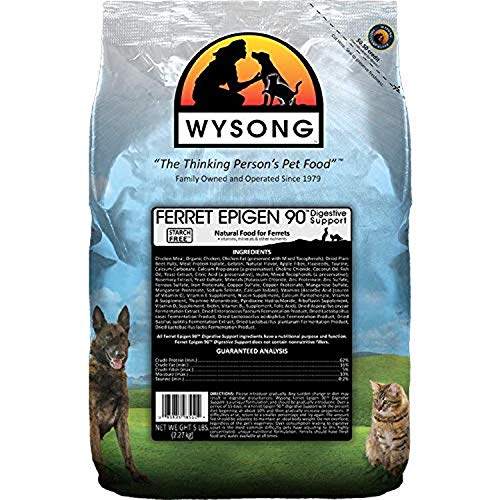
When digestive health is a top priority for your ferret, Wysong Ferret Epigen 90 Digestive Support stands out as the best choice. I rely on its 62% protein and 16% fat formula for maximum nutrient absorption. It contains no starch-only high-meat ingredients, including organic sources, aligned with a ferret’s carnivorous biology. Each serving is enhanced with probiotics, prebiotics, and digestive enzymes to promote consistent, firm stools. I appreciate the added phytonutrients, nutraceuticals, and natural-form antioxidants. Vitamins and minerals are precisely balanced. Wysong’s 1979 founding and focus on species-appropriate diets give me confidence. The 5 lb bag supports long-term digestive wellness.
Best For: Ferret owners seeking a high-protein, starch-free diet specifically formulated to support optimal digestive health and nutrient absorption.
Pros:
- Features a 62% protein, 16% fat formula with no starch, aligning with ferrets’ natural carnivorous diet
- Enhanced with probiotics, prebiotics, and digestive enzymes to promote firm stools and digestive balance
- Fortified with phytonutrients, natural antioxidants, vitamins, and minerals for comprehensive nutrition
Cons:
- Higher price point compared to conventional ferret foods
- Limited availability outside specialty pet stores or online retailers
- The high protein content may not be suitable for ferrets with certain medical conditions requiring dietary restrictions
Higgins Pet Food Intune Ferret 4Lb

This high-quality diet stands out for ferret owners who prioritize a clean, biologically appropriate ingredient profile with traceable protein sourcing. I rely on Higgins Pet Food Intune Ferret 4Lb because it’s made in the USA with sustainably sourced Alaska pollock as the primary protein. It’s grain-free and不含 peas, meat by-products, artificial colors, preservatives, or flavors. Omega-3 and omega-6 fatty acids support skin and coat health. Vitamins C and E enhance immune function. Calcium and phosphorus promote strong teeth and bones. Each 4-pound bag delivers consistent, species-specific nutrition.
Best For: Ferret owners seeking a high-quality, grain-free diet with sustainable, traceable protein and no artificial additives.
Pros:
- Sustainably sourced Alaska pollock is the primary protein, supporting a biologically appropriate diet
- Rich in omega-3 and omega-6 fatty acids for healthy skin and coat, plus vitamins C and E for immune support
- Free from grains, peas, meat by-products, and artificial colors, preservatives, or flavors
Cons:
- Limited protein variety may not suit ferrets needing rotational diets
- Higher price point compared to conventional ferret foods
- Only available in a 4-pound bag, which may be inconvenient for bulk feeders
Marshall Ferret Diet Dry Food 6 lbs

Marshall Ferret Diet Dry Food 6 lbs stands out as the best choice for ferret owners who prioritize high animal protein and species-appropriate nutrition. I rely on its 38% crude protein and 18% fat content to fuel my ferret’s energy and muscle maintenance. Chicken is the first ingredient, providing high-quality animal protein. The formula includes chicken by-products (organs only) and chicken by-product meal for digestibility and nutrient density. Dried beet pulp and brewer’s yeast support gut health. With 3.5% fiber, it promotes firm stools. I follow feeding guidelines strictly-offering it free choice, limiting treats, and replacing food daily.
Best For: Ferret owners seeking a high-protein, species-appropriate dry food formulated by experts to support their pet’s carnivorous dietary needs and overall health.
Pros:
- High 38% crude protein and 18% fat content from quality animal sources to support energy, muscle maintenance, and overall vitality
- Developed by veterinarians and ferret nutrition experts, featuring chicken as the first ingredient and including essential amino acids and vitamins
- Promotes digestive health with optimal fiber levels, highly digestible ingredients, and beneficial additives like brewer’s yeast and dried beet pulp
Cons:
- Contains corn meal and dried beet pulp, which are less ideal for strict carnivores and may cause digestive sensitivities in some ferrets
- Relies on chicken by-products instead of whole meat as primary ingredients, which may be a concern for some pet owners
- Free-choice feeding recommendation may lead to overeating or food wastage if not monitored closely
Mazuri | Ferret Food | 5 Pound (5 LB) Bag

If you’re looking for athat mirrors the natural, meat-heavy diet of a ferret’s wild ancestors, Mazuri’s 5-pound dry kibble stands out as a top-tier choice. It’s formulated with high-quality animal proteins to meet your ferret’s strict carnivorous needs. The extruded kibble design aids digestibility and appeals to picky eaters. Omega-3 fatty acids support skin health and a glossy coat. I appreciate the added taurine and natural Vitamin E-key for heart, immune, and reproductive health. Live probiotics boost gut function. It’s free from soy, peas, wheat, and corn-reducing allergy risks.
Best For: Ferret owners seeking a high-protein, nutritionally complete diet that supports digestive health, skin and coat condition, and overall wellness.
Pros:
- High-quality animal protein sources meet the carnivorous dietary needs of ferrets
- Contains Omega-3 fatty acids, taurine, and natural Vitamin E to support skin, heart, immune, and reproductive health
- Includes live probiotics and is free from soy, peas, wheat, and corn for better digestion and reduced allergy risks
Cons:
- Higher price point compared to some other ferret food brands
- Some ferrets may be sensitive to specific animal proteins used
- Limited availability in certain retail stores, may require online purchase
Marshall Select Chicken Formula Ferret Diet (4 lbs)

Since fresh chicken is the first ingredient and makes up 75% of each 4 lb bag, this formula works best for ferrets that require a high-meat, species-appropriate diet. I rely on it because it delivers 36% crude protein and 18% fat-ideal for muscle maintenance and sustained energy. The 4% fiber content supports digestive health and firm stool. Developed by veterinarians, it includes Omega-3 fatty acids and essential amino acids for coat health and metabolic function. I use it as a complete diet, offering it free-choice. I limit treats to 10% of intake, replace food daily, and always provide fresh water.
Best For: Ferrets that thrive on a high-meat, species-appropriate diet with optimal protein and fat levels for active, carnivorous metabolism.
Pros:
- High-quality, fresh chicken as the first ingredient, providing 75% fresh chicken per bag for superior digestibility
- Balanced 36% protein and 18% fat levels support muscle maintenance, energy, and overall health
- Veterinarian-developed with added Omega-3 fatty acids and amino acids for coat and metabolic health
Cons:
- May be too high in protein or fat for less active or senior ferrets with reduced metabolic needs
- Free-choice feeding requirement may lead to overeating if not monitored carefully
- Contains 4% fiber, which may be on the higher side for some ferrets sensitive to plant-based ingredients
Wysong Ferret Epigen 90 Natural Food

When you’re feeding a strict carnivore that evolved without the ability to process carbohydrates, choosing a starch-free diet isn’t just ideal-it’s essential. I rely on Wysong Ferret Epigen 90 because it’s the first extruded kibble with zero starch. It’s meat-based, 90% animal ingredients, packed with 42% protein and rich in omega-3s. This 5.63-pound bag delivers a nutrient-dense profile fortified with probiotics, enzymes, and phytonutrients. At 7.5 x 11 x 4 inches, the package stores easily. I introduce it slowly-it’s that potent. For active ferrets needing peak coat and weight health, it’s unmatched. No other kibble matches its concentration.
Best For: Ferret owners seeking a starch-free, high-protein, meat-based diet that supports optimal health for strict carnivores.
Pros:
- First starch-free extruded kibble specifically designed for carnivores like ferrets
- Extremely nutrient-dense with 90% animal ingredients and 42% protein for peak coat, weight, and energy
- Fortified with probiotics, enzymes, omega-3s, and phytonutrients to support digestion and overall health
Cons:
- Requires very slow, gradual introduction which may be inconvenient for some owners
- High nutrient concentration may be too potent for sensitive or less active ferrets
- Premium pricing compared to conventional ferret kibbles due to specialized formulation
Marshall Ferret Diet Senior Formula (4 lbs)

Marshall Ferret Diet Senior Formula (4 lbs) is the best choice for older ferrets-especially those aged four years and beyond-who need targeted nutritional support to maintain muscle mass and digestive efficiency. I rely on its 34% crude protein and 17% fat content to meet the high metabolic demands of aging obligate carnivores. Real meat, including chicken and chicken by-product meal, fuels muscle retention. The 3% fiber blend, with dried beet pulp and oatmeal, supports consistent stool quality and gut motility. A veterinarian-developed formula guarantees balanced amino acids-like DL-methionine and L-lysine-for organ and immune health. I replace it daily for freshness and pair it with constant clean water.
Best For: Senior ferrets aged 4 years and older, especially those with reduced activity levels or weight management needs, seeking targeted support for muscle maintenance and digestive health.
Pros:
- Formulated with 34% crude protein and 17% fat to meet the metabolic demands of aging obligate carnivores
- Includes real meat and veterinarian-developed amino acid balance (DL-methionine, L-lysine) for muscle and immune support
- Contains fiber-rich ingredients like dried beet pulp and oatmeal to promote healthy digestion and consistent stool quality
Cons:
- Contains corn meal, a carbohydrate source that may not align with a strictly carnivorous diet
- Includes chicken by-products, which some pet owners may prefer to avoid
- Requires daily replacement to maintain freshness, increasing potential for food waste
Factors to Consider When Choosing Ferret Food
You need to prioritize high protein content-look for at least 36–40% crude protein from animal sources-since ferrets are obligate carnivores with rapid metabolisms. Choose foods with low carbohydrate levels, ideally under 20%, and guarantee the first ingredients are real meat like chicken, turkey, or lamb to match their biological needs. Don’t overlook taurine enrichment and digestible animal-based fats, which support heart health and nutrient absorption critical for long-term wellness.
High Protein Content
Protein is the cornerstone of a ferret’s diet, and getting it right matters for long-term health. Ferrets need at least 34% crude protein to meet their metabolic demands as obligate carnivores. You should choose foods with 38% or more crude protein to support peak energy and physiological function. High-quality animal-based proteins-like chicken, turkey, or egg-must dominate the ingredient list. These sources are highly digestible, ensuring efficient nutrient absorption and reducing strain on the digestive system. Avoid plant-based proteins; they’re poorly utilized and can disrupt amino acid balance. While protein is essential, don’t exceed 60% crude protein without veterinary guidance-such concentrations risk nutrient imbalances and kidney stress. Aim for precision. Your ferret thrives on consistency, not excess. Prioritize foods that list whole meat first and deliver sustained amino acid profiles. This isn’t just nutrition-it’s biological necessity.
Low Carbohydrate Levels
Ferrets thrive on diets that closely resemble their natural prey-based intake, which is extremely low in carbohydrates. You should feed a diet with less than 3% dietary fiber and under 2% total carbohydrates. Their short digestive tracts can’t process plant-based nutrients, so carbs offer little nutritional value and may cause harm. High carbohydrate levels trigger blood sugar spikes, increasing the risk of insulinoma, a common and dangerous pancreatic tumor in ferrets. Always avoid grains, corn, soy, peas, and potatoes-these ingredients drastically raise carbohydrate content. Choose ferret food with crude fiber below 3.5% to support healthy digestion. Ideal formulas contain zero plant fillers, mimicking the nutritional profile of whole prey. Carbohydrates, when present, should come only from animal sources like liver or muscle tissue. Keeping carbs minimal guarantees metabolic balance and long-term health.
Animal Based Ingredients
Nutrition starts with the label. You need to see animal-based proteins like chicken or poultry as the first ingredient-ferrets are obligate carnivores, so plant-based proteins won’t cut it. Choose foods with at least 34% crude protein from animal sources to maintain muscle and support metabolism. These proteins must include organ meats, like liver or heart, which are dense in essential amino acids and essential nutrients. Animal-based fats should make up 17–18% of the diet, delivering concentrated energy and keeping skin healthy and coat shiny. Avoid products listing plant proteins high on the ingredient list-they can disrupt digestion and cause nutrient imbalances. Animal by-products aren’t fillers; they’re biologically appropriate components that mirror what ferrets eat in the wild. Always prioritize whole meat sources and recognizable animal ingredients to meet your ferret’s strict dietary needs.
Taurine Enrichment Necessary
Since taurine is a critical nutrient that ferrets can’t produce on their own, it must be included in their diet through supplementation. This essential amino acid supports cardiac function, vision, and metabolic health. Without enough taurine, ferrets risk developing dilated cardiomyopathy-a serious, often fatal heart condition. As obligate carnivores, ferrets rely on animal-based nutrition, but processing dry food can degrade natural taurine levels. That’s why high-quality ferret diets include added taurine to compensate. Look for foods that provide at least 0.1% taurine on a dry matter basis-levels proven to meet carnivore requirements. Reputable brands formulate with precise supplementation to guarantee stability and bioavailability. Taurine enrichment isn’t optional; it’s a non-negotiable component of a complete ferret diet. Check labels carefully. Consistent intake prevents deficiency and sustains long-term organ function. Your ferret depends on you to supply it daily.
Digestive Health Support
When selecting a diet that supports ideal digestive health, prioritize formulas with precise fiber levels, high digestibility, and targeted gut-supporting additives. Choose foods with 3.5% to 4% fiber to maintain healthy stool consistency and prevent gastrointestinal issues. Ferrets are obligate carnivores, so select animal-based proteins like chicken, turkey, or egg as the primary ingredients. High digestibility guarantees efficient nutrient absorption and minimizes stool odor and volume. Look for added prebiotics, probiotics, and digestive enzymes-they support balanced gut flora and improve digestion. Avoid plant-based fillers such as corn, soy, peas, and potatoes; they are poorly digested and may cause intestinal upset. Opt for a fat content of 17% to 18% to support energy demands and aid absorption of fat-soluble vitamins. These nutrients are essential for robust digestive and metabolic function.
Age Specific Formulations
As your ferret ages, its dietary needs shift markedly, requiring tailored nutrition to match its life stage. Kits need at least 35% crude protein and 18–20% fat to fuel rapid growth and high metabolism. These levels support muscle development and sustained energy. Adult ferrets do best with 32–38% protein and 15–20% fat, balancing muscle maintenance and caloric intake. This range prevents obesity while meeting metabolic demands. Seniors, typically over four years, benefit from slightly lower fat-around 15%-and moderate fiber to aid digestion and weight control. Digestive efficiency declines with age, making nutrient absorption more critical. Age-specific formulas align macronutrients with metabolic changes, reducing risks like insulinoma. You’re not just feeding-you’re preventing disease. Proper formulation supports organ function, energy, and longevity. Matching food to life stage guarantees your ferret stays lean, active, and healthy. Choose precisely.
No Artificial Additives
Every premium ferret diet should exclude artificial additives-plain and simple. Synthetic colors, flavors, and preservatives offer no nutritional benefit and can trigger digestive upset or long-term organ stress in these sensitive carnivores. Instead, choose foods preserved with mixed tocopherols (a natural form of vitamin E), which maintain fat stability and nutrient integrity without introducing harmful chemicals. Ferrets’ short digestive tracts absorb additives quickly, increasing exposure to compounds that impair liver and kidney function over time. By eliminating artificial ingredients, you reduce metabolic strain and support efficient nutrient processing. High-quality formulas use whole animal proteins and organs for natural vitamin enrichment, improving bioavailability and minimizing inflammation risks. This approach mirrors the clean, prey-based intake of wild mustelids, aligning with their obligate carnivore physiology. Avoiding synthetic additives isn’t just safer-it’s biologically appropriate, promoting longevity through diet precision.
Frequently Asked Questions
How Often Should I Feed My Ferret Each Day?
You should feed your ferret 6 to 8 small meals daily. Ferrets have a short digestive tract and rapid metabolism, requiring frequent nutrient intake. Their average gut transit time is 3–4 hours, making consistent feeding essential. Offer high-protein (30–40%), low-fiber (2–3%) food in measured portions every 3–4 waking hours. Free-feeding works only if you monitor intake to prevent overeating or spoilage. Prevent hypoglycemia and digestive stress through routine, spaced feeding intervals aligned with their natural carnivorous physiology.
Can Ferrets Eat Cat Food in a Pinch?
Yes, you can feed ferret cat food in a pinch, but only high-protein, low-fiber kitten formulas. Ferrets need 30–40% animal-based protein and 15–20% fat. Most adult cat foods fall short in protein and contain plant fillers. Choose grain-free, named-meat-first options like chicken or turkey meal. Avoid fish-based or high-carbohydrate blends. It’s not ideal long-term-ferrets have unique digestive needs-but it’s survivable for a day or two.
Do Ferrets Need Water Available at All Times?
Yes, you must provide fresh water to your ferret at all times. Dehydration can occur rapidly, leading to serious health complications. Ferrets have high metabolic rates and require constant hydration to support organ function. Use a clean, spill-proof water bottle with a metal spout, checked daily for clogs. Water intake averages 75–100 ml per kg of body weight daily. Replace water every 12 hours to prevent bacterial growth and guarantee peak health.
Is It Safe to Give Ferrets Treats Daily?
Yes, you can give ferrets treats daily, but only in strict moderation. Limit treats to 1–2 teaspoons per day to prevent obesity and nutritional imbalances. Choose meat-based, low-fiber, high-protein options with minimal carbohydrates-ideally under 3% carbs and 15–20% fat. Avoid sugary, dairy, or plant-based treats. Overfeeding treats displaces essential nutrients from their primary diet, increasing risks of insulinoma and gastrointestinal issues over time.
Should I Refrigerate Opened Ferret Food?
Yes, you should refrigerate opened ferret food. Exposure to air and heat degrades fats, causing oxidation and rancidity. Ferret diets are high in animal-based fats, which spoil faster than dry kibble for dogs or cats. Store opened food in an airtight container and keep it at or below 40°F (4°C). Use within 30 days for maximum nutrient retention. This preserves essential fatty acids and prevents spoilage.