Best Dog Food for a German Shepherd Puppy That Parents Trust
You need a formula tailored to your German Shepherd puppy’s growth and breed-specific needs. Royal Canin German Shepherd Puppy delivers with 8–12 mm ovoid kibble designed for their long muzzle, promoting proper chewing. It contains glucosamine (1,000 mg/kg), chondroitin, DHA (0.1% minimum), and a precise 1.2:1 calcium-to-phosphorus ratio. The diet supports joint health, immune function, and digestion-all in a highly palatable, chicken-based formula. Trusted by breeders, it’s a benchmark for developmental nutrition. More details follow.
We are supported by our audience. When you purchase through links on our site, we may earn an affiliate commission, at no extra cost for you. Learn more. Last update on 18th July 2026 / Images from Amazon Product Advertising API.
Notable Insights
- Royal Canin German Shepherd Puppy food supports joint and immune health with glucosamine, chondroitin, and vitamin E.
- Purina Pro Plan Large Breed Puppy uses real chicken and DHA for brain, joint, and coat development.
- Blue Buffalo Life Protection Formula includes DHA, ARA, and LifeSource Bits for immune and cognitive support.
- IAMS Large Breed Puppy provides 32% protein from real chicken and omega-3 DHA for brain and muscle growth.
- Hill’s Science Diet offers DHA, balanced minerals, and controlled energy to support bone and brain development.
Royal Canin German Shepherd Puppy Breed Specific Dry Dog Food, 30 lb. bag

If you own a purebred German Shepherd puppy, this Royal Canin formula is designed specifically for your dog’s unique developmental needs. It supports immune health with an antioxidant complex, including vitamin E. The food promotes digestive wellness using highly digestible proteins and precise fiber levels. Glucosamine and chondroitin aid joint and bone development in this large-breed puppy food. Kibble shape is engineered for the German Shepherd’s long muzzle, encouraging proper chewing. It contains 3,639 kcal/kg, or 331 kcal per cup. Feed 2-3/4 to 6-1/4 cups daily, based on age and weight. Shift over 5–7 days. Switch to adult formula at 15 months.
Best For: Purebred German Shepherd puppies aged 8 weeks to 15 months who need breed-specific nutrition to support immune, digestive, and joint health during growth.
Pros:
- Supports immune system development with an exclusive antioxidant complex, including vitamin E
- Promotes digestive health with highly digestible proteins and tailored fiber content
- Kibble shape designed for German Shepherd’s long muzzle to encourage proper chewing and dental health
Cons:
- Limited to German Shepherd breed only, reducing versatility for multi-breed households
- Relatively high price point compared to non-breed-specific puppy formulas
- Gradual transition required, which may be inconvenient for some pet owners
Royal Canin German Shepherd Puppy Food
Royal Canin German Shepherd Puppy Food stands out as the best choice for owners committed to raising healthy, well-developed German Shepherd puppies through scientifically crafted nutrition. It’s a dry kibble formula designed for puppies 8 weeks to 15 months old. The food contains highly digestible proteins and specific fibers to support digestive health. Glucosamine and chondroitin promote strong joint and bone development. Antioxidants and vitamin E strengthen the immune system. Kibble shape is tailored to the German Shepherd’s strong muzzle, encouraging proper chewing. It measures 12.28 x 8.23 x 3.27 inches and comes in a 2.5-pound bag (ASIN: B0FPRGTSGL).
Best For: Puppy owners of German Shepherds seeking breed-specific nutrition to support healthy growth and development from 8 weeks to 15 months old.
Pros:
- Contains glucosamine and chondroitin to support joint and bone development in large-breed puppies
- Tailored kibble shape encourages proper chewing and is designed for the German Shepherd’s strong muzzle
- Includes antioxidants and vitamin E to promote a healthy immune system and digestive fibers for optimal stool quality
Cons:
- Limited to a 2.5-pound bag size, which may require frequent repurchasing for larger households
- Not formulated for adult or senior German Shepherds, limiting long-term use
- Availability is listed for September 5, 2025, indicating it may not yet be on the market
Purina Pro Plan Large Breed Puppy Food

Purina Pro Plan Large Breed Puppy Food is best for German Shepherd puppies when controlled growth and joint development are top priorities. It’s formulated to support the ideal growth rate, reducing strain on developing bones and joints. Glucosamine helps build strong cartilage, essential for large breeds prone to hip dysplasia. DHA from omega-rich fish oil supports brain and vision development. Real chicken is the first ingredient, delivering a high-protein diet with 26% crude protein. Vitamin A and omega-6 fatty acids nourish skin and coat. Each cup contains 408 kcal, meeting energy needs without excess weight gain.
Best For: Large breed puppies like German Shepherds who need controlled growth and strong joint development.
Pros:
- Contains glucosamine and DHA to support joint health and brain/vision development
- Features real chicken as the first ingredient with a high-protein 26% crude protein formula
- Includes vitamin A and omega-6 fatty acids to promote healthy skin and coat
Cons:
- May be more expensive compared to other large breed puppy formulas
- Calorie density requires careful portion control to avoid overfeeding
- Chicken-based formula may not suit puppies with poultry sensitivities
Blue Buffalo Puppy Dry Food (5 lb)
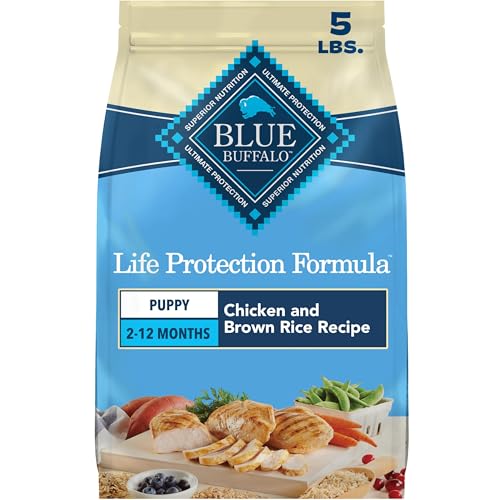
This Blue Buffalo Puppy Dry Food (5 lb) is my top pick for German Shepherd puppy owners who prioritize natural ingredients and targeted developmental support. Real chicken is the first ingredient, providing high-quality protein for growing muscles. The formula contains no poultry by-products, corn, wheat, or soy-common allergens in lower-grade foods. DHA and ARA, derived from mother’s milk, support cognitive development and retinal health. LifeSource Bits deliver a precise blend of antioxidants, vitamins, and minerals to strengthen immune function and maintain oxidative balance. This 5-pound trial bag is part of Blue Buffalo’s Life Protection Formula line, featuring natural ingredients and enhanced packaging with clear benefit highlights.
Best For: Puppy owners seeking a natural, premium dry dog food with real chicken and no common allergens to support healthy growth and development.
Pros:
- Real chicken is the first ingredient, providing high-quality protein for muscle development
- Contains DHA and ARA to support cognitive function and retinal health in growing puppies
- LifeSource Bits offer a blend of antioxidants, vitamins, and minerals for immune support and oxidative balance
Cons:
- Limited to a 5-pound trial size, which may not be cost-effective for larger breeds long-term
- Some puppies may be sensitive to ingredients despite the absence of corn, wheat, and soy
- Packaging design varies, which may cause confusion with product updates or versions
IAMS Large Breed Puppy Food (30.6 lb)

My German Shepherd puppy thrives on high-quality protein, and IAMS Large Breed Puppy Food delivers 32% protein from real chicken to fuel strong muscle growth and skeletal development. This nutritionally complete formula provides 100% balanced nutrition with zero fillers, easing the shift to adult dog food. It includes 22 essential nutrients found in mother’s milk, supporting thorough development. Omega-3 DHA enhances brain cognition and learning, making training more effective. Antioxidants boost immune function during critical early stages. Each 30.6 lb bag offers consistent, vet-recommended nutrition tailored for large breed puppies.
Best For: Large breed puppies like German Shepherds that require high-quality protein and balanced nutrition for optimal growth and development.
Pros:
- Contains 32% high-quality protein from real chicken to support strong muscle and skeletal development
- Enriched with omega-3 DHA for enhanced brain cognition and trainability
- Includes 22 essential nutrients found in mother’s milk and antioxidants for comprehensive immune and physical development
Cons:
- Larger bag size may not be ideal for pet owners with limited storage space
- Some puppies may be sensitive to chicken as the primary protein source
- Higher protein content may not suit all large breed puppies with specific dietary restrictions
Purina ONE Plus Puppy Dry Dog Food

When raising a large-breed puppy like a German Shepherd, proper nutrition during growth stages becomes critical to long-term joint and skeletal health, making Purina ONE Plus Puppy Dry Dog Food an ideal choice for owners focused on balanced development. Real chicken is the first ingredient, delivering high-quality protein for strong muscles and heart health. It contains DHA from mother’s milk to support brain and vision development. Four antioxidant sources strengthen the immune system. Glucosamine and precise protein levels promote joint health and controlled growth. The kibble blends crunchy bites with tender morsels, boosting taste without artificial additives. Made in Purina-owned U.S. facilities, it includes a SmartBlend of omega-6 fatty acids, vitamins, and minerals for skin, coat, and overall wellness.
Best For: Large-breed puppy owners seeking a nutritious, balanced diet that supports healthy growth, joint development, and immune function.
Pros:
- Real chicken as the first ingredient provides high-quality protein for muscle and heart development
- Contains DHA and antioxidants to support brain, vision, and immune system health
- Includes glucosamine and controlled protein levels to promote joint health and optimal growth rate
Cons:
- May not be suitable for small or toy breed puppies due to large kibble size and formulation for large breeds
- Contains chicken as a primary ingredient, which may not suit puppies with poultry sensitivities
- Premium price point compared to some other puppy food brands
Bully Max Puppy Food Lamb & Rice

If your German Shepherd puppy has a sensitive stomach or food allergies, Bully Max Puppy Food Lamb & Rice stands out as an ideal choice. I rely on its 24% protein and 14% fat formula to fuel growth and sustain energy. It delivers 419 calories per cup, supporting large-breed development. Lamb is the first ingredient, offering highly digestible, real-meat nutrition. The chicken-free, meat-rich blend includes pork and brown rice for balanced digestion. Omega fatty acids promote skin health and reduce itching. It’s enriched with vitamins A, C, D, E, K, B12, and postbiotics. I trust its True Label policy-no corn, soy, wheat, or artificial additives. Made in the USA, it’s transparent, complete, and formulated for all puppies, including sensitive breeds.
Best For: Puppies with sensitive stomachs or food allergies, especially large breeds like German Shepherds needing high-protein, easily digestible nutrition.
Pros:
- High-protein 24/14 formula with 419 calories per cup supports healthy growth and sustained energy
- Lamb-first, chicken-free recipe with brown rice and pork promotes optimal digestion and skin health
- Transparent True Label policy-free from corn, soy, wheat, and artificial additives, made in the USA
Cons:
- Limited flavor variety due to specialized lamb and rice formulation
- Higher fat content may not suit puppies requiring lower-fat diets
- Premium pricing compared to conventional puppy foods
Hill’s Science Diet Large Breed Puppy Food

Hill’s Science Diet Large Breed Puppy Food stands out as a top choice for German Shepherd puppies due to its precise nutrient profile tailored to support controlled growth and joint health. I rely on its DHA from fish oil to promote healthy brain and eye development. High-quality protein builds strong muscles for active play. Balanced calcium and phosphorus levels support proper bone and tooth formation. It’s formulated specifically for large breed puppies to avoid excessive growth rates that can stress joints. Made in the USA with globally sourced ingredients, it’s a veterinarian-recommended brand I trust for long-term health.
Best For: Large breed puppies, such as German Shepherds, needing controlled growth, joint support, and balanced nutrition for long-term health.
Pros:
- DHA from fish oil supports healthy brain and eye development
- High-quality protein promotes strong muscle growth and active play
- Balanced minerals like calcium and phosphorus aid in proper bone and teeth development
Cons:
- May be more expensive compared to non-veterinarian-recommended brands
- Contains globally sourced ingredients, which some prefer to avoid
- Not suitable for small or medium breed puppies due to breed-specific formulation
Hill’s Science Diet Large Breed Puppy Food
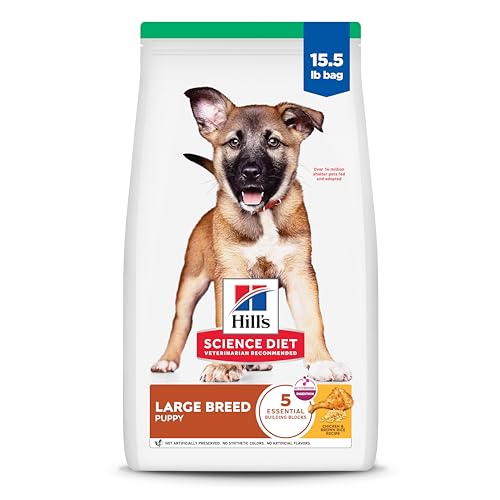
For German Shepherd puppies, proper nutrition from day one shapes a lifetime of health, and Hill’s Science Diet Large Breed Puppy Food stands out as the top choice for owners who prioritize science-backed development. It contains DHA from fish oil, supporting cognitive and visual growth. High-quality protein builds lean muscle mass during rapid growth phases. Balanced calcium and phosphorus levels promote strong bones without overstimulating growth-critical for joint health in large breeds. I feed this formula because it’s made in the USA with globally sourced ingredients and backed by Hill’s rigorous research. It’s the #1 veterinarian-recommended puppy food brand.
Best For: Large breed puppies, like German Shepherds, that need science-backed nutrition for healthy brain, muscle, and bone development during critical growth stages.
Pros:
- Contains DHA from fish oil to support healthy brain and eye development
- Features high-quality protein to fuel growing muscles and active play
- Provides balanced minerals for strong bones and teeth without overstimulating growth
Cons:
- May be more expensive compared to non-veterinarian-recommended brands
- Limited availability in some smaller retail stores
- Some puppies may be sensitive to specific ingredients despite high quality
Hill’s Science Diet Large Breed Puppy Food

When raising a German Shepherd puppy, choosing a food formulated for large breed development is critical to support controlled growth and long-term joint health. I rely on Hill’s Science Diet Large Breed Puppy Food because it’s engineered specifically for puppies like mine. DHA from fish oil supports brain and eye development. High-quality protein builds strong muscles. Balanced calcium and phosphorus ratios promote proper bone and dental growth. The kibble size suits large-breed jaws. It’s made in the USA with global ingredients. Veterinarians widely recommend it. Controlled energy levels help prevent rapid growth, reducing skeletal stress. This diet supports lifelong health.
Best For: Large breed puppies like German Shepherds that require controlled growth, strong joint development, and balanced nutrition for lifelong health.
Pros:
- Contains DHA from fish oil to support healthy brain and eye development
- Features high-quality protein to build strong muscles and sustain active play
- Includes balanced minerals like calcium and phosphorus for optimal bone and dental growth
Cons:
- Not suitable for small or toy breed puppies due to specialized large-breed formulation
- Contains global ingredients, which may concern pet owners preferring locally sourced components
- Higher price point compared to non-veterinarian-recommended puppy foods
Factors to Consider When Choosing Dog Food for a German Shepherd Puppy
You need to choose dog food that meets your German Shepherd puppy’s unique nutritional demands. These dogs require a diet rich in high-quality protein-aim for at least 22% crude protein from animal sources-to support their rapid growth and muscle development. Don’t overlook DHA, joint-support nutrients like glucosamine, and highly digestible ingredients, since German Shepherds are prone to sensitive stomachs and hip dysplasia.
Breed-Specific Nutritional Needs
Nutrition is the foundation for healthy development in German Shepherd puppies. You need a diet with 22–25% protein and 8–12% fat to fuel their rapid growth and sustain high energy. Choose foods rich in animal-based proteins for ideal amino acid profiles. DHA, an omega-3 fatty acid, should be included-at least 50 mg per 1,000 kcal-to support brain and vision development. Glucosamine (minimum 750 mg/kg) and chondroitin work together to promote joint integrity and reduce the risk of hip dysplasia. Antioxidants like vitamin E (50–100 IU/kg) strengthen immune function during early life stages. Look for highly digestible ingredients and avoid fillers, as they improve stool quality. Specific fibers such as beet pulp or FOS aid digestion. A breed-specific formula balances these nutrients precisely. You’re not just feeding a puppy-you’re building a foundation for lifelong health.
Digestive Health Support
Because digestive health directly influences overall well-being, selecting a dog food that supports efficient nutrient absorption and gut balance is critical for German Shepherd puppies. Choose formulas with highly digestible proteins like chicken meal or fish, which reduce fecal bulk and enhance nutrient uptake. Opt for a balanced mix of soluble and insoluble fiber-ideally 2–4% total fiber-to regulate bowel movements and nourish beneficial gut bacteria. Avoid corn, wheat, and soy; these fillers offer little nutrition and often trigger gastrointestinal upset. Instead, select foods with prebiotics (like FOS) or postbiotics that strengthen gut lining integrity and improve digestion. Moderate fat levels-around 10–15%-provide energy without overloading a puppy’s developing system. These components work together like a well-tuned engine, ensuring smooth, consistent digestion and resilient gastrointestinal function from day one.
Joint And Bone Development
Since German Shepherd puppies grow rapidly, their diet must support controlled skeletal development to prevent long-term joint issues. You need to feed a formula with balanced calcium and phosphorus levels-typically 1.2% to 1.8% calcium and a calcium-to-phosphorus ratio of 1.2:1-to avoid skeletal abnormalities. Excess calories push rapid growth, increasing stress on developing bones and joints. Choose food with moderate energy density-around 3,000–3,500 kcal/kg-to support steady growth. Glucosamine (at least 1,000 mg/kg) and chondroitin sulfate support cartilage formation and joint integrity. Omega-3 fatty acids, especially DHA (minimum 0.1% of diet), aid joint tissue development. Zinc (150 mg/kg) and magnesium (0.08%) contribute to bone density. Precise mineral balance is critical-too much or too little disrupts bone remodeling.
High-Quality Protein Source
Your German Shepherd puppy’s joints and bones aren’t the only systems needing precise nutritional support-muscle development hinges on equally careful dietary planning. You need a dog food where high-quality protein is the first ingredient. This guarantees essential amino acids drive lean muscle growth. Aim for at least 22% crude protein to match your puppy’s rapid developmental pace. Animal-based proteins-like chicken, lamb, or fish-deliver superior bioavailability compared to plant sources. These named meats are highly digestible, minimizing waste and maximizing nutrient uptake. Avoid generic “meat meal” or by-products-they lack consistent quality. Consistent intake of premium animal protein supports not just muscles, but also joint and skeletal health in large breeds. Proper protein balance helps your puppy build strength without excess fat. It’s not just about quantity-source matters. Choose formulas with real, identifiable animal proteins to fuel healthy, sustained growth from the inside out.
Dha For Brain Growth
While nurturing a German Shepherd puppy, supporting brain development is just as essential as building strong muscles and bones. DHA, an omega-3 fatty acid found in mother’s milk and fish oil, is vital for healthy neural growth. You’ll want to choose a puppy formula that includes clinically tested levels of DHA to guarantee peak cognitive development. Studies show puppies fed DHA-enriched diets demonstrate improved learning, problem-solving, and trainability. DHA also supports retinal tissue formation, enhancing visual acuity. Since brain development continues through the first 12 to 18 months, consistent DHA intake during this window is pivotal. Look for foods listing fish meal or algae as DHA sources, with concentrations validated by feeding trials. High DHA formulas boost neural connectivity, much like high-speed wiring in a computer. Always verify nutrient levels on the label to match your puppy’s developmental needs.
Kibble Shape And Size
Choosing the right kibble shape and size matters more than you might think when feeding a German Shepherd puppy. Their elongated muzzle and strong jaw require kibble designed for efficient chewing. Opt for larger, uniquely shaped pieces-typically 8–12 mm in diameter-that match their natural bite pattern. These geometries encourage proper jaw alignment during chewing and increase mechanical abrasion, reducing plaque buildup by up to 20% over standard kibble. Larger sizes also slow eating, cutting the risk of gulping that can lead to bloat or poor digestion. Kibble with textured surfaces enhances acceptance during weaning, stimulating interest through touch and scent. Specific shapes like ovoid or grooved tablets break down plaque more effectively than round or flat variants. Always match kibble dimensions to your puppy’s mouth size-too small, and it defeats dental benefits; too large, and they avoid chewing altogether.
Frequently Asked Questions
How Often Should I Feed My German Shepherd Puppy Each Day?
You should feed your German Shepherd puppy 3 to 4 times daily. Puppies aged 8 to 12 weeks need frequent meals to support rapid growth. Divide the recommended daily amount into equal portions. From 3 to 6 months, maintain 3 meals per day. After 6 months, shift to 2 meals. Consistent feeding times regulate digestion. Always provide fresh water. Follow feeding guidelines on food packaging based on weight and age.
Can I Mix Dry and Wet Food for My Puppy?
Yes, you can mix dry and wet food for your puppy. Combining both types supports hydration and nutritional balance. Use a 60:40 ratio-60% dry kibble to 40% wet food-based on daily caloric needs. Guarantee both products meet AAFCO nutrient profiles for growth. Monitor stool consistency and adjust ratios if digestive upset occurs. Always provide fresh water. Mixing textures can ease shifts during feeding changes.
Should I Give My Puppy Supplements With Their Dog Food?
No, you shouldn’t give your puppy supplements unless a veterinarian recommends them. Commercial puppy foods meeting AAFCO standards already provide balanced nutrition. Adding supplements can cause nutrient imbalances-excess calcium, for example, may contribute to skeletal issues in large breeds like German Shepherds. Over-supplementation risks joint problems and developmental abnormalities. Stick to a high-quality, breed-specific diet. Monitor growth rates and consult your vet before introducing any additive.
How Do I Transition My Puppy to a New Dog Food?
You switch your puppy to new dog food over 7–10 days to prevent digestive upset. Start by mixing 25% new food with 75% old food for days 1–2. Increase the new food by 25% every two days. By day 7, feed 100% new food. Monitor stool consistency and energy levels. Sudden changes can cause diarrhea or vomiting due to gut microbiome disruption.
Is It Normal for My Puppy to Drink a Lot of Water?
Yes, it’s normal for your puppy to drink a lot of water. Puppies have higher hydration needs due to rapid growth and elevated metabolism. A German Shepherd puppy typically drinks 0.5 to 1 ounce of water per pound of body weight daily. Increase intake may also follow active play, dry food consumption, or warm environments. Monitor for excessive urination or lethargy, which could indicate underlying health issues.