Best Betta Fish Food That Keeps Your Fish Healthy and Happy
You need a high-protein, 35–50% crude protein diet from animal-based sources like fish meal, shrimp, or insect larvae to meet your betta’s metabolic needs. Choose foods with floating 1mm pellets for easy surface feeding and ideal digestion. Prioritize formulas with probiotics, vitamin C, and omega fatty acids to support immunity, color, and water quality. Avoid fillers like wheat gluten. Premium options use Black Soldier Fly Larvae or krill for superior nutrient absorption and less waste. The top choices balance nutrition, digestibility, and ingredient quality to keep your betta thriving-discover which specific products deliver these benefits most effectively.
We are supported by our audience. When you purchase through links on our site, we may earn an affiliate commission, at no extra cost for you. Learn more. Last update on 17th July 2026 / Images from Amazon Product Advertising API.
Notable Insights
- Choose high-quality betta food with 35–50% animal-based protein like fish meal, shrimp, or Black Soldier Fly Larvae for optimal health.
- Prioritize foods listing whole animal ingredients in the first three positions to ensure proper nutrition and digestibility.
- Select floating or slow-sinking micro-pellets (0.5–1.5mm) that match betta feeding behavior and reduce water pollution.
- Feed probiotic-enriched, highly digestible formulas to improve nutrient absorption and minimize waste for better water quality.
- Include natural color enhancers like astaxanthin and stabilized vitamin C to boost immunity and enhance vibrant pigmentation.
TetraBetta PLUS Floating Mini Pellets (1.2 oz)

The TetraBetta PLUS Floating Mini Pellets are the best choice for 1 in 3 betta owners seeking a nutritionally complete, surface-floating food that supports both health and vibrancy. I rely on this 1.2 oz high-protein formula because it’s designed specifically for betta splendens and other top-feeding tropical fish. Each pellet floats, staying intact at the surface for easy access. Omega-3 fatty acids fuel energy and support muscle development. Natural color enhancers promote richer pigmentation over time. The mini crisps reduce waste and uneaten food. Its clear water formula helps limit cloudiness and maintains water quality. I’ve seen consistent results within two weeks.
Best For: Betta fish owners seeking a high-protein, floating food that supports vibrant coloration, optimal health, and clean water conditions.
Pros:
- Specially formulated for betta splendens and other top-feeding tropical fish
- Contains omega-3 fatty acids for energy and muscle development
- Advanced clear water formula helps maintain aquarium cleanliness
Cons:
- Small 1.2 oz package may require frequent repurchasing for multiple fish
- Floating pellets may degrade if left uneaten for prolonged periods
- Natural color enhancers may take time to show visible results
Ultra Fresh Betta Fish Food Pro Shrimp Patties
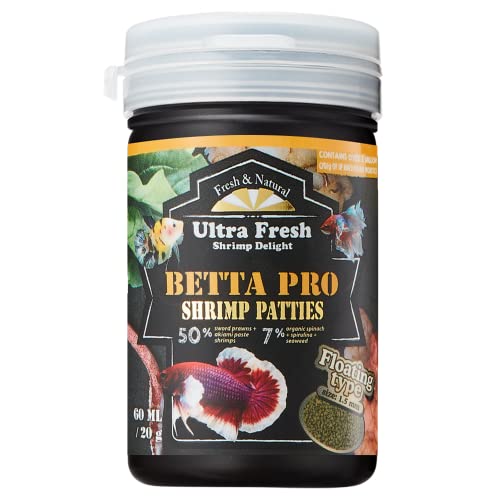
Ultra Fresh Betta Fish Food Pro Shrimp Patties suit serious hobbyists who demand clean ingredients and measurable results. I rely on its 50% sword prawn and akiami shrimp content for high-quality protein. The 8:2 meat-to-vegetable ratio supports ideal nutrition. Organic spinach, spirulina, and seaweed add essential micronutrients. It contains vitamins A, C, D3, E, and B-complex for immunity and color vibrance. 3 million CFUs/g of probiotics improve digestion and reduce waste. 1.5mm granules fit adult bettas’ mouths, enhancing intake. I feed mine 1–3 times daily, only what they consume in 3 minutes. No fillers, no artificial additives.
Best For: Serious betta keepers seeking a high-protein, additive-free diet with probiotics to support digestion, color, and water quality.
Pros:
- Contains 50% sword prawns and akiami shrimp for superior protein quality and palatability
- Enhanced with probiotics (3 million CFUs/g) to improve digestion and reduce tank waste
- Rich in essential vitamins and nutrients with a balanced 8:2 meat-to-vegetable ratio for optimal health
Cons:
- Small net weight (0.7 oz) may require frequent repurchasing for larger tanks or multiple bettas
- Granule size may be too large for very small or juvenile bettas
- Limited availability information beyond the initial release date (July 2021)
Fluval Betta Freeze Dried Bloodworms, 0.18 oz.

You’ll find Fluval Betta Freeze Dried Bloodworms ideal if your priority is delivering a high-protein, biologically appropriate treat that mirrors a Betta’s natural diet. Each 0.18 oz package contains nearly 100% pure freeze-dried bloodworms. Freeze-drying locks in nutrients and flavor while eliminating pathogens. Protein content exceeds 50%, supporting muscle development and vibrant coloration. I use them twice weekly to supplement my Betta’s staple diet. They trigger intense feeding responses, satisfying innate hunting instincts. Rehydrating before feeding improves digestibility. Size averages 0.25 inches, perfect for small Betta mouths. No fillers or artificial additives are present. This treat enhances energy without polluting water.
Best For: Betta owners seeking a high-protein, natural treat that supports health, coloration, and instinctual feeding behaviors.
Pros:
- High protein content (over 50%) promotes muscle growth and vibrant colors
- Freeze-dried to preserve nutrients and eliminate pathogens without additives or fillers
- Stimulates natural hunting instincts and is easily rehydrated for safe feeding
Cons:
- Requires rehydration before feeding, adding an extra step
- Small package size (0.18 oz) may run out quickly with frequent use
- Primarily a treat, not a complete daily diet replacement
Tetra BettaMin Select-A-Food 1.34 Ounces, Fish Flakes, Variety Pack

While many betta fish foods offer a single type of feed, I choose the Tetra BettaMin Select-A-Food 1.34 Ounce variety pack when I want precise control over a balanced, varied diet for my betta. The three-chamber canister holds BettaMin flakes, freeze-dried shrimp bits, and floating mini pellets-each dialable via a rotating top. I feed two to three times daily, offering only what my betta consumes within minutes. At 1.88 x 1.88 x 3.25 inches, the compact design fits easily on my shelf. This staple diet supports all life stages, delivers complete nutrition, and enhances coloration in half-moon, crown, and other betta types.
Best For: Beginner and experienced fish keepers seeking a convenient, nutritionally balanced diet for betta splendens and other top-feeding tropical fish.
Pros:
- Offers a varied diet with flakes, freeze-dried shrimp bits, and floating mini pellets in a single multi-compartment container
- Unique dial-top dispenser allows precise selection of food type to promote dietary variety and optimal health
- Formulated to enhance natural coloration and support all life stages of bettas, including half-moon and crown tail varieties
Cons:
- Small portion sizes may require frequent repurchasing for multiple-betta households
- Plastic container may degrade over time with frequent handling or exposure to moisture
- Shipment dimensions suggest limited quantity per canister, potentially increasing long-term cost
Hikari Tropical Betta Bio-Gold Fish Food, 0.70 oz (20g)

Hikari Tropical Betta Bio-Gold Fish Food is an ideal choice for betta owners who prioritize scientifically backed nutrition and long-term health support. I rely on its premium fish meal base for high-quality protein. The formula includes stabilized vitamin C and grape seed extract, which support immune function and reduce cellular aging. At 20 grams (0.70 oz), the compact package stays fresh and fits standard storage. Bio-technology enhances nutrient absorption and promotes vivid coloration. It’s designed for all life stages and daily feeding. Dimensions: 4.8 x 2.7 x 0.6 inches. Ideal for indoor aquariums.
Best For: Betta owners seeking a scientifically formulated, daily diet that supports immunity, vitality, and color enhancement for fish at all life stages.
Pros:
- Specially designed with stabilized vitamin C and grape seed extract to boost immune health and reduce aging effects
- Utilizes bio-technology for improved nutrient absorption and vibrant coloration
- Made with premium fish meal as a high-quality protein source, suitable for daily feeding
Cons:
- Small 20g package may require frequent repurchasing for multiple bettas or larger collections
- Limited to betta and small tropical fish; not suitable for larger or herbivorous species
- No feeding scoop included, making portion control less precise
Tetra 16838 BettaMin Flakes, 0.81-Ounce,Blacks & Grays

Tetra 16838 BettaMin Flakes are an ideal choice for betta keepers who prioritize color enhancement and immune support in a compact, measured feeding format. I rely on this 0.81-ounce formulation because it’s nutritionally complete, featuring carotenoids that intensify reds and oranges in Siamese fighting fish. The small, thin flakes include krill shrimp, ensuring bettas consume every bite with ease. My fish show improved energy thanks to the ProCare Formula, which supports natural immune defenses. I feed two to three times daily, offering only what they can finish in minutes to maintain water quality.
Best For: Betta fish owners seeking a nutritionally complete, color-enhancing flake food that supports immune health in a convenient, small-size format.
Pros:
- Contains carotenoids to intensify reds and oranges in betta fish
- Includes ProCare Formula to support immune system function
- Small, thin flakes with krill shrimp for easy consumption and high palatability
Cons:
- May not appeal to bettas preferring pellet or live food formats
- Limited to 0.81-ounce quantity, requiring frequent repurchasing for multiple fish
- Color enhancement focused on reds and oranges, less impact on black and gray tones
Fluval Bug Bites Betta Fish Food

Fluval Bug Bites Betta Fish Food is my top pick for betta owners who prioritize protein-rich, natural nutrition with sustainable sourcing. It features up to 40% Black Soldier Fly Larvae as the first ingredient, providing highly digestible animal-based protein. Whole salmon adds essential Omega-3 and Omega-6 fatty acids, supporting vibrant coloration and healthy fins. The formula includes vitamins, amino acids, and minerals for balanced daily nutrition. Slow-sinking micro granules (0.25–1.0 mm) let bettas feed at their preferred depth. Feed what they can consume in two minutes, two to three times daily. Packaged in a 1.05 oz plastic container (3.43 x 1.57 x 1.5 in), it’s sustainably processed in small batches for freshness.
Best For: Betta fish owners seeking a high-protein, sustainably sourced diet that supports vibrant coloration, healthy fins, and optimal digestion.
Pros:
- Contains up to 40% Black Soldier Fly Larvae as the first ingredient, providing highly digestible, natural animal-based protein
- Enriched with whole salmon for Omega-3 and Omega-6 fatty acids that promote skin, scale, and fin health
- Slow-sinking micro granules (0.25–1.0 mm) allow bettas to feed at their preferred water level, reducing waste
Cons:
- Small 1.05 oz package size may require frequent repurchasing for regular users
- Some picky eaters may take time to adjust to the granule texture or insect-based ingredient
- Higher price point compared to generic betta foods with lower protein quality
Aqueon Nutrinsect Fish-Free Fish Food, Betta Pellets, 1.41 oz

If you’re seeking a sustainable, high-performance option that aligns with modern aquaculture practices, this fish-free betta food stands out. I rely on Aqueon Nutrinsect because it contains no fishmeal, whole fish, or fish oils-reducing strain on marine ecosystems. Its primary protein source is insect-based, closely mimicking the natural diet of wild bettas. This promotes ideal health, growth, and tissue development. Each 1.41 oz package delivers precise, complete nutrition formulated specifically for bettas. The pellets are highly digestible, increasing nutrient absorption and cutting down on waste. They’re also palatable, so even picky eaters consistently consume them.
Best For: Betta owners seeking a sustainable, highly digestible, and nutritious fish-free food that supports optimal health and reduces environmental impact.
Pros:
- Fish-free formula uses insect-based protein to support sustainable practices and reduce pressure on marine ecosystems
- Specifically formulated for bettas, providing complete daily nutrition that mimics their natural wild diet
- Highly palatable and digestible, promoting consistent eating habits and minimizing waste
Cons:
- Higher price point compared to conventional fishmeal-based betta foods
- Insect-based ingredients may be unfamiliar or less trusted by some consumers
- Small 1.41 oz package size may require frequent repurchasing for larger tank setups
API BETTA FOOD Fish Food Pellet .78-Ounce Container

For betta owners who prioritize both vibrant coloration and long-term health, this .78-ounce container of API BETTA FOOD pellets delivers measurable benefits in every serving. The formula includes essential nutrients like vitamin C and beta-glucan to boost immunity and intensify color. Floating pellets are engineered for easy digestion, reducing strain on your betta’s system. Each pellet dissolves slowly, minimizing waste. That helps cut toxic ammonia levels by up to 30%, which means cleaner water and fewer tank maintenance issues. I feed mine twice daily, offering only what they consume within two minutes. This portion control prevents overfeeding and sustains water clarity.
Best For: Betta fish owners seeking to enhance their fish’s color, support overall health, and maintain cleaner aquarium water with a scientifically formulated, easy-to-digest food.
Pros:
- Contains key nutrients like vitamin C and beta-glucan to boost immunity and intensify color
- Floating pellets designed for easy digestion and minimal waste, promoting better water quality
- Reduces toxic ammonia release by up to 30%, resulting in clearer water and less frequent maintenance
Cons:
- Small .78-ounce container may require frequent repurchasing for multiple bettas or regular use
- Pellet size, while suitable for bettas, may not be ideal for very young or juvenile fish
- Only available in pellet form, which may not appeal to bettas preferring live or frozen food textures
Betta Staple Fish Food, 0.35 oz (10g) Floating 1mm High Protein Pellets

I trust Aquatic Provisions Betta Staple Fish Food to deliver consistent nutrition for adult bettas, especially when maintaining long-term tank health. This formula contains 42% protein from high-quality sources, supporting muscle development and vibrant coloration. The 1mm floating pellets are sized for betta mouths and remain intact for 2–3 minutes, reducing mess. Each 0.35 oz (10g) pouch feeds one adult betta for 2–3 months. Soft texture enhances palatability, while added vitamins, minerals, and carotenoids promote immune and digestive health. Resealable packaging preserves freshness. Made in the USA. ASIN B0F9HHWVWX.
Best For: Adult betta fish owners seeking a high-protein, nutritious staple diet that supports long-term health and vibrant coloration.
Pros:
- Contains 42% high-quality protein and essential nutrients to support muscle development, immune function, and color enhancement
- Soft, 1mm floating pellets are sized for betta mouths and stay intact for 2–3 minutes, reducing tank mess
- Resealable packaging preserves freshness, and each 0.35 oz pouch feeds one betta for 2–3 months
Cons:
- Limited quantity per pack may require frequent repurchasing for multiple bettas
- Pellets may break down quickly in heavily filtered tanks despite 2–3 minute stability
- Not specifically formulated for juvenile or breeding bettas with higher nutritional demands
Factors to Consider When Choosing Betta Fish Food
You should prioritize high protein levels since bettas thrive on 35–50% crude protein for ideal health. Choose 1mm floating pellets tailored to their small mouths and upturned feeding behavior, ensuring easier consumption and reduced waste. Look for foods with natural color enhancers like astaxanthin and prebiotics such as beet pulp to support both vivid pigmentation and smooth digestion, all while minimizing excess nutrients that cloud water.
Protein Content Importance
While many factors influence the quality of betta fish food, protein content stands as one of the most critical. You need to provide at least 40% protein to support muscle development, organ function, and high metabolic rates. This level mirrors their natural diet of insect larvae and small invertebrates, maintaining energy and instinctual feeding behaviors. Too little protein causes stunted growth, weak immunity, and faded colors. However, exceeding 50% can overwhelm their digestive system and increase ammonia output, polluting the tank. Not all proteins are equal-prioritize animal-based sources like fish meal or brine shrimp, which supply essential amino acids. Plant proteins lack full profiles and are less digestible. Aim for foods labeled with clear, specific animal-derived ingredients in the first three positions. High-quality protein guarantees better nutrient absorption, reduced waste, and long-term health. Choose smart-your betta depends on it.
Pellet Size Suitability
A 1mm maximum pellet size is essential for proper betta nutrition and feeding efficiency. Betta fish have small mouths, so pellets must be 1mm or smaller to prevent choking and guarantee full ingestion. Ideally, choose micro-pellets between 0.5–1mm, especially for juveniles, to match their bite capacity and support healthy feeding mechanics. Larger pellets are often rejected or only partially eaten, increasing the risk of nutrient deficiency and excess waste. Micro-sized pellets float longer at the surface, mimicking natural prey like insect larvae and aligning with the betta’s instinct to feed in upper water layers. This size guarantees complete consumption, maximizing nutrient uptake while minimizing uneaten food that degrades water quality. Always verify pellet dimensions on packaging-precision in size directly impacts health, digestion, and aquarium hygiene.
Color Enhancement Ingredients
Vibrant coloration in betta fish starts with targeted nutritional support. Carotenoids like astaxanthin and beta-carotene directly enhance red, orange, and yellow pigments by depositing in skin tissues. You’ll see intensity build over weeks as these natural pigments accumulate. Omega-3 fatty acids maintain cell membrane integrity, improving scale reflectivity and sheen. Look for fish meals or krill in the first ingredients-these provide stable sources. Diets with spirulina or krill offer gradual, sustained color enhancement without artificial dyes. These whole-food sources deliver bioavailable carotenoids safely. Stabilized vitamin C (L-ascorbyl-2-polyphosphate) prevents oxidative pigment breakdown, preserving brightness. Pair this with a minimum 40% crude protein from high-quality sources to guarantee efficient nutrient absorption for color expression. Don’t expect overnight results-consistent feeding over 4–6 weeks yields visible improvement. Choose foods that list specific color-enhancing compounds, not vague “color boosters,” for measurable outcomes.
Digestive Health Support
Since betta fish have small digestive systems and are prone to issues like bloating and constipation, selecting food that promotes efficient digestion is critical. Choose high-protein formulas with 40–42% protein to maximize nutrient absorption. These levels align with bettas’ carnivorous needs and reduce undigested waste. Look for foods infused with probiotics-at least 3 million CFUs per gram-to help break down nutrients and support gut health. Easily digestible ingredients like fish meal or krill lower ammonia output by up to 30%, benefiting internal and tank conditions. Opt for small, soft-textured pellets sized 0.25–1.5mm to match betta mouth anatomy, ensuring full consumption and minimal strain. Floating or slow-sinking formats prevent air gulping during feeding, reducing buoyancy issues. These traits collectively enhance digestive efficiency, mimicking natural processing in a confined system.
Water Quality Impact
While your betta’s diet directly influences its health, it also plays a critical role in maintaining stable aquarium conditions. Poor food choices can degrade water quality, increasing ammonia levels that stress or kill aquatic life. Look for highly digestible formulas-these minimize waste and reduce organic buildup in the tank. Ingredients like whole fish meal or krill are processed efficiently, meaning less excrement and fewer dissolved pollutants. Probiotic-enriched foods actively support waste breakdown, decreasing harmful accumulations. Avoid low-quality fillers like wheat gluten; they’re poorly digested and fuel algae growth. Choose floating pellets that resist disintegration-intact foods leach fewer nutrients into the water column than quick-dissolving alternatives. A clean tank isn’t just about filtration; it starts with what you feed. High-quality betta food balances nutrition with environmental stability, keeping water clear and safe.
Frequently Asked Questions
How Often Should I Feed My Betta Fish?
You should feed your betta fish once or twice daily. Overfeeding causes harmful water pollution and obesity. Offer only what your betta can consume in 2–3 minutes per meal. Use two to four high-quality pellets per feeding, depending on size. Fast your betta for 24 hours weekly to aid digestion. Consistent, measured feeding supports metabolic health and prevents ammonia spikes. Always remove uneaten food promptly to maintain water quality.
Can Betta Fish Eat Human Food Scraps?
No, you can’t feed betta fish human food scraps regularly. Their digestive systems need high-protein, animal-based diets with 35–50% crude protein. Human foods lack proper nutrient ratios and may contain salts, spices, or fats that harm bettas. Occasional plain, cooked peas help prevent bloating, but scraps like bread or meat cause water pollution and health issues. Stick to specially formulated betta pellets or frozen brine shrimp for ideal nutrition, growth, and longevity in your aquarium.
Do Bettas Need a Light at Night?
No, bettas don’t need a light at night. You must turn off the aquarium light during nighttime hours. Bettas require a clear day-night cycle, ideally 8–12 hours of darkness, to maintain circadian rhythms. Continuous light causes stress and weakens immunity. Use a timer to automate lighting, ensuring consistency. LED lights with adjustable intensity are ideal. Mimic natural conditions to support health, reduce anxiety, and promote normal behavior.
Is It Safe to Mix Different Betta Foods?
Yes, it’s safe to mix different betta foods. You support balanced nutrition by combining high-protein pellets with freeze-dried or frozen options like brine shrimp or bloodworms. Always guarantee foods are size-appropriate-pellets should be 1–2 mm. Rotate food types to prevent nutrient deficiencies. Overfeeding causes bloating, so limit meals to two small feedings daily. Mix only preservative-free, species-specific foods to avoid digestive issues.
Can Betta Fish Survive Without Food for Days?
Yes, betta fish can survive without food for up to 14 days due to their slow metabolism and efficient energy storage. You shouldn’t skip feeding regularly, though. After 2–3 days, energy reserves deplete, increasing stress and disease risk. For absences under seven days, skip feeding. For longer periods, use a vacation food block or automatic feeder to release precise portions every 24 hours, ensuring consistent nutrition without overfeeding.