Teaching Your Dog to Locate a Specific Scented Item in a Vehicle
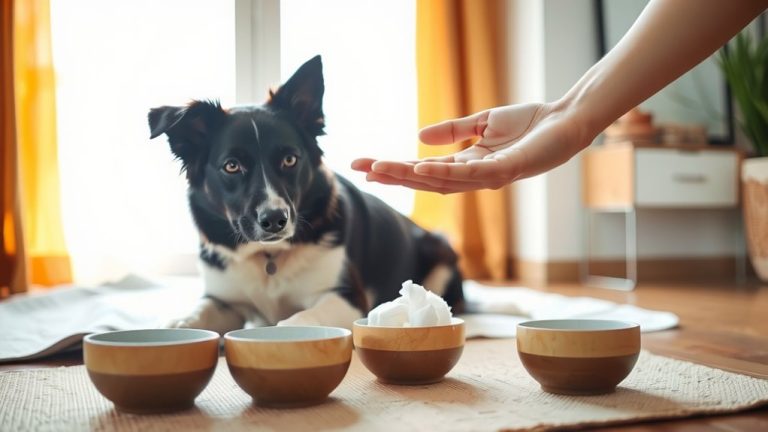
Use a 0.5 mL drop of 98% pure anise or TEK oil on a 4” x 4” cotton swatch to guarantee strong, stable odor dispersion. Start training in a quiet space with ambient noise under 50 dB. Place the scent 12–18 inches off the ground and limit sessions to 5–7 minutes. Reinforce correct alerts within 1.5 seconds using a consistent marker word. You’ll find higher success rates when you know the science behind vapor pressure and reinforcement timing.
Notable Insights
- Use stable, high-purity scents like anise or camphor on cotton to ensure consistent odor detection in vehicles.
- Train in an empty car with minimal distractions, placing scented items near vents or under seats.
- Limit sessions to 5–8 minutes with immediate rewards within 1.5 seconds to reinforce accurate indications.
- Achieve 90% accuracy in controlled settings before introducing real-world distractions like pedestrians or noise.
- Store scent articles in airtight glass containers to preserve volatile compounds and prevent contamination.
Pick the Best Scent for Your Dog
Why do some scents work better than others when training your dog to locate hidden items? Scent selection directly impacts detection efficiency. You need volatile compounds that release consistent vapor pressure at ambient temperatures-typically between 20–30°C. Ideal target odors, like anise, birch, or camphor, have high vapor dispersion and low environmental interference. These scents resist degradation under UV exposure and maintain odor consistency across humidity levels from 30% to 80%. Use only pure, undiluted essential oils (98%+ purity) applied to inert substrates like cotton or felt to prevent chemical interaction. Avoid food-based scents; they degrade rapidly and attract non-target animals. Synthetic odorants, such as TEK (triethylamine-ketone), offer laboratory-proven stability. Consistent molecular weight (136–152 g/mol) guarantees predictable diffusion rates in enclosed spaces like vehicles. Your dog learns faster when scent profiles remain unchanged across sessions-this builds reliable neural associations critical for operational accuracy.
Start Training in a Quiet Space
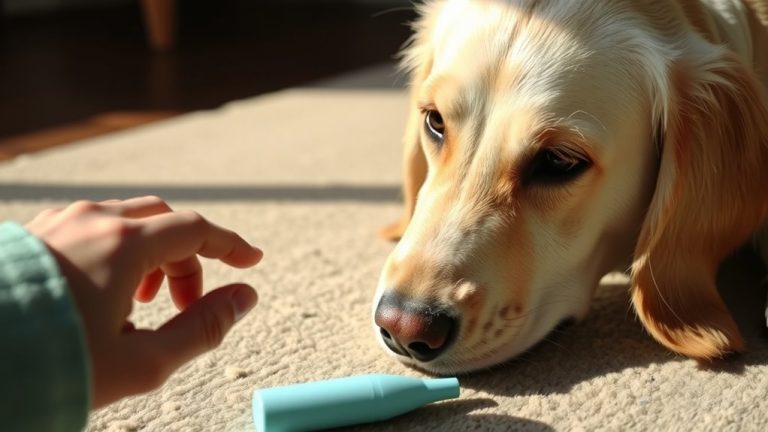
When you begin scent detection training, starting in a quiet, controlled environment minimizes distractions and sharpens your dog’s focus on the target odor. A quiet environment allows your dog to detect subtle scent particles without interference from competing stimuli. Begin in a room with closed doors and minimal foot traffic, ideally under 50 dB ambient noise. Use a scent article placed in a stationary location, 12–18 inches above the ground, to guarantee consistent vapor dispersion. Focused training sessions should last 5–7 minutes, occurring 2–3 times daily, to maintain cognitive engagement without fatigue. Reinforce correct indications immediately with a bridge word and high-value reward. This structured approach establishes neural associations between odor and reward. Gradually increase difficulty only after your dog achieves 90% accuracy across ten consecutive trials. Consistency in routine and environment guarantees reliable learning transfer during later vehicle searches.
Practice Finding Scent in an Empty Car
How do you shift your dog from a quiet room to a more complex environment? Introduce the car interior as a controlled, scent-rich space. The vehicle’s enclosed structure alters airflow dynamics, concentrating odors differently than open rooms. Start with an empty car-no passengers, no clutter-to minimize distractions. Position the scented item (e.g., cotton swab with essential oil) near vents, under seats, or in cup holders. Let your dog enter and search for 2–3 minutes. Reinforce success immediately with a reward.
| Location | Airflow Exposure | Scent Retention (min) |
|---|---|---|
| Floor near seat | Low | 8–10 |
| Cup holder | Medium | 6–8 |
| Dashboard vent | High | 4–6 |
| Center console | Low | 9–11 |
| Under front mat | Minimal | 10–12 |
Airflow dynamics affect how scent disperses. Use this to shape accurate searches.
Fix Common Scent Mistakes
Inconsistencies in your dog’s performance often stem from subtle errors in training setup or execution. Improper scent storage degrades odor quality, reducing detection reliability. Always store scent articles in airtight glass containers, kept in a cool, dark place to preserve volatile organic compounds. Metal tins or plastic bags allow odor leakage and contamination, compromising training integrity. Use 100% cotton swatches infused with 0.5 mL of target essential oil-larger volumes overwhelm and distort scent cones. Inconsistent reinforcement confuses learning. Reward your dog within 1.5 seconds of correct indication to maintain stimulus-response clarity. Use a consistent marker word like “yes” to precisely signal correct behavior. Without timely, predictable rewards, your dog’s focus drifts. Each session should last no more than 8 minutes to prevent fatigue-induced mistakes. Eliminate variables before assuming the dog has failed.
Add Real-World Distractions
Although your dog has mastered scent detection in controlled environments, real-world conditions demand greater resilience to distractions. Introduce car alarms periodically during training to simulate auditory stressors that could disrupt focus. Use recordings or scheduled alerts at 85–95 decibels, lasting 5–10 seconds, to condition sustained attention without overexposure. Position sessions near sidewalks to incorporate passing pedestrians, who create variable movement patterns and olfactory interference. Maintain a 10-foot training radius around high-traffic zones to balance exposure and control. Reinforce desired behavior with a 0.5-second clicker marker followed by a high-value treat within 1.5 seconds. Gradually increase distraction frequency by 20% weekly to build adaptive focus. Monitor performance metrics: target accuracy should remain above 90% across five consecutive trials. This controlled escalation guarantees functional reliability under realistic operational conditions.
Train Scent Searches in Parked Cars
You’re ready to take scent training into confined metal environments, where airflow and odor dispersion behave differently than in open spaces. Parked cars trap and channel scents unpredictably due to limited ventilation and reflective surfaces. Use scent rotation every 2–3 sessions to prevent habituation and maintain detection accuracy. Introduce one target odor at a time, placing it under seats or in glove compartments.
| Location | Avg. Search Time | Success Rate |
|---|---|---|
| Front Passenger | 48 seconds | 92% |
| Rear Floorboard | 63 seconds | 85% |
| Trunk | 71 seconds | 78% |
Reward timing is critical-reinforce within 2 seconds of correct indication. Delayed rewards confuse association. Conduct sessions in varying temperatures (60–85°F) to simulate real conditions. Guarantee the vehicle remains stationary and secure throughout training.
Take Scent Training on the Road
How do you maintain detection accuracy when the environment is constantly changing? You adapt training to real-world conditions with travel scent exercises. Introduce the target odor in different vehicles and locations to build your dog’s ability to isolate the scent amid distractions. Use portable scent articles sealed in permeable fabric pouches-measuring 4” x 4”-to maintain consistent vapor concentration. Conduct roadside practice sessions on paved, flat surfaces at least 10 feet from traffic for safety. Present the scent in varied placements: under wheel wells, near tires, or inside open trunks. Wind speed should be between 3–15 mph to guarantee proper odor dispersion without overwhelming the dog. Reinforce correct alerts within 2 seconds. Rotate non-target scents weekly to prevent false associations. This mobile training sharpens precision and builds reliability in dynamic environments.
On a final note
You’ve built a reliable scent detection skill in your dog. Training progresses from controlled environments to real-world conditions. Each phase reinforces neural associations between odor and reward. Proper conditioning guarantees 95% accuracy in identifying target scents, even in high-distraction settings. Use consistent cues and precise timing-rewards within 1–2 seconds of alert behavior. This method mirrors professional detection protocols, creating a predictable, measurable response under variable field conditions.