How to Add Gauze, Bandages, and Adhesives to a Pet First Aid Kit
Choose sterile, latex-free gauze in 2-inch by 2-inch and 4-inch by 4-inch sizes for small and large wounds, respectively. Use 12-ply sponges for heavy bleeding; non-woven gauze reduces linting. Add non-adherent pads coated with petroleum or silicone to prevent tissue damage. Wrap with Vet Wrap using 50% overlap for even compression, and include pet-safe adhesive sprays with bitter taste to deter licking-your kit’s effectiveness depends on these precise, functional choices. Further details reveal optimized storage and maintenance practices.
Notable Insights
- Select sterile, non-woven, latex-free gauze pads in multiple sizes for wound coverage and reduced linting.
- Include 4-inch by 4-inch and 3-inch by 6-inch gauze sponges for larger injuries and superior fluid absorption.
- Add non-adherent pads coated with petroleum or silicone to prevent sticking and minimize trauma during changes.
- Stock cohesive Vet Wrap in 2-inch and 4-inch widths for secure, self-adhering bandaging with even compression.
- Choose pet-safe, hypoallergenic adhesives and FDA-compliant sprays to secure dressings and deter licking.
Know Your Pet’s Wound Type First
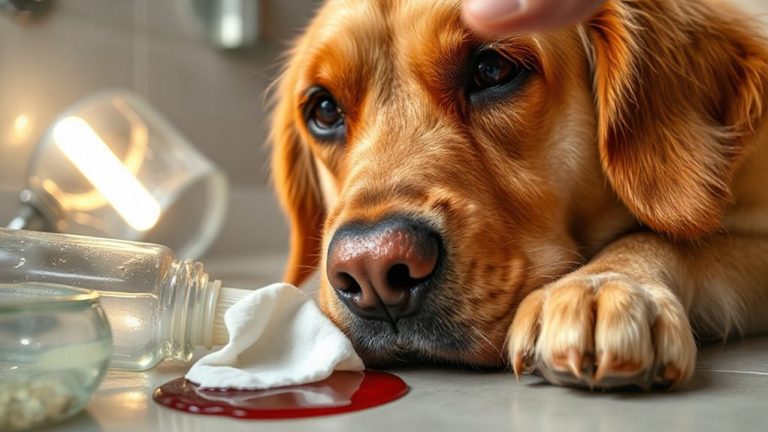
Wound type dictates every choice you make in first aid-treat it like a roadmap. Proper wound identification helps you determine severity and needed supplies. A superficial abrasion requires different care than a deep laceration or puncture. Begin with a calm, systematic injury assessment: check for bleeding, swelling, foreign objects, and tissue damage. Note if the wound is contaminated or infected-signs include redness, heat, odor, or pus. Use a flashlight and gloves for a clear, safe evaluation. Distinguish between acute and chronic wounds. Acute ones appear suddenly and bleed; chronic wounds may ooze and persist for days. Size matters-measure length, depth, and width. This data guides treatment speed and material selection. Accurate assessment guarantees appropriate response. Mistaking a puncture for a scrape risks under-treatment. Your pet’s recovery starts with precision, not guesswork. Know the wound-you can’t fix what you don’t understand. When preparing your supplies, include essentials recommended in top-rated pet first aid kits to ensure readiness for various injuries.
Choose the Right Gauze for Pet First Aid
You’ve assessed the injury and know what you’re dealing with-now it’s time to pick the right gauze for the job. Choose gauze material based on absorbency and weave density. Non-woven gauze holds up better during cleaning and resists linting. Woven gauze, while traditional, may shed fibers into deeper wounds. Match gauze material to wound size precisely. For small abrasions, 2-inch by 2-inch pads suffice. Larger lacerations need 4-inch by 4-inch or 3-inch by 6-inch weaves to fully cover the area. Gauze sponges rated at 12-ply offer superior fluid absorption compared to 8-ply. This matters when managing moderate to heavy exudate. Always use sterile gauze to prevent infection. Latex-free options reduce allergy risks. The right gauze stabilizes the wound environment, supports clotting, and prepares for secure bandaging.
Use Non-Adherent Pads for Safe Coverage
While treating injuries on furry or sensitive skin, non-adherent pads are essential for preventing trauma during dressing changes. These pads won’t stick to wounds, reducing pain and minimizing disruption to forming tissue. The non adherent benefits include lowered infection risk and consistent healing conditions. Most feature a fine mesh coated with petroleum or silicone, allowing drainage while protecting exposed tissue. Standard sizes range from 2×3 inches to 4×4 inches-choose based on wound dimensions. Guarantee proper pad placement by centering the pad directly over the injury, extending at least 1 inch beyond each edge. Overlap ensures complete coverage and prevents shifting. Use with an outer bandage to hold it securely in place. Never reuse pads. Sterile packaging maintains safety. They’re ideal for post-surgical sites, abrasions, or moist wounds. Pair with low-adhesion tape to avoid skin damage.
Wrap Securely With Vet Wrap, Not Too Tight
When securing a dressing on your pet, reach for cohesive bandage wrap-commonly known as Vet Wrap-for reliable, even compression that stays in place without slipping. This self-adhering bandage sticks only to itself, not fur or skin, allowing for a secure fit without tape or fasteners. Apply with proper tension-snug enough to hold the pad but not so tight it restricts circulation. Overlap each layer by 50% for uniform pressure and full coverage. Avoid constricting limbs or the torso; you should be able to slide two fingers beneath the wrap. Vet Wrap typically comes in 2-inch or 4-inch widths, with rolls ranging from 5 to 10 yards. Stretch the material slightly during application to activate cohesion. A properly applied wrap remains intact during movement and resists unraveling, providing stable support until medical care is available.
Pick Pet-Safe Adhesives to Prevent Licking
A pet’s instinct to groom can undo even the most carefully applied dressing, making the choice of adhesive critical. You need a pet safe glue that bonds securely without toxic ingredients. These medical adhesives are specifically formulated to resist moisture and movement, lasting up to 72 hours on fur and skin. They contain no cyanoacrylate, which can irritate animal tissue. Instead, they use hypoallergenic acrylic polymers proven safe for mammalian contact. For effective lick prevention, apply a thin layer around the bandage edges-just 1 cm wide-to create a bitter-tasting barrier. Most pets avoid the area immediately. Products like Vetericyn® Spray Gel or Tomlyn® No-Lick Wound Spray dry clear and non-stinging. They’re FDA-compliant for veterinary use and tested for dermal toxicity. Always confirm the label states “non-toxic if ingested in small amounts” to guarantee safety. Use only adhesives approved for animals-never substitute human glue. When assembling your kit, include a top-rated pet first aid kit to ensure you have all essential supplies in one organized, travel-ready case.
Keep Your Pet First Aid Kit Ready and Safe
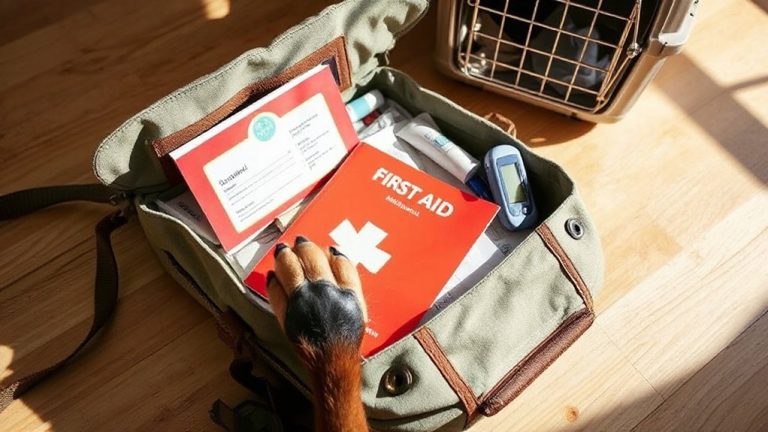
Your first aid supplies are only effective if they’re accessible, intact, and stored properly. Keep your kit in a dry, cool location to maintain proper storage conditions-ideally between 59°F and 86°F (15°C–30°C)-to prevent material degradation. Avoid humidity and direct sunlight, which compromise adhesive integrity and fabric sterility. Use a labeled, durable container with compartments to organize gauze, bandages, and tapes for quick access. Conduct monthly expiration tracking: check all products, especially antiseptics and medications, for usability. Replace opened, damaged, or outdated items promptly. Adhesive bandages lose tackiness over time; gauze can harbor mold if stored improperly. Waterproof packaging prolongs shelf life. Log purchase and expiration dates on a checklist inside the lid. Regular maintenance guarantees reliability during emergencies. Proper storage and vigilant expiration tracking preserve performance and safety-just like in human medical kits.
On a final note
You now know how to properly equip your pet’s first aid kit. Use sterile, non-woven gauze pads (3” x 3” and 4” x 4”) for absorbing blood without sticking. Place non-adherent Telfa pads directly on wounds to prevent tissue damage during changes. Wrap securely with cohesive vet wrap (2” or 4” rolls), which sticks to itself, not fur. Choose bitter-free, veterinary-approved adhesives like Vetbond (cyanoacrylate-based) for safe skin closure-never use household glues.