The Importance of Calcium-to-Phosphorus Ratios in Weight-Loss Diets for Growing Dogs
You need to maintain a calcium-to-phosphorus ratio of 1.2:1 to 1.4:1 in growing dogs on weight-loss diets. High-fiber, low-fat foods often contain phytates and cereal by-products that impair calcium absorption and skew the ratio toward phosphorus. Even with adequate phosphorus (0.5%–1.1%), low calcium (below 0.8%) disrupts bone mineralization. This imbalance stresses kidneys, weakens growth plates, and risks developmental disease. Proper ratios support hydroxyapatite formation and parathyroid function. Check guaranteed analysis, convert to dry matter if needed, and monitor growth-adjustments may be necessary as body composition changes. Further insights await.
Notable Insights
- Weight-loss diets high in fiber and cereal by-products can disrupt calcium-to-phosphorus ratios, impairing bone development in growing dogs.
- An optimal Ca:P ratio of 1.2:1 to 1.4:1 is critical for proper bone mineralization and growth plate function in puppies.
- Low calcium or high phosphorus levels reduce calcium bioavailability and increase risks of skeletal deformities and soft tissue calcification.
- Diets with Ca:P ratios near 1:1 compromise bone health, especially during calorie restriction when nutrient density is lower.
- Regular monitoring, precise ingredient balancing, and veterinary guidance are essential to maintain correct Ca:P ratios in homemade weight-loss diets.
How Weight-Loss Diets Disrupt Calcium-To-Phosphorus Balance
While many weight-loss diets reduce calorie density by increasing fiber and decreasing fat, they often overlook the impact on essential mineral ratios-especially calcium and phosphorus. You increase plant-based ingredients to boost fiber, but this introduces phytates, leading to mineral interference that reduces calcium bioavailability. Simultaneously, phosphorus levels remain high due to the inclusion of cereal by-products, skewing the Ca:P ratio beyond the ideal 1.2:1 to 2:1 range. Nutrient synergy suffers when imbalances impair bone mineralization. Common commercial formulations drop calcium concentrations to 0.6% while leaving phosphorus near 0.5%, creating a near 1:1 ratio-suboptimal for skeletal development. Even with adequate total minerals, poor formulation disrupts absorption kinetics. You rely on supplements, but without synchronized release, their efficacy diminishes. Correcting this requires precise ingredient selection, not just calorie control.
Why the Calcium-To-Phosphorus Ratio Matters for Puppies
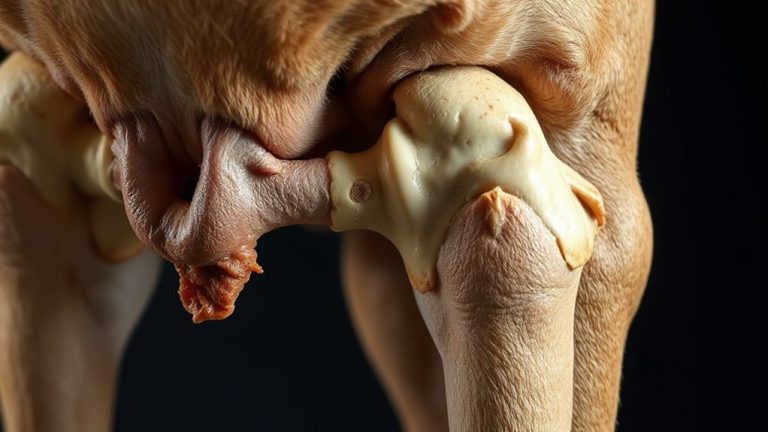
You can’t afford imbalances when building bones from the ground up. The calcium-to-phosphorus ratio directly supports proper bone development in growing puppies. An ideal ratio of 1.2:1 to 1.4:1 guarantees calcium is available for mineralization without phosphorus interference. Too little calcium relative to phosphorus impedes hydroxyapatite formation, weakening bone matrix. Growth plate health depends on this balance, as chondrocyte activity and cartilage calcification require precise mineral availability. Without it, longitudinal bone growth becomes disorganized. Calcium fuels osteoblast function, while phosphorus must be limited to prevent precipitation of calcium phosphate in soft tissues. This ratio also influences parathyroid hormone regulation. Deviations suppress active vitamin D synthesis, reducing calcium absorption. Maintaining this ratio in weight-loss diets is critical-lower caloric intake must not compromise mineral density. Each gram of skeletal tissue formed needs proportionate mineral support. Balance enables structural integrity.
Health Risks of an Unbalanced Calcium-To-Phosphorus Ratio
Disruption in the calcium-to-phosphorus ratio opens the door to serious health complications, especially in dogs on calorie-restricted diets. You risk skeletal malformations because growing bones rely on precise mineral balance. Bone deformities can develop when calcium is too low or phosphorus too high, weakening structural integrity. Excess phosphorus also causes kidney strain, forcing organs to filter waste inefficiently.
| Imbalance Type | Health Consequence |
|---|---|
| High phosphorus | Increased kidney strain |
| Low calcium | Poor bone mineralization |
| Ratio outside 1:1–2:1 | Elevated risk of deformities |
You must maintain ratios between 1:1 and 2:1 (calcium:phosphorus) to support healthy development. Deviations impair cellular metabolism and compromise long-term joint and renal function. Calorie restriction magnifies these risks-nutrient density becomes critical.
How to Find the Right Ratio on Dog Food Labels
A balanced calcium-to-phosphorus ratio is critical, and you can find it by decoding the guaranteed analysis on dog food labels. Look for the listed calcium content and phosphorus levels, usually given as a percentage on an as-fed basis. For growing dogs on weight-loss diets, aim for a ratio between 1:1 and 2:1. Calcium content should ideally be 0.8% to 1.6%, while phosphorus levels should range from 0.6% to 1.1%. Divide the calcium percentage by the phosphorus percentage to calculate the actual ratio. Some premium brands list mineral levels on a dry matter basis-convert them by dividing the reported value by the food’s dry matter percentage (typically 90% for kibble). Accurate comparisons require consistent calculations across all products. Always verify that the mineral data aligns with AAFCO nutrient profiles for growth.
Balancing Calories and Minerals in Homemade Meals
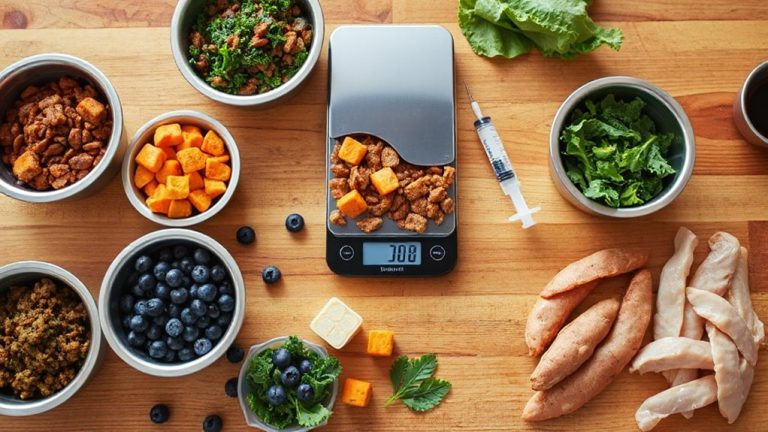
Meeting mineral requirements in homemade dog meals demands the same precision as selecting commercial diets, especially when managing weight loss. You must prioritize meal planning to guarantee correct calcium-to-phosphorus ratios-target 1:1 to 2:1 for growing dogs. Without structured nutrient tracking, deficiencies or excesses can impair bone development. Use digital tools or spreadsheets to log every ingredient’s mineral content, referencing databases like USDA or NRC guidelines. For example, 1,000 mg of calcium and 600 mg of phosphorus meet a moderate ratio of 1.67:1. Balance lean proteins with calcium-rich supplements like ground eggshells or bone meal, adjusting portions to maintain calorie deficits. A 20-lb puppy needing 700 kcal/day shouldn’t exceed that while meeting mineral thresholds. Weigh ingredients accurately using a gram scale. Poor planning risks metabolic imbalances, even if the diet appears nutritious. Consistent nutrient tracking prevents guesswork and supports healthy, controlled weight loss.
Adjusting the Ratio as Your Puppy Loses Weight
How do you maintain the right calcium-to-phosphorus ratio as your puppy sheds pounds? Adjusting the ratio requires consistent growth monitoring to track skeletal development. As your puppy loses fat, their mineral needs shift. The ideal calcium-to-phosphorus ratio remains between 1:1 and 1.3:1 for growing dogs. Weight loss alters nutrient density, so simply reducing food volume can imbalance minerals. You need to reformulate meals to preserve adequate calcium without overloading phosphorus. Growth monitoring through biweekly weigh-ins and monthly skeletal assessments helps detect changes early. Always base adjustments on veterinary consultation-your vet may recommend bone density scans or blood work. They’ll verify mineral levels and confirm your diet’s appropriateness. Never guess: even a 0.2 shift outside the ideal range risks bone deformities. With precise recalculations and professional oversight, you support safe weight loss without compromising development.
Signs Your Puppy Needs a Ratio Adjustment
You’re monitoring your puppy’s weight loss and adjusting their diet, but subtle changes in movement or structure may signal that the calcium-to-phosphorus ratio needs a second look. Imbalances can lead to bone pain and stunted growth, especially during rapid development. Watch for limping, reluctance to jump, or abnormal joint alignment. Below are key indicators and their clinical relevance:
| Symptom | Possible Cause | Action Required |
|---|---|---|
| Limping | Bone pain from mineral imbalance | Adjust Ca:P ratio to 1.2:1–1.4:1 |
| Shortened stride | Joint stress or deformation | Evaluate diet and consult vet |
| Swollen joints | Improper mineralization | Test blood calcium and phosphorus |
| Delayed healing | Poor bone matrix formation | Increase bioavailable calcium |
| Stunted growth | Chronic ratio imbalance | Reformulate diet immediately |
Persistent issues demand prompt dietary correction.
On a final note
You must maintain a calcium-to-phosphorus ratio between 1:1 and 1.2:1 in growing puppies, especially during weight loss. Reducing calories often lowers mineral intake, risking skeletal deformities. Check guaranteed analysis on labels for precise Ca and P percentages. For homemade diets, use lab-formulated supplements to balance minerals. Adjust ratios as body weight changes to support bone density. Monitor growth velocity and bone development closely to prevent irreversible orthopedic damage.