What Veterinarians Listen for When Checking Your Pet’s Heart and Lungs
You’re checking your pet’s heart and lungs to catch early signs of disease. Vets listen for regular rhythm, normal rates-60–140 bpm in dogs, 140–220 in cats-and clear breath sounds. Abnormal clicks, murmurs, or crackles may indicate valve issues, fluid, or airway narrowing. Wheezing suggests bronchitis or asthma; persistent changes demand further evaluation. Subtle shifts in timing or intensity can signal serious conditions before symptoms appear-knowing these details helps you act early.
Notable Insights
- Veterinarians assess heart rate, rhythm, and regularity to detect arrhythmias or abnormal beats.
- They listen for heart murmurs, which indicate turbulent blood flow and possible valve disease.
- Normal breath sounds are evaluated for rate, effort, and presence of abnormal respiratory patterns.
- Crackles or wheezes in lung sounds may suggest fluid, inflammation, or airway narrowing.
- Persistent abnormal findings prompt further testing like X-rays, echocardiograms, or blood work.
Why Vets Listen to Your Pet’s Heart and Lungs
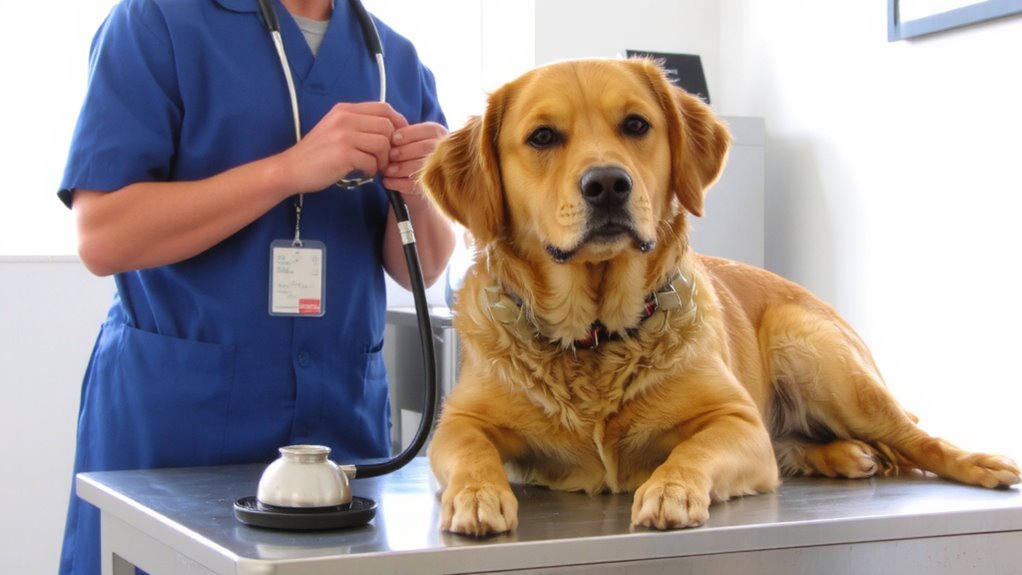
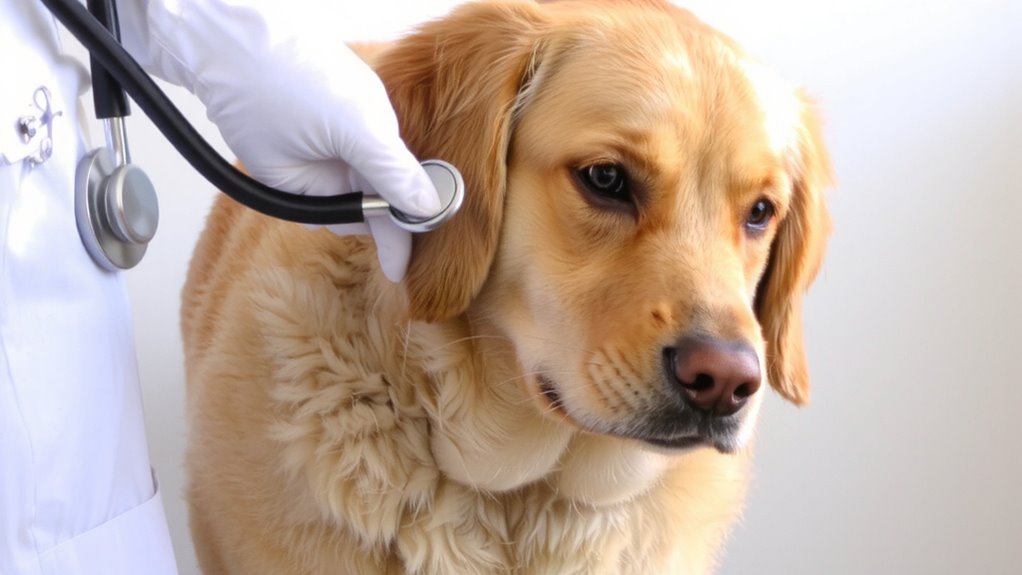
Why do veterinarians pause during an exam to press a stethoscope against your pet’s chest? They’re evaluating cardiac rhythms and respiratory effort-critical indicators of internal health. Normal cardiac rhythms in dogs typically range from 60 to 140 beats per minute, while cats average 120 to 220 bpm. Deviations may signal underlying pathology. Respiratory effort should be smooth and effortless, with rates between 15–30 breaths per minute in most adult pets. Irregular patterns could reflect pain, obstruction, or metabolic imbalance. The stethoscope amplifies subtle sounds, allowing precise evaluation of heart valve function and airflow through bronchi. You rely on this evaluation to detect early disease before symptoms arise. By analyzing timing, intensity, and regularity, vets identify potential problems in oxygen delivery or circulation. This non-invasive step provides immediate, actionable data. It’s a cornerstone of preventive care, ensuring timely intervention when cardiac rhythms or respiratory effort fall outside expected parameters.
What Abnormal Heart Sounds Mean for Your Dog or Cat
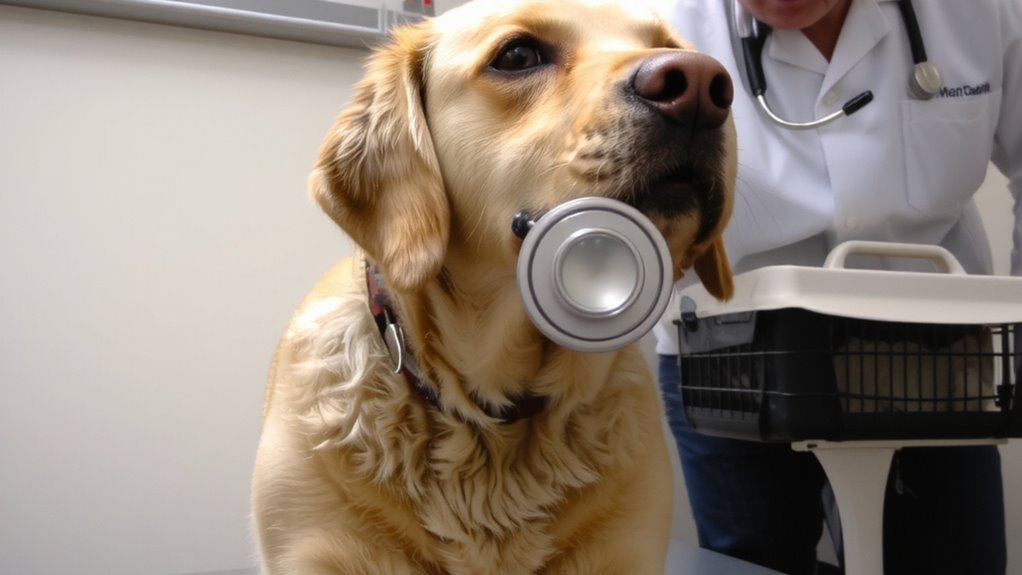
What might a soft whoosh or a sudden click mean when your vet listens to your pet’s heart? Those sounds could signal heart murmurs-abnormal noises caused by turbulent blood flow. You’ll often hear this in dogs, especially older or large breeds, though cats can develop them too. Murmurs don’t always mean disease, but they can point to underlying valve disorders. These conditions occur when heart valves thicken, calcify, or fail to close properly, disrupting efficient circulation. A common example is mitral valve insufficiency, where leakage causes backward flow, detected as a systolic murmur. Your vet grades murmurs from I to VI based on loudness and vibration. Further tests-like chest X-rays, echocardiograms, or ECGs-help confirm structural defects. Early detection improves management, often through medication that supports heart function and slows progression. Monitoring these signs helps keep your pet’s cardiovascular system as stable as possible.
How Crackles and Wheezing Reveal Lung Problems
Have you ever heard the faint, popping sounds of air moving through damp straw? That’s what crackling sounds in your pet’s lungs often resemble. These noises, detected with a stethoscope, usually signal fluid or inflammation in the small airways. Crackles occur during inhalation and suggest conditions like pneumonia or pulmonary edema. Wheezing, a high-pitched whistling, points to narrowed airways. It’s commonly linked to bronchitis or asthma, especially in cats. Both crackles and wheezing may indicate airway obstruction, limiting airflow and oxygen exchange. Veterinarians classify these sounds by timing, pitch, and location to pinpoint the problem. Fine crackles are brief, sharp, and heard late in inspiration; coarse types last longer and appear earlier. Wheezes can be inspiratory, expiratory, or biphasic. Detecting these abnormalities helps guide diagnostics like radiographs or bronchoscopy.
Normal vs. Abnormal: Is Your Pet’s Breathing or Heartbeat Off?
Your pet’s breathing and heartbeat provide essential clues about their health, just as crackles and wheezing can point to lung issues. Normal breathing patterns and heart rhythm are crucial indicators of wellness. Deviations may signal underlying conditions.
| Parameter | Normal Dog | Normal Cat |
|---|---|---|
| Breathing Rate | 10–30 breaths/min | 20–30 breaths/min |
| Heart Rate | 60–140 bpm (large dogs), 100–160 bpm (small) | 140–220 bpm |
| Heart Rhythm | Regular, consistent beats | Steady, even intervals |
Abnormal breathing patterns include labored effort or irregular timing. You might notice your pet panting at rest or flaring nostrils. An uneven heart rhythm-skipped or extra beats-can suggest cardiac dysfunction. Listen during quiet moments; use a stopwatch to time breaths. Assess consistency over 24 hours. Regular monitoring helps detect subtle shifts in heart rhythm and breathing patterns early.
When to Worry: Red Flags in Heart and Lung Exams
How often have you noticed your pet breathing heavily while lying still? That could signal a cardiac or respiratory issue. Rapid, labored breathing at rest-more than 30 breaths per minute in dogs, 25 in cats-warrants immediate evaluation. Persistent coughing, especially at night, may indicate heart failure. You should also monitor for fever spikes above 103°F, which can worsen cardiac strain and suggest infection. Unexplained weight loss, particularly muscle wasting around the hips, often accompanies chronic heart disease or lung tumors. A heart rate consistently over 160 bpm in cats or 140 in dogs at rest is abnormal. Veterinarians listen for muffled heart sounds, arrhythmias, or loud lung crackles, which suggest fluid or obstruction. Early detection improves outcomes, so report changes immediately.
On a final note
You rely on your veterinarian to detect subtle changes in heart and lung sounds. A normal canine heart rate ranges from 60–160 bpm; cats average 140–220 bpm. Veterinarians listen for murmurs, gallops, crackles, or wheezes. Systolic murmurs suggest valve issues; crackles often indicate fluid in alveoli. Early detection through auscultation enables timely intervention, improving outcomes.