How to Teach Your Cat to Use a Step-Up Stool to Reach High Places
Set up a stable step stool with a non-slip surface, at least 12 inches wide by 16 inches long, supporting 30 pounds without flexing. Position it in a familiar area and let your cat explore at their own pace. Use high-value treats to lure them, rewarding all four paws on the platform within 1–2 seconds. Guide each paw gently, matching natural gait rhythm. Consistent, short sessions build confidence-more effective techniques follow.
Notable Insights
- Choose a stable step stool with a non-slip surface and dimensions that support your cat’s weight and paw placement.
- Introduce the stool gradually, allowing your cat to explore it at their own pace in a familiar, low-distraction area.
- Use high-value treats to lure your cat onto the stool, rewarding all four paws on the platform within 1–2 seconds.
- Guide paws gently upward one at a time, using tactile cues and consistent 2–3 second intervals to build rhythm and confidence.
- Increase height incrementally by 2.5 cm after five successful attempts, ensuring incline stays below 35 degrees for safety.
Set Up a Safe, Cat-Friendly Step Stool
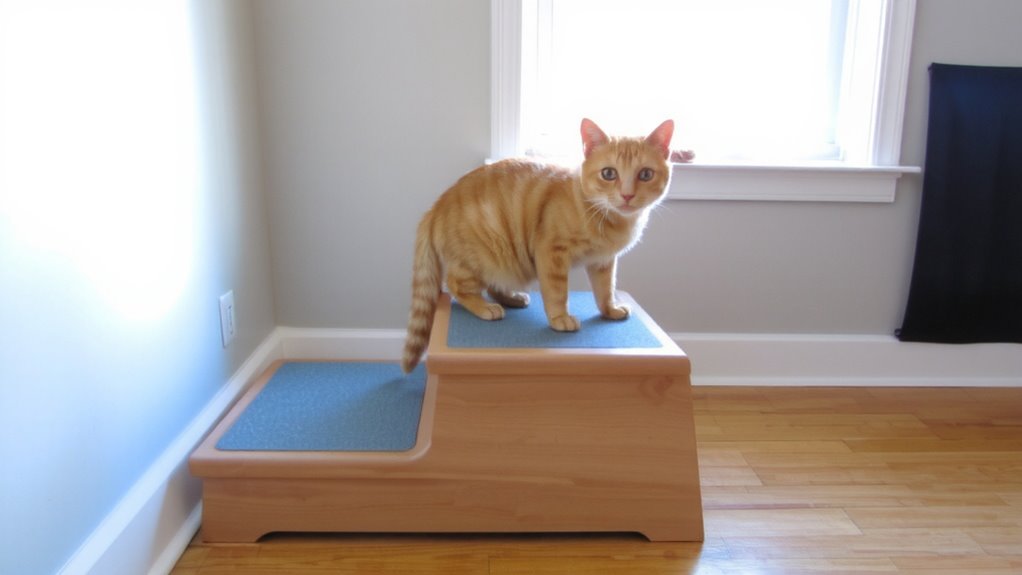
A stable, properly designed step stool provides your cat with safe access to elevated spaces. Choose a model with a stable platform measuring at least 12 inches wide by 16 inches long to support your cat’s full stride. The platform must support up to 30 pounds without flexing, guaranteeing balance during use. Attach a non slip surface, such as rubberized matting or textured grip tape, to prevent paw slippage. Ideal tread depth is 1 inch, allowing secure footing. Stool height should match your cat’s shoulder height-typically 8 to 10 inches-to minimize jump effort. Use durable, lightweight materials like reinforced ABS plastic or powder-coated steel. Guarantee all edges are rounded and joints sealed to prevent snags. Angled risers at 30 degrees improve accessibility. Position the stool perpendicular to the target surface, allowing straight-line access.
Let Your Cat Sniff and Explore First
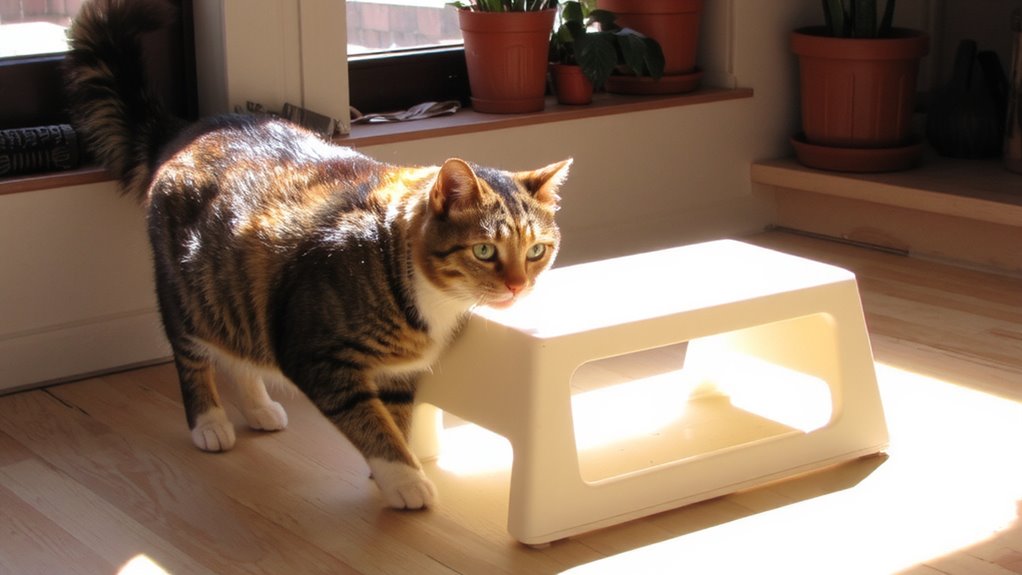
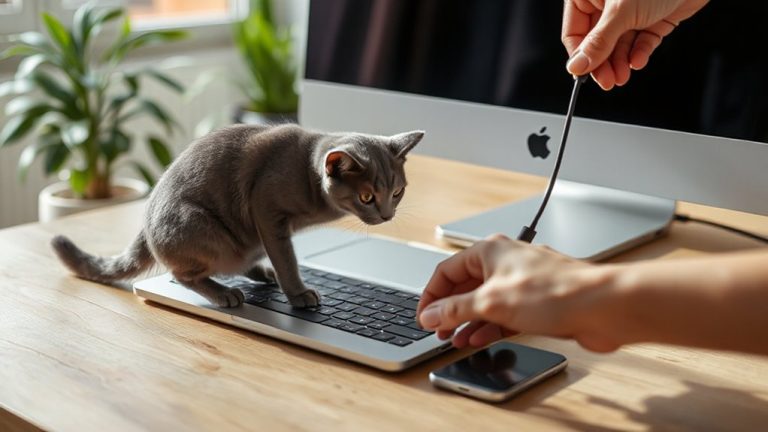
Curiosity drives your cat’s interaction with new objects, making initial exploration critical. Allow your cat to engage in sensory exploration before expecting use of the step-up stool. Cat curiosity compels investigation through smell, touch, and sight. Place the stool in a familiar location, ensuring it remains stationary-any movement may trigger avoidance. Permit unrestricted access during low-distraction times, allowing your cat to approach at their own pace. Use a non-slip rubberized surface (minimum 12” x 16” per step) to provide secure footing. Avoid forced contact; instead, let your cat perform olfactory assessment, an essential phase in habituation. Observe body language: forward ears and slow blinking indicate comfort. Exploration duration varies-some cats require minutes, others days. This self-directed process reduces neophobia and builds environmental trust. Sensory exploration forms the foundation for voluntary interaction, ensuring subsequent training stages proceed efficiently and with minimal stress.
Lure With Treats to Build Confidence
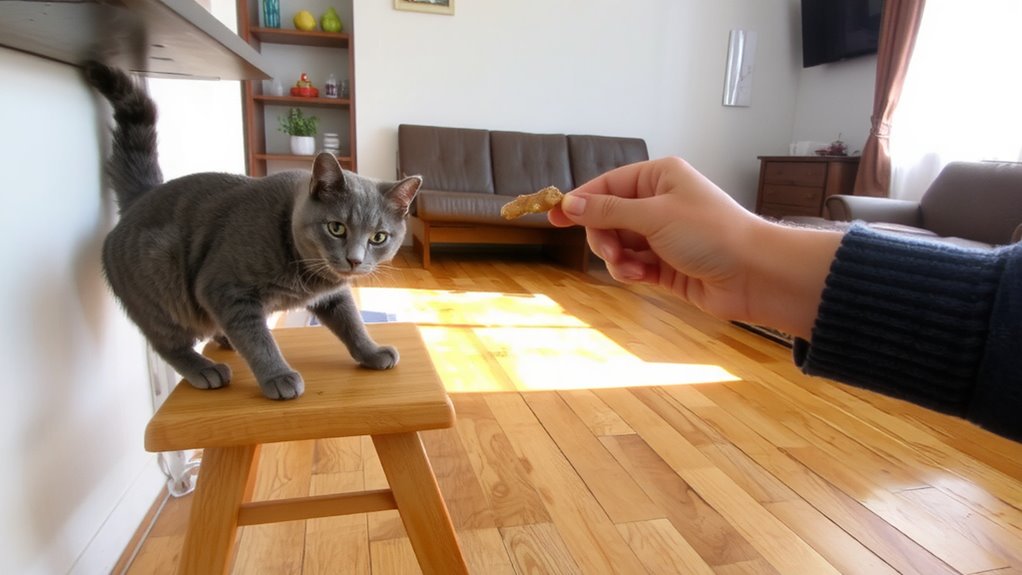
One effective way to encourage your cat to use the step-up stool is by using high-value treats as motivation. Begin by holding a treat close to your cat’s nose, then slowly move it toward the stool’s base. Accurate treat timing increases success-deliver the reward the instant all four paws are on the platform. This immediate response strengthens associative learning. Positive reinforcement solidifies the behavior; each correct action must be followed by a treat within 1–2 seconds. Use small, soft treats (approximately 0.25–0.5 grams) to allow repeated trials without overfeeding. Conduct three to five short sessions daily, lasting no more than two minutes each, to maintain focus. Over time, the cat links the action with reward. Gradually phase out the treat lure while maintaining sporadic reinforcement to prevent extinction of the learned behavior.
Guide Each Paw Onto the Step Stool
Start by positioning your cat in front of the step stool, making certain all four paws are aligned with the base. Proper paw placement is critical-guide each paw upward one at a time, using light pressure on the shoulders to encourage motion without force. Place your hand beside each step to provide tactile cues, helping your cat judge height and depth. Step timing should match your cat’s natural gait; too fast causes hesitation, too slow reduces momentum. Allow a 2–3 second interval between steps to maintain rhythm. Use a non-slip surface with 0.75-inch risers to minimize joint strain. Repeat the sequence consistently, aligning paw placement precisely with each session to build muscle memory. Correct positioning makes certain weight distribution across limbs, reducing reliance on forelimbs. Perform training sessions when your cat is calm and focused, typically post-nap or post-meal, to optimize coordination. Consistent repetition strengthens locomotor patterns essential for independent use.
Fix Common Training Setbacks
Why does your cat hesitate or refuse the step stool despite consistent practice? Fear avoidance is likely the cause. Cats rely on predictable environmental cues; sudden changes in texture, height, or stability trigger anxiety. If your cat exhibits fear avoidance, reassess the stool’s placement and introduction speed. Make sure the step stool has a non-slip surface, as surface slipping compromises paw grip and balance. Use rubberized mats or abrasive tread strips (minimum 0.8 mm thickness) to increase traction. Confirm the stool’s incline angle is no more than 35 degrees to reduce physical strain. Shorten training sessions to two minutes to prevent cognitive overload. Reinforce confidence with immediate positive reinforcement-offer treats within 1.5 seconds of successful contact. Gradually raise stool height by 2.5 cm increments only after five consecutive successful attempts without hesitation.
On a final note
You’ve successfully trained your cat using a step-up stool. Choose a nonslip, low-angle model-ideally 10–12 inches high with textured treads-to guarantee stability. Confirm the base measures at least 18 x 12 inches to prevent tipping. Reinforce trained behavior with consistent treat rewards. Monitor each use to verify paw placement and balance. A properly acclimated cat will ascend confidently, reducing joint strain compared to jumping. This method supports safe vertical access in homes.