Low-Fat, High-Fiber Diets for Obese Cats: What Ingredients to Look For
Choose a low-fat, high-fiber cat food with less than 9% fat and 8–12% crude fiber on a dry matter basis. Prioritize named lean proteins like chicken or turkey breast as the first ingredient. Include functional fibers such as psyllium, cellulose, or pumpkin at proven levels (0.5–3%). Avoid grain fillers and artificial preservatives. These components work together to reduce calorie intake while maintaining satiety and nutrient balance. The right formula supports healthy weight loss without sacrificing health-you’ll see which specific ingredients deliver the best results.
Notable Insights
- Look for lean animal proteins like turkey or chicken breast listed as the primary ingredient to support muscle mass and satiety.
- Choose formulas with crude fat under 12% (dry matter basis) to reduce calorie density and promote weight loss.
- Ensure crude fiber is between 8–12% (dry matter basis) to enhance fullness and support digestive health.
- Select specific, functional fiber sources like psyllium, pumpkin, inulin, or cellulose instead of vague “fiber blends.”
- Avoid grain fillers, artificial preservatives, and unnamed by-products that offer little nutritional value for obligate carnivores.
What Makes Low-Fat, High-Fiber Cat Food Work?
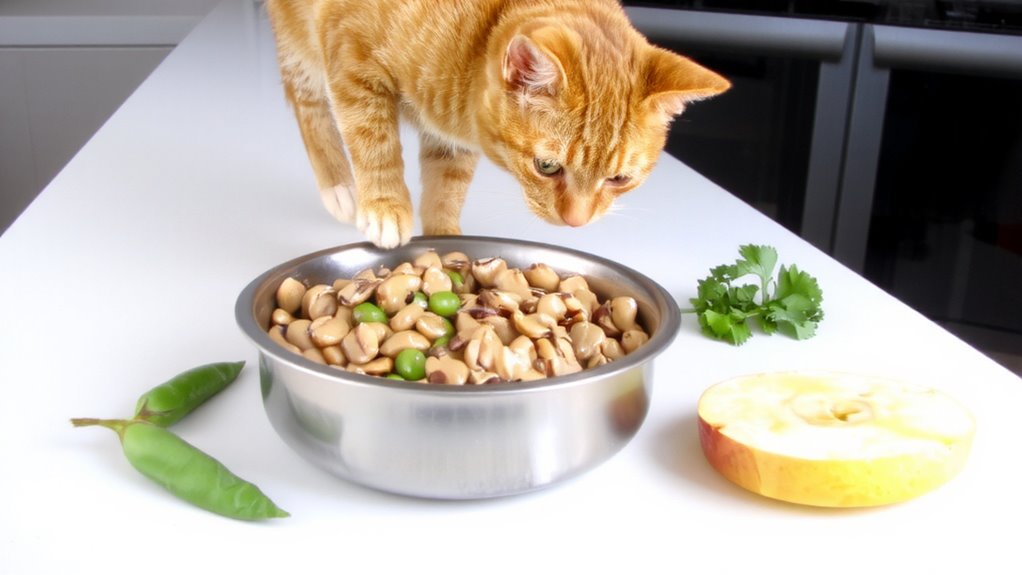
Why do low-fat, high-fiber diets help obese cats lose weight safely? These diets trigger a strong satiety response, helping your cat feel full even with fewer calories. High fiber increases bulk and slows gastric emptying, which prolongs meal satisfaction. That means less begging and fewer calories consumed daily. Meanwhile, reduced fat content lowers overall energy density-critical for weight loss. Yet, nutrient density remains high. Vitamins, minerals, and essential amino acids are preserved through careful formulation. Look for diets with at least 8–10% crude fiber and less than 12% crude fat on a dry matter basis. These specifications support metabolic health without sacrificing nutrition. Proper nutrient density guarantees your cat doesn’t miss key nutrients during calorie restriction. This balance of satiety response and nutrient density makes low-fat, high-fiber food effective, safe, and sustainable for feline weight management.
Best Lean Proteins for Weight-Loss Cat Food
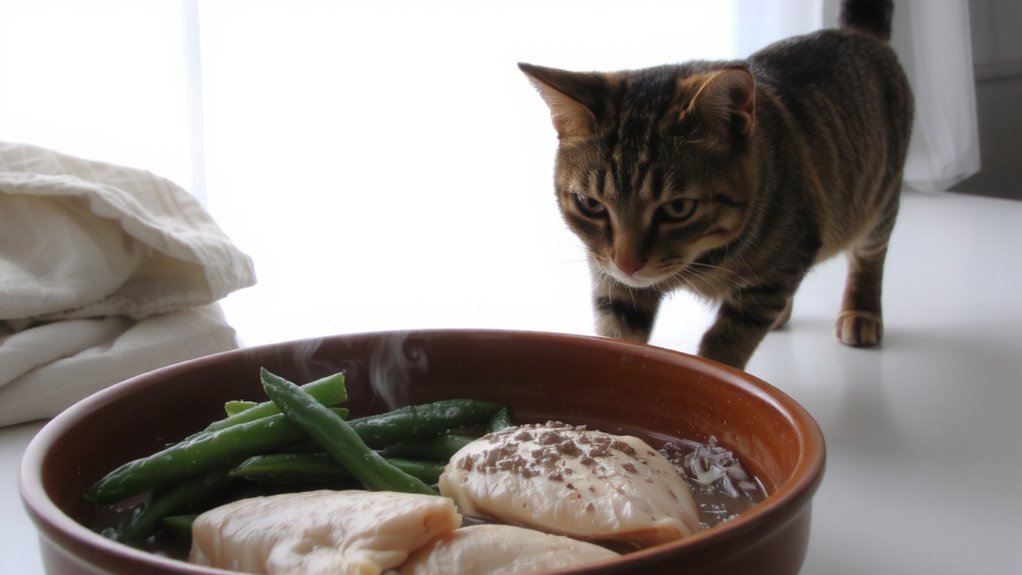
Lean protein sources form the foundation of effective weight-loss diets for cats. You need to prioritize highly digestible, low-fat proteins to support muscle retention while reducing caloric intake. Turkey breast is an excellent choice, containing approximately 115 kcal per 100 grams and only 1.7% fat, making it ideal for maintaining satiety without excess energy. Chicken breast offers similar benefits, providing about 120 kcal and 2.6% fat per 100 grams, along with 23 grams of complete protein. Both ingredients deliver essential amino acids like taurine, critical for cardiac and ocular health. These lean meats are easily digestible, ensuring maximum nutrient absorption. When you select weight-loss cat food, make certain turkey breast or chicken breast is listed as the primary ingredient. Their high biological value supports metabolic efficiency. Consistent use helps achieve gradual, sustainable weight loss in obese cats.
Healthy Fiber Ingredients That Help Cats Feel Full
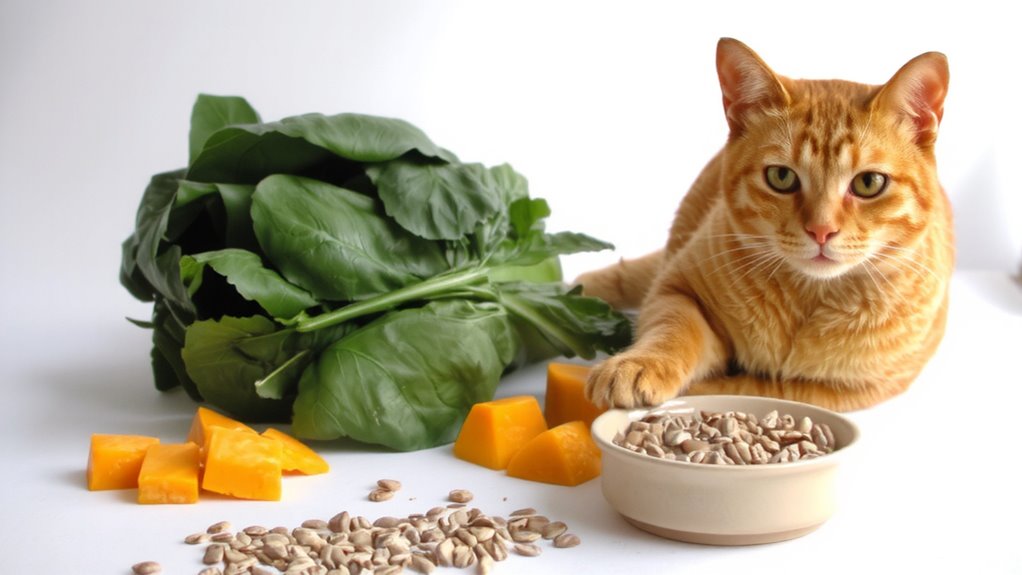
How can you help your obese cat feel full without adding excess calories? Focus on soluble fiber and other satiety boosters that expand in the stomach and slow digestion. These ingredients prolong meal satisfaction and reduce overall food intake. Soluble fiber also supports healthy gut bacteria and stabilizes blood sugar. Choose cat foods with natural, fermentable fibers for maximum effect.
| Fiber Source | Type of Fiber | Recommended Inclusion Rate |
|---|---|---|
| Psyllium husk | Soluble fiber | 0.5–1.0% of dry matter |
| Pumpkin puree | Mixed fiber | 1–2% of total formula |
| Inulin (from chicory) | Soluble fiber | 0.2–0.8% of dry matter |
| Cellulose | Insoluble fiber | 1–3% of dry matter |
These satiety boosters enhance fullness while contributing minimal energy. Psyllium and inulin are especially effective soluble fiber sources.
Fillers and Additives to Skip in Cat Food
What’s really in your cat’s bowl-and does it matter? Yes. Avoid grain fillers like corn, wheat, and soy-they add bulk with little nutritional value and can spike blood sugar. Cats are obligate carnivores; they need animal protein, not carbohydrates. Grain fillers often replace premium ingredients, reducing diet quality. Skip artificial preservatives such as BHA, BHT, and ethoxyquin. These chemicals extend shelf life but pose health risks with long-term ingestion. Opt instead for natural preservatives like mixed tocopherols (vitamin E). Check labels: if the first five ingredients include unnamed by-products or vague “flour,” it’s a red flag. Fillers contribute empty calories, counterproductive for weight management. High-fiber diets should rely on functional fibers-like beet pulp or psyllium-not indigestible junk. Clean nutrition supports metabolic health. Read every ingredient name carefully. Your cat’s long-term wellness depends on what you eliminate, not just what you add.
How to Spot Real Low-Fat, High-Fiber Cat Food
You’ve already learned which ingredients to avoid-now it’s time to focus on what to look for. Real low-fat, high-fiber cat food has a fat content below 9% on a dry matter basis. Check the guaranteed analysis and convert values by subtracting moisture (typically 10% for dry food), then divide fat and fiber by the dry matter percentage. Fiber sources should include beet pulp, cellulose, or psyllium-ingredients proven to support satiety without sacrificing digestibility. Avoid vague terms like “fiber blend”; instead, look for exact percentages listed in guaranteed analysis, ideally 8–12% fiber (dry matter basis). High-quality formulas balance fermentable and insoluble fibers to maintain colon health and reduce calorie density. These specifications guarantee your cat feels full while consuming fewer calories. Always verify nutrition claims with AAFCO statements and third-party lab testing results.
Switch to Weight-Loss Food Without Upsetting Your Cat
Why do some cats experience digestive distress when changing foods, while others shift seamlessly? Their gut microbiota respond differently to dietary changes. A sudden switch disrupts bacterial balance, causing gas, diarrhea, or vomiting. You can prevent this with a gradual shift over 7 to 10 days. Start by mixing 25% new weight-loss food with 75% current food. Incrementally increase the new food while decreasing the old. This allows digestive enzymes and microbes to adapt. Pair this with strict portion control-measure meals using a kitchen scale to the gram, following manufacturer guidelines based on your cat’s target weight, not current weight. Overfeeding sabotages even the best formula. Use a timed feeder if needed. Monitor stool quality daily. Consistency matters more than speed when reforming your cat’s diet. High-fiber formulas can support satiety and digestion, especially when they include best high-fiber dog foods as a reference for quality fiber sources.
On a final note
You can effectively manage feline obesity with low-fat, high-fiber diets. Choose foods containing less than 9% fat on a dry matter basis and at least 8% crude fiber. Prioritize lean proteins like chicken breast or turkey meal. Use soluble fibers such as beet pulp or guar gum to prolong satiety. Avoid corn, soy, and artificial preservatives. Always shift gradually over 7–10 days to maintain digestive stability.