Best Low Phosphorus Cat Food: 4 Vet-Backed Picks Compared
You need a low-phosphorus cat food that meets veterinary standards for kidney support, and Weruva Wx Phos Focused delivers with up to 50% less phosphorus than the AAFCO adult minimum of 0.5% on a dry matter basis. It uses bone-free tilapia, chicken, or tuna for highly bioavailable protein and includes no fillers or artificial additives. Formulas like Forza10 Kidney Support and Dave’s Pet Food also provide controlled phosphorus levels-down to 0.15%-paired with hydrolyzed proteins for reduced renal strain. These clinically formulated diets maintain amino acid balance while limiting mineral buildup, supporting long-term kidney function. Key ingredients like cranberries and omega-3s enhance urinary and antioxidant protection. More precise nutritional strategies follow.
We are supported by our audience. When you purchase through links on our site, we may earn an affiliate commission, at no extra cost for you. Learn more. Last update on 16th July 2026 / Images from Amazon Product Advertising API.
Notable Insights
- Weruva Wx Phos Focused uses bone-free proteins and has up to 50% less phosphorus than AAFCO minimums for effective renal support.
- Forza10 Renal Support formulas feature controlled phosphorus, hydrolyzed proteins, and natural ingredients like cranberries for kidney and urinary health.
- Purina Pro Plan Veterinary Diets NF Kidney Function is clinically formulated with balanced phosphorus levels and real meat for high digestibility.
- Dave’s Pet Food Kidney Support contains 0.15% phosphorus, high moisture, and essential nutrients, making it vet-recommended and non-prescription.
- Ideal low-phosphorus diets should contain under 0.3% phosphorus on a dry matter basis and prioritize highly bioavailable animal proteins.
Weruva Wx Phos Focused Natural Wet Cat Food, Our Lowest Phosphorus Formulas
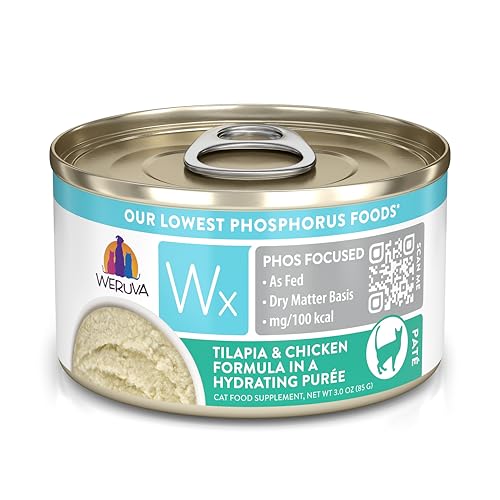
If you’re managing a cat with compromised kidney function, low phosphorus nutrition isn’t just helpful-it’s essential. I rely on Weruva Wx Phos Focused Natural Wet Cat Food because it delivers up to 50% less phosphorus than AAFCO minimums. Its tilapia and chicken formula maintains high-quality protein levels, vital for preserving muscle mass. The highly bioavailable proteins support efficient digestion and amino acid absorption. The hydrating purée boosts moisture intake, critical for renal health. It’s made with natural ingredients, no fillers, cellulose, or carbs to artificially lower phosphorus. Bone-free and palatable, it’s a safe, effective choice for long-term management.
Best For: Cats with compromised kidney function requiring a low-phosphorus, high-protein, natural diet to support renal health and maintain muscle mass.
Pros:
- Delivers up to 50% less phosphorus than AAFCO minimum levels while maintaining high-quality protein from tilapia and chicken
- Hydrating purée texture promotes increased moisture intake, supporting kidney function and urinary health
- Made with natural, bone-free ingredients without fillers, cellulose, or carbohydrates that artificially lower phosphorus
Cons:
- Limited protein variety compared to broader commercial wet food lines, which may affect long-term palatability for picky eaters
- Higher cost per can compared to standard over-the-counter wet cat foods
- Requires a multi-can pack purchase, which may not suit cats needing short-term dietary trials
Forza10 Cat Food Lamb Flavor (12-Pack)
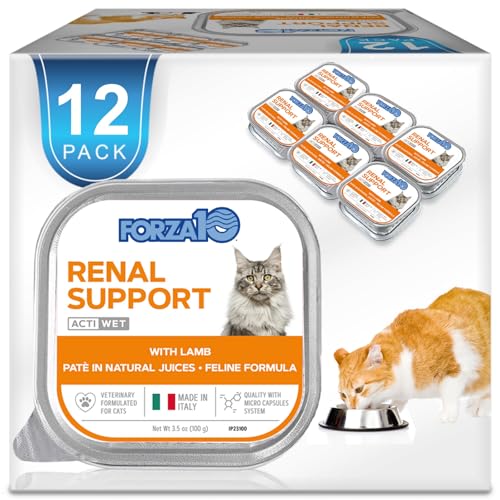
For cats with compromised kidney function, controlling dietary phosphorus is critical, and Forza10 Cat Food Lamb Flavor (12-Pack) delivers a precisely formulated wet food option designed to support long-term renal health. It contains controlled phosphorus levels and adapted protein content, reducing kidney workload. Hydrolyzed and potato proteins enhance digestibility while minimizing metabolic strain. Each 3.5 oz can features lamb as the primary ingredient, fortified with cranberries, dandelion, and clover extract for antioxidant and urinary support. It’s non-GMO, free of by-products, wheat, soy, and artificial additives. I recommend it for daily feeding-alone or mixed-with vet-formulated precision that mirrors therapeutic diet standards.
Best For: Cats with kidney issues or those requiring a vet-formulated, low-phosphorus diet to support renal and cardiac health.
Pros:
- Precisely controlled phosphorus and protein levels to reduce strain on kidneys
- Made with high-quality, non-GMO ingredients and no artificial additives, by-products, wheat, or soy
- Enhanced with cranberries, dandelion, and clover extract for urinary and antioxidant support
Cons:
- Limited flavor variety may not appeal to all cats
- Higher price point compared to standard wet cat foods
- Requires refrigeration after opening, limiting convenience for travel or multi-cat households
Weruva Lickable Cat Treats Variety Pack
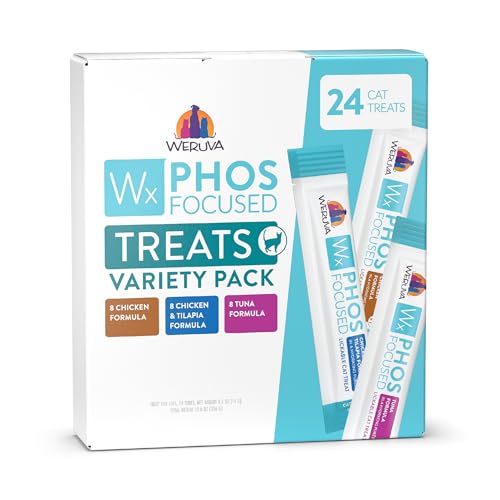
The Weruva Wx Phos Focused Lickable Cat Treats Variety Pack is a precision-formulated option for cats requiring low-phosphorus nutrition, particularly those managing chronic kidney disease or other phosphorus-sensitive conditions. I rely on this treat pack because it uses naturally low-phosphorus proteins like boneless, skinless chicken, wild-caught tuna, tilapia, and egg white. Each 0.5oz tube delivers precise portions-ideal for controlled feeding. The smooth, lickable texture guarantees easy consumption, even for cats with reduced appetites. There’s no grain, gluten, carrageenan, or fillers. Weruva follows BRCGS Global Standards for Human Food, so I trust its safety and quality. Developed by pet parents David and Stacie Forman, it’s a scientifically sound, practical tool in feline dietary management.
Best For: Cats needing low-phosphorus nutrition, especially those with chronic kidney disease or other phosphorus-sensitive health conditions.
Pros:
- Formulated with naturally low-phosphorus, high-quality proteins like chicken, tuna, tilapia, and egg white
- Smooth, lickable texture that’s easy to consume, even for cats with reduced appetite or dental issues
- Free from grain, gluten, carrageenan, fillers, and artificial additives; made in facilities meeting BRCGS Global Standards for Human Food
Cons:
- Higher price point compared to standard cat treats
- Limited flavor variety within the Wx Phos line
- Single-serve tubes may create more waste compared to multi-cat containers
Weruva Pate & Gravy Variety Pack

I rely on Weruva’s Pate & Gravy formulas when managing cats with early to moderate kidney concerns who still need quality protein. These 3oz cans contain up to 50% less phosphorus than AAFCO minimums, supporting renal health without sacrificing nutrition. The formula uses highly bioavailable animal proteins for efficient amino acid absorption and muscle preservation. Hydration is enhanced through bone-free, moisture-rich ingredients. There are no fillers, powdered cellulose, or empty carbs. I appreciate that phosphorus reduction comes from real food sourcing, not artificial binders. Each variety pack includes 12 cans, ensuring dietary rotation without compromising purity or digestive tolerance.
Best For: Cats with early to moderate kidney concerns needing high-quality, low-phosphorus nutrition without fillers or artificial additives.
Pros:
- Formulated with up to 50% less phosphorus than AAFCO minimums to support renal health
- Uses highly bioavailable animal proteins for optimal amino acid absorption and muscle maintenance
- Free from fillers, powdered cellulose, and non-essential carbohydrates, emphasizing natural nutrition
Cons:
- Limited to 3oz cans, which may require more cans for larger cats or multi-cat households
- Lower phosphorus content may not suit cats without renal concerns needing standard mineral levels
- Premium pricing compared to conventional wet cat food brands
Weruva Wx Phos Focused Natural Wet Cat Food, Our Lowest Phosphorus Formulas

A kidney-conscious cat deserves food engineered with clinical precision, and Weruva Wx Phos Focused Natural Wet Cat Food delivers exactly that. This formula contains up to 50% less phosphorus than AAFCO minimum levels, helping manage renal workload. I rely on its highly bioavailable proteins to support muscle maintenance without taxing the kidneys. There are no fillers, carbohydrates, or powdered cellulose-just clean, natural ingredients. Each 3oz can uses bone-free tilapia and tuna in a hydrating purée, boosting fluid intake critical for urinary health. I trust its nutrient-dense profile because it avoids artificial additives that distort phosphorus measurements. Hydration and purity make this food a clinical-grade choice.
Best For: Cats with kidney concerns or those requiring a low-phosphorus, hydrating, and natural diet to support renal and urinary health.
Pros:
- Contains up to 50% less phosphorus than AAFCO minimum levels, supporting reduced renal workload
- Features highly bioavailable, natural proteins to maintain muscle mass without fillers or carbohydrates
- Promotes hydration with a puréed texture and bone-free ingredients, crucial for cats with urinary issues
Cons:
- Limited protein variety may not suit cats with specific fish sensitivities
- Premium pricing compared to standard wet cat foods
- Only available in 3oz cans, which may be less convenient for multi-cat households
Weruva Wx Phos Focused Variety Pack – Canned Cat Food, 3 oz Cans (20 Count)

Supporting cats with compromised kidney function starts with precise nutritional control, and the Weruva Wx Phos Focused Variety Pack delivers a phosphorus-controlled formula specifically tailored for feline renal health. Each 3 oz can contains clinically balanced levels of phosphorus to help reduce renal strain. I rely on its real meat ingredients-like chicken and tuna-sourced for high digestibility and lean nutrition. The grain-free, filler-free recipe eliminates common allergens. There are no artificial preservatives, colors, or flavors. Each of the 20 single-serving cans guarantees freshness and reduces waste. This variety pack supports long-term urinary and kidney function through science-backed formulation.
Best For: Cats with kidney or urinary tract issues needing a controlled-phosphorus, grain-free diet for optimal renal health.
Pros:
- Phosphorus-controlled formula supports kidney and urinary tract health
- Made with high-quality, real meat ingredients for digestibility and taste
- Grain-free, no fillers, and free from artificial additives for sensitive cats
Cons:
- Limited to 3 oz servings, which may require multiple cans for larger cats
- Higher price point compared to standard canned cat food
- Variety pack may not suit cats with specific protein sensitivities
Weruva Chicken & Tilapia Freeze-Dried (1oz)

For cats managing kidney health, controlling dietary phosphorus is non-negotiable-and this freeze-dried formula delivers precision nutrition where it matters most. I rely on Weruva’s Chicken & Tilapia Freeze-Dried because it uses naturally low-phosphorus proteins: boneless chicken breast, tilapia, and egg whites. It contains up to 50% less phosphorus than AAFCO’s minimum, without fillers like powdered cellulose. Each 1oz bag (model 4542, ASIN B0F24XN9TM) offers a fully cooked, BRCGS-certified meal. It’s ideal for supplemental feeding. Suggested intake ranges from ¾ to 1½ cups daily based on weight. It preserves muscle, supports kidney function, and maintains palatability-all without artificial phosphorus dilution.
Best For: Cats requiring kidney support and low-phosphorus nutrition, especially those managing chronic kidney disease.
Pros:
- Formulated with naturally low-phosphorus proteins like chicken breast, tilapia, and egg whites
- Up to 50% less phosphorus than AAFCO minimums without artificial fillers or carbohydrates
- Freeze-dried for high palatability and muscle maintenance, BRCGS-certified for quality
Cons:
- Intended only for supplemental feeding, not as a complete daily diet
- Small 1oz bag size may require frequent repurchasing for regular use
- Higher cost compared to traditional wet or dry cat foods
Forza10 Cat Food for Kidney Support
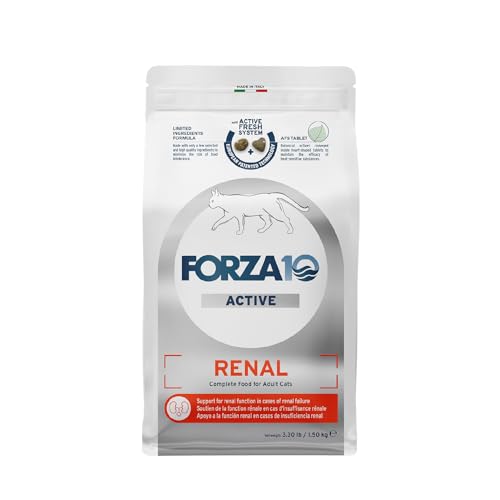
When your cat faces kidney challenges, managing phosphorus intake becomes critical. I rely on Forza10 Cat Food for Kidney Support because it’s formulated with hydrolyzed protein and potato protein to limit phosphorus while maintaining essential amino acids. This dry food contains cranberries, dried dandelion, and clover extract-botanicals proven to aid renal function. Each 3.3-pound bag offers complete, balanced nutrition for adult cats, free from GMOs, wheat, soy, and artificial additives. Its limited-ingredient profile enhances digestibility and reduces organ strain. Crafted in Italy with veterinary input, it supports long-term kidney and cardiac health through precise nutrient control.
Best For: Cats with kidney issues needing low-phosphorus, veterinarian-formulated nutrition to support renal and cardiac health.
Pros:
- Features hydrolyzed and potato proteins to help control phosphorus levels while maintaining essential amino acids
- Contains kidney-supporting botanicals like cranberries, dried dandelion, and clover extract
- Free from GMOs, wheat, soy, by-products, and artificial additives with a limited-ingredient formula for better digestibility
Cons:
- Limited flavor variety may not appeal to all cats
- Premium pricing compared to standard commercial cat foods
- Only available in a 3.3-pound bag, which may require frequent reordering
Dave’s Pet Food Kidney Support Cat Food (24 Pack)

If your cat is showing early signs of kidney disease or has been diagnosed with chronic renal issues, Dave’s Pet Food Kidney Support Cat Food offers a scientifically formulated solution designed to reduce strain on essential organs. Its low phosphorus content (0.15%) helps decrease mineral buildup, easing the kidneys’ workload. High moisture levels support hydration and kidney function. I chose this formula because it’s vet-recommended yet doesn’t require a prescription. It features chicken and chicken liver pate in a smooth texture cats accept easily. The protein quality sustains muscle mass without overburdening kidneys. It delivers 17 essential vitamins and minerals, including taurine, for complete nutritional support.
Best For: Cats showing early signs of kidney disease or those with chronic renal issues who need a vet-recommended, low-phosphorus diet.
Pros:
- Low phosphorus content (0.15%) helps reduce kidney workload and supports long-term renal health
- High moisture level promotes hydration and optimal kidney function
- Palatable chicken and chicken liver pate texture encourages eating in cats with sensitive appetites
Cons:
- May not be suitable for cats requiring prescription-only renal diets in advanced stages of kidney disease
- Contains liver, which some cats may be sensitive to or overconsume due to palatability
- Canned format may be less convenient than dry food for some pet owners
Fresh Made Kidney Care Cat Treats
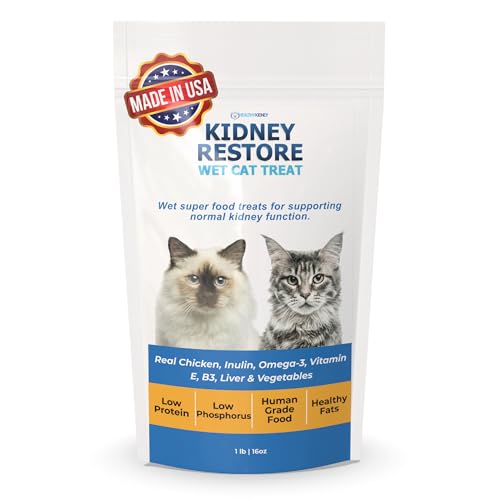
I recommend Fresh Made Kidney Care Cat Treats for cats with chronic kidney disease who need precise nutritional support, especially when managing phosphorus intake is critical. These vet-formulated, low-phosphorus, low-sodium treats are made with human-grade chicken, liver, and egg proteins in kidney-safe ratios. They’re soaked before cooking and include natural phosphorus blockers. Enriched with omega-3s, Vitamin E, B3, and inulin, they support hydration and renal function. The 1-pound pack (ASIN: B0G23VRVYF) provides a nutrient-dense, intermittent snack. Not a complete diet. Suitable for all breeds and life stages.
Best For: Cats with chronic kidney disease requiring low-phosphorus, low-sodium nutritional support to maintain renal function and hydration.
Pros:
- Vet-formulated with human-grade proteins (chicken, liver, egg) in kidney-safe ratios
- Low phosphorus, low sodium, and enriched with omega-3s, Vitamin E, B3, and inulin for renal and overall health
- Includes natural phosphorus blockers and is soaked before cooking to help maintain normal phosphorus levels
Cons:
- Limited customer feedback with only 2 reviews and a 3.0-star rating
- Not a complete diet; must be used as an intermittent treat alongside main renal diet
- Relatively new product launch (November 2025), so long-term efficacy data may be limited
Factors to Consider When Choosing Low Phosphorus Cat Food
You need to check the phosphorus level first-ideal therapeutic diets contain under 0.3% phosphorus on a dry matter basis to support kidney health. High-quality protein is essential, so pick foods with clearly listed animal-based proteins like chicken or salmon, which produce fewer metabolic waste byproducts. Always prioritize options designed with veterinary input, featuring natural ingredients and added moisture to help maintain hydration, since even a 10% increase in water intake can substantially reduce renal workload.
Phosphorus Level Importance
Although cats may not show outward signs of kidney distress early on, managing dietary phosphorus becomes critical once chronic kidney disease is suspected or diagnosed. You should aim for cat foods with phosphorus levels below 0.3% on a dry matter basis. This threshold helps reduce the risk of mineral imbalances and soft tissue calcification, which can worsen kidney damage. High phosphorus intake stresses compromised kidneys, accelerating disease progression. Even if your cat’s bloodwork appears normal, early-stage disease can still benefit from reduced phosphorus. The AAFCO minimum for adult cat food is 0.5% phosphorus, so low-phosphorus diets contain up to 50% less than that. These restricted levels aren’t just safe-they’re proven to support longer survival times and better quality of life. Always check the guaranteed analysis and calculate dry matter values to confirm true phosphorus content.
Protein Quality Matters
High-quality protein plays a central role in supporting feline health, especially when managing phosphorus intake for cats with kidney concerns. You need highly bioavailable proteins so your cat absorbs essential amino acids efficiently, reducing nitrogenous waste that stresses compromised kidneys. Choose real animal-based sources like chicken, turkey, or salmon-they maintain muscle mass without relying on plant fillers that dilute nutritional value. Prioritize proteins naturally low in phosphorus, such as lean poultry or select fish, to meet dietary needs while supporting renal function. Don’t cut protein too low-adequate, digestible levels prevent muscle wasting even in restricted-phosphorus diets. Avoid non-essential carbs and fillers; they displace protein and reduce biological value. Look for formulations where animal protein is the first ingredient and unnamed by-products are absent. These choices guarantee your cat gets concentrated, usable amino acids-essential for long-term vitality. Quality matters more than quantity.
Hydration Support Needs
Why do cats with kidney concerns struggle to stay hydrated? Your cat’s thirst drive often decreases with renal disease, making it harder for them to consume enough water. That’s why you need to prioritize moisture-rich food. Wet or canned low phosphorus diets contain 70–80% moisture, drastically increasing hydration compared to dry kibble’s 10%. This high water content supports urine dilution, lowering the risk of crystal formation and promoting urinary tract health. Increased fluid intake also helps maintain glomerular filtration rate, reducing strain on damaged kidneys. You’re not just feeding-you’re supplementing essential fluids. Diets with bone-free proteins and added broths or gels boost palatability while enhancing hydration. Moisture delivery isn’t optional; it’s therapeutic. Choosing a high-moisture, low phosphorus formula actively supports renal function and overall fluid balance in your cat’s daily nutrition.
Natural Ingredients Preferred
Nutrient integrity starts with sourcing. You should choose low phosphorus cat food made with natural ingredients to guarantee nutrient density and avoid synthetic additives. These formulas exclude non-nutritive fillers like powdered cellulose, which can falsely lower phosphorus readings without enhancing dietary quality. Natural recipes use highly bioavailable animal proteins, supporting muscle maintenance without increasing renal workload. They provide essential nutrients-taurine, omega-3 fatty acids, vitamins-through whole food sources, not artificial supplementation. You’ll also avoid artificial preservatives, colors, and flavors, reducing metabolic burden on compromised kidneys. Carbohydrate-minimal formulations align with feline nutritional biology, promoting better long-term outcomes. By prioritizing natural ingredients, you select a diet that’s both physiologically appropriate and therapeutically effective. This approach guarantees your cat receives clean, functional nutrition tailored to kidney health without relying on lab-made substitutes or misleading nutritional profiles.
Veterinary Formulation Benefits
Veterinary formulation transforms how you manage your cat’s kidney health. These diets are crafted with animal nutritionists to deliver precise nutrient profiles tailored for renal support. You’ll find phosphorus levels controlled below 0.5% on a dry matter basis, reducing strain on compromised kidneys. Unlike generic foods, veterinary formulas balance high-quality, highly digestible proteins to preserve muscle mass without overloading the kidneys. They align with clinical guidelines for managing feline chronic kidney disease, ensuring therapeutic effectiveness. You also get added functional nutrients-omega-3 fatty acids reduce inflammation, while antioxidants like vitamin E help protect kidney cells. Every ingredient serves a purpose, calibrated not just for safety but for measurable health outcomes. When you choose a veterinary-formulated diet, you’re not just limiting phosphorus-you’re providing science-backed, targeted nutrition that supports long-term kidney function and overall liveliness.
Texture And Palatability
Because appetite changes are common in cats with kidney disease, selecting a low phosphorus food with an appealing texture becomes critical to maintaining consistent intake. Wet foods like pâtés, gravies, and purées often work best-they’re smooth, hydrating, and easy to swallow. Moist textures boost fluid intake, helping dilute urine and support kidney function. If your cat has dental sensitivity, avoid chunky formulas; smooth or finely ground options reduce chewing effort. Freeze-dried or rehydratable foods offer intense aroma and a tender texture that picky eaters respond to, while still meeting renal diet standards. Look for bone-free, soft meat pieces or homogenized proteins-these enhance palatability without raising phosphorus. Canned formulas typically contain 70–80% moisture, far exceeding dry kibble’s 10%, making them more effective for hydration. Choose textures that match your cat’s oral health and eating behavior to guarantee daily compliance.
Feeding Guidelines Clarity
How do you know if a low phosphorus cat food meets your pet’s daily needs? Check whether the feeding guidelines specify if the food is for daily maintenance or only intermittent use. A complete, balanced diet should support long-term health, especially for cats with chronic kidney disease. Portion size matters-feed 0.5 to 1.5 ounces per pound of body weight daily, depending on caloric density. Always follow labeled instructions for shifting from your cat’s old food over 7–10 days to prevent digestive upset. Never assume a product is nutritionally adequate just because it’s low in phosphorus. Confirm it’s labeled as “complete and balanced” by AAFCO standards. If it’s a supplement or treat, it won’t meet full nutritional needs. Many therapeutic diets require veterinary supervision-look for clear warnings and usage directions. Read labels carefully; clarity guarantees safety, consistency, and proper compliance.
Frequently Asked Questions
Can I Mix Low Phosphorus Cat Food With Regular Food?
Yes, you can mix low phosphorus cat food with regular food, but you’ll dilute the therapeutic benefit. Doing so reduces the overall phosphorus reduction needed for medical management. For cats with kidney disease, consistency in phosphorus intake below 0.3–0.5% on a dry matter basis is critical. Mixing may work short-term, but long-term, full shift to a prescription low-phosphorus diet guarantees effective control and slows disease progression.
How Often Should I Feed My Cat Low Phosphorus Food?
You should feed your cat low phosphorus food at every meal, daily. Doing so maintains consistent phosphorus control, critical for managing kidney disease. Split the daily portion into two meals unless your vet advises otherwise. Frequent feeding stabilizes nutrient absorption. Always follow the label’s feeding guide, adjusting for weight and health status. Never skip doses-steady intake supports long-term renal function and slows disease progression.
Is Low Phosphorus Cat Food Suitable for All Life Stages?
No, low phosphorus cat food isn’t suitable for all life stages. You must avoid feeding it to kittens or pregnant cats. Their bodies need higher phosphorus for growth and development. Adult and senior cats with kidney issues benefit most. These formulas typically contain 0.3–0.6% phosphorus on a dry matter basis. Always check the label for AAFCO statements confirming suitability for specific life stages.
Does Low Phosphorus Food Help With Early Kidney Disease?
Yes, feeding low phosphorus food helps slow the progression of early kidney disease. You reduce strain on your cat’s kidneys by limiting phosphorus intake. Veterinary studies show diets with phosphorus levels below 0.5% on a dry matter basis improve survival rates. These foods support filtration efficiency and lower serum phosphorus. Early dietary intervention is critical. You’re not curing the disease, but you’re stabilizing kidney workload, delaying complications, and extending quality lifespan through precise nutritional management.
Are There Side Effects to Switching to Low Phosphorus Cat Food?
You may notice mild digestive upset when switching to low phosphorus cat food, especially if done too quickly. Shift over 7–10 days by mixing increasing amounts with current food. Most cats adapt well. Phosphorus levels below 0.5% on a dry matter basis are safe for healthy kidneys and beneficial in early renal support. No serious side effects occur with proper formulation. Always choose vet-formulated diets to maintain nutritional balance.