Best Wet Cat Food for Pancreatitis: Royal Canin vs Wellness CORE+
Vets recommend low-fat, highly digestible wet cat foods to reduce pancreatic workload. Choose formulas with less than 15% fat on a dry matter basis, like Royal Canin Digestive Care or Hill’s i/d. These contain highly digestible proteins and prebiotic fibers that support nutrient absorption and gut health. High moisture content aids hydration and digestion. Look for grain-free, additive-free options with real animal-based proteins. Each 3-oz can delivers balanced nutrition critical during recovery. The right diet makes a clear difference in managing symptoms effectively-further details reveal how specific ingredients align with long-term care needs.
We are supported by our audience. When you purchase through links on our site, we may earn an affiliate commission, at no extra cost for you. Learn more. Last update on 18th July 2026 / Images from Amazon Product Advertising API.
Notable Insights
- Royal Canin Digestive Care wet food is vet-recommended for cats with pancreatitis due to its highly digestible proteins and low-fat formulation.
- Wellness CORE+ Digestive Health Chicken Formula offers low-fat, grain-free nutrition with prebiotic fiber to support gut and pancreatic health.
- Blue Buffalo True Solutions Blissful Belly uses real chicken and clinically proven prebiotics to promote digestion and firm stools in sensitive cats.
- Low-fat wet foods with less than 10–15% fat on a dry matter basis are essential to reduce pancreatic enzyme secretion and prevent flare-ups.
- Highly digestible, grain-free formulas with moisture-rich ingredients help maintain hydration and ease digestive strain in cats with pancreatitis.
Royal Canin Digestive Care Cat Food (3oz, 12-Pack)

If your cat struggles with pancreatitis and sensitive digestion, Royal Canin Digestive Care Wet Cat Food is a targeted solution designed for cats one year and older with compromised gastrointestinal function. I rely on its highly digestible proteins to reduce gut irritation and support nutrient absorption. Each 3oz can contains soft slices in gravy, a texture proven to enhance palatability and digestion. In Royal Canin’s internal study, over 95% of cats showed improved stool quality within 10 days when fed this wet food alongside its dry counterpart. I recommend the 12-pack for consistent feeding. It delivers 100% complete nutrition, with balanced vitamins and minerals to maintain weight and digestive health.
Best For: Adult cats one year and older with sensitive stomachs or compromised digestive function, including those managing conditions like pancreatitis.
Pros:
- Formulated with highly digestible proteins to support optimal digestion and reduce gut irritation
- Soft slices in gravy texture promotes nutrient absorption and palatability, with over 95% improvement in stool quality within 10 days when paired with dry formula
- Provides 100% complete and balanced nutrition with tailored vitamins and minerals to maintain healthy weight and overall wellness
Cons:
- Requires pairing with dry food for optimal results, which may increase overall feeding cost
- Limited to cats 1 year and older, not suitable for kittens or senior cats with different nutritional needs
- Some cats may be sensitive to specific ingredients despite the sensitive stomach formulation
Wellness CORE+ Digestive Health Wet Cat Food

Wellness CORE+ Digestive Health Wet Cat Food stands out for cats needing a highly digestible, low-fat diet that supports pancreatic health without sacrificing nutrition. I rely on its grain-free formula with chicken as the first ingredient, delivering 10% crude protein and minimal fat ideal for sensitive systems. Prebiotic fiber fuels beneficial gut bacteria, while pumpkin and papaya aid digestion. Each 3-oz can contains zero corn, wheat, soy, or carrageenan. Omega-3 fatty acids promote skin and coat health. I recommend 1¾ to 2 cans daily per 6–8 lbs body weight. Backed by a 4.2-star rating from over 2,600 reviews and the Wellness Guarantee.
Best For: Cats with sensitive stomachs or digestive issues who need a highly digestible, grain-free, low-fat diet that supports gut and overall health.
Pros:
- Chicken is the first ingredient, providing high-quality protein with 10% crude protein per can
- Contains prebiotic fiber, pumpkin, and papaya to support digestion and gut health
- Free from corn, wheat, soy, carrageenan, and artificial additives, backed by a 4.2-star customer rating and satisfaction guarantee
Cons:
- Limited to one flavor option, which may reduce long-term palatability for some cats
- Lower fat content may not suit cats needing higher energy diets or weight gain
- Small 3-oz cans may be inconvenient for owners of larger cats or multi-cat households
Blue Buffalo Digestive Care Wet Cat Food
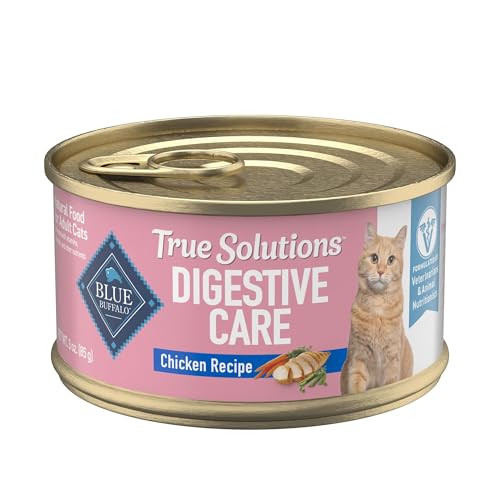
Blue Buffalo True Solutions Blissful Belly Digestive Care Natural Adult Wet Cat Food stands out for cats needing gentle digestive support, especially those managing pancreatitis. I rely on real chicken as the first ingredient, delivering a high-quality, easily digestible protein source. The formula contains clinically proven prebiotic fiber to nourish beneficial gut bacteria and support stool quality. Each 3-oz can provides high moisture content, aiding hydration-a key factor in pancreatic health. I avoid corn, wheat, soy, and by-product meals, reducing potential irritants. Packaged in a 24-can pack, it’s vet-recommended for digestive care with consistent, transparent labeling.
Best For: Cats with sensitive stomachs or digestive issues, including those managing pancreatitis, who benefit from highly digestible, natural wet food with real chicken and no common irritants.
Pros:
- Formulated with real chicken as the first ingredient for high-quality, easily digestible protein
- Contains clinically proven prebiotic fiber to support healthy digestion and stool quality
- High moisture content promotes hydration, which is essential for overall and pancreatic health
Cons:
- Higher price point compared to non-specialty wet cat foods
- Only available in small 3-oz cans, which may be less convenient for multi-cat households
- Limited flavor variety within the Blissful Belly line, potentially reducing long-term acceptance
Blue Buffalo Digestive Care Wet Food for Cats
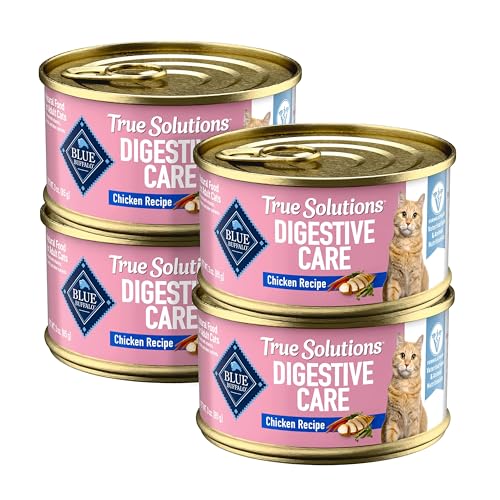
I recommend Blue Buffalo True Solutions Digestive Care Wet Food for cats with pancreatitis who need a gentle, protein-focused diet that supports digestive stability. This formula starts with real chicken as the first ingredient, providing high-quality, easily digestible protein. It contains clinically proven prebiotic fiber to nourish beneficial gut bacteria and support stool quality. Veterinarian-formulated with animal nutritionists, it’s made with natural ingredients enhanced with vitamins, minerals, and nutrients. Each 3-ounce can is rich in moisture, aiding hydration. The 4-pack trial size lets you test tolerance. Low in fat and free from grains, this food minimizes digestive strain while maintaining nutritional balance.
Best For: Cats with sensitive stomachs or pancreatitis needing a low-fat, high-protein, and easily digestible wet food to support digestive health.
Pros:
- Formulated with real chicken as the first ingredient for high-quality, digestible protein
- Contains clinically proven prebiotic fiber to support gut health and firm stool quality
- Veterinarian-formulated with natural ingredients, added vitamins, and zero grains for sensitive digestion
Cons:
- Trial pack offers limited quantity, making long-term use costlier if purchased regularly
- Some cats may be sensitive to chicken despite the gentle formula
- Not specifically labeled as prescription or veterinary diet, so may not suit severe medical cases without vet approval
Wellness CORE+ Digestive Health Wet Cat Food

If your cat struggles with pancreatitis and sensitive digestion, this high-moisture pate delivers targeted support where it’s needed most. I rely on real whitefish as the first ingredient for highly digestible protein. The smooth pate texture enhances palatability and eases digestion. It’s grain-free and excludes corn, wheat, soy, carrageenan, and artificial additives. Prebiotic fiber promotes gut health. Omega-3 fatty acids nourish skin and coat. Formulated by vets, it offers complete nutrition for adult cats. High water content aids hydration. Serve at room temperature; refrigerate leftovers.
Best For: Cats with sensitive stomachs or pancreatitis needing a grain-free, highly digestible, high-moisture diet to support digestive and overall health.
Pros:
- Real whitefish as the first ingredient provides highly digestible protein
- Grain-free formula with prebiotic fiber and no artificial additives supports gut health
- High moisture content promotes hydration and the smooth pate aids digestion
Cons:
- Limited to wet food format, which may not suit all feeding preferences
- Whitefish-based formula may not be ideal for cats with specific fish sensitivities
- Requires refrigeration of unused portions, which may be less convenient
Reveal Natural Wet Canned Cat Food

Reveal Natural Wet Canned Cat Food stands out as a top choice for cats managing pancreatitis due to its limited ingredient, grain-free formulation that reduces digestive strain. I rely on its 100% natural ingredients-no artificial colors, flavors, or preservatives-to support sensitive systems. Each 2.47 oz can features high-quality protein as the first ingredient, like real tuna fillet or ocean fish. The 12-can variety pack includes 4 each of three recipes, offering texture diversity and consistent hydration through broth-based formulas. I’ve found its minimal ingredient lists reduce food sensitivity risks while delivering complete, balanced nutrition your cat needs during recovery.
Best For: Cats with pancreatitis or sensitive digestive systems seeking a grain-free, limited-ingredient, natural wet food option.
Pros:
- Made with 100% natural ingredients and no artificial colors, flavors, or preservatives
- High-quality protein as the first ingredient to support muscle health and easy digestion
- Broth-based formulas promote hydration and appeal to picky eaters
Cons:
- Small can size (2.47 oz) may not be cost-effective for larger cats or frequent feeding
- Limited flavor variety within the pack, which may not suit all taste preferences
- Requires refrigeration after opening, limiting convenience for on-the-go feeding
Wellness CORE+ Digestive Health Cat Food (12-Pack)

For cats managing pancreatitis, digestive stability and high-quality nutrition are non-negotiable. I rely on Wellness CORE+ Digestive Health Cat Food because it’s formulated specifically for sensitive stomachs. Its grain-free recipe starts with real salmon or whitefish as the first ingredient, guaranteeing high biological value protein. Prebiotic fiber supports beneficial gut flora, promoting consistent digestion. The formula includes Omega-3 fatty acids from fish oil to maintain skin and coat health. Each 12-pack contains six cans of salmon pâté and six of whitefish pâté. The smooth texture guarantees easy consumption, while the wet format boosts hydration, critical for kidney and urinary function.
Best For: Cats with sensitive stomachs or digestive conditions like pancreatitis who need grain-free, high-protein, easily digestible meals.
Pros:
- Formulated with real salmon or whitefish as the first ingredient to support digestion and provide high-quality protein
- Contains prebiotic fiber and Omega-3 fatty acids to promote gut health and nourish skin and coat
- Grain-free, carrageenan-free, and free from artificial additives, with a smooth pâté texture for easy consumption
Cons:
- Limited to two seafood flavors, which may not suit cats needing protein variety or with fish sensitivities
- Wet food format requires refrigeration after opening and has a shorter shelf life once opened
- Higher price point compared to some conventional wet cat food brands
Hill’s i/d Digestive Care Cat Food (24-Pack)
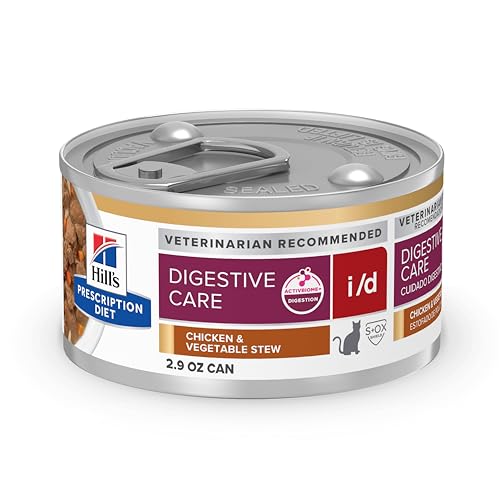
Hill’s Prescription Diet i/d Digestive Care Chicken & Vegetable Stew stands out as a top-tier choice for cats managing pancreatitis, particularly when digestive stability and nutrient absorption are critical. It’s formulated with ActivBiome+ Digestion, a prebiotic fiber blend that rapidly supports gut microbiome balance. The stew is highly digestible, reducing intestinal strain. B vitamins and electrolytes replace those lost during digestive stress. Clinically proven antioxidants strengthen immune function. Omega-3 and omega-6 fatty acids maintain skin and coat health. S+OXSHIELD technology helps prevent struvite and calcium oxalate crystals. Each 2.9 oz can comes in a 24-pack. Veterinarians recommend it for sensitive digestive systems.
Best For: Cats with pancreatitis or sensitive digestive systems needing highly digestible nutrition and gut microbiome support.
Pros:
- Features ActivBiome+ Digestion to rapidly activate and balance the gut microbiome
- Highly digestible formula reduces intestinal strain and improves nutrient absorption
- Includes S+OXSHIELD technology to help prevent struvite and calcium oxalate crystal formation
Cons:
- Requires a veterinarian’s recommendation, limiting over-the-counter accessibility
- Stew texture may not appeal to cats preferring dry or chunk-style foods
- Relatively small 2.9 oz cans may require feeding multiple cans per meal for larger cats
Hill’s Sensitive Stomach Cat Food (24-Pack)

Though not specifically formulated for pancreatitis, this wet cat food works well for cats needing a highly digestible, low-fat diet that supports gastrointestinal sensitivity. I rely on its precisely balanced nutrient profile to minimize digestive strain. Each 2.9 oz can contains highly digestible chicken and vegetables in a minced texture, easing nutrient absorption. It’s low in fat, which helps manage pancreatic workload. Omega-6 fatty acids and vitamin E support skin health. Prebiotic fiber nourishes beneficial gut bacteria. Made in the USA with globally sourced ingredients. Hill’s is the #1 veterinarian-recommended brand.
Best For: Cats with sensitive stomachs and skin issues that require a highly digestible, low-fat, veterinarian-recommended wet food.
Pros:
- Supports digestive and skin health with highly digestible ingredients, prebiotic fiber, Omega-6 fatty acids, and vitamin E
- Low-fat formula helps reduce strain on the pancreas, making it suitable for cats with pancreatitis
- Made in the USA with globally sourced ingredients and trusted by veterinarians as the #1 recommended brand
Cons:
- Not specifically formulated for pancreatitis, so may lack targeted nutritional adjustments for severe cases
- Minced texture may not appeal to cats preferring chunks or whole meat pieces
- Some cats may be sensitive to chicken as a primary protein source
Blue Buffalo Blissful Belly Wet Cat Food

Blue Buffalo Blissful Belly Wet Cat Food stands out for cats with pancreatitis who need gentle, high-quality nutrition that supports both digestive and overall health. I rely on real chicken as the first ingredient, delivering high biological value protein without added by-product meals. The formula includes clinically proven prebiotic fiber to fuel beneficial gut bacteria and support stool quality. It’s made in the USA with natural ingredients, free from corn, wheat, soy, and poultry by-products. Developed by veterinarians and animal nutritionists, it’s designed specifically for digestive care. Each 3-oz can provides balanced, palatable nutrition ideal for sensitive systems.
Best For: Cats with sensitive stomachs or pancreatitis needing a high-protein, natural wet food with digestive support.
Pros:
- Features real chicken as the first ingredient, providing high-quality, easily digestible protein
- Contains clinically proven prebiotic fiber to promote healthy gut bacteria and improve stool quality
- Made in the USA with natural ingredients, free from corn, wheat, soy, and poultry by-product meals
Cons:
- Only available in 3-oz cans, which may be less convenient for owners of larger or multiple cats
- Higher price point compared to some other therapeutic wet cat foods
- Limited flavor variety within the Blissful Belly line
Factors to Consider When Choosing Wet Cat Food for Pancreatitis
You need to prioritize protein quality when selecting wet cat food for pancreatitis-look for named meat sources like chicken or turkey listed as the first ingredient, ensuring amino acid balance without excess strain on compromised organs. Keep fat content under 10% on a dry matter basis, since low-fat formulas reduce pancreatic workload and help prevent flare-ups. Also, choose highly digestible, grain-free options with moisture levels above 75% to support hydration and ease gastrointestinal stress.
Protein Quality Matters
Digestive efficiency starts with protein quality. You need high-quality, highly digestible proteins to reduce pancreatic workload while maintaining muscle mass. Choose wet cat foods with named animal sources-like chicken, turkey, or salmon-because they’re more bioavailable than by-products or plant proteins. These proteins deliver essential amino acids efficiently, supporting recovery without aggravating inflammation. Look for meals listed as primary ingredients, indicating higher protein concentration. Avoid fillers such as corn or soy, which hinder nutrient absorption and increase digestive strain. Easily digestible proteins also cut down on gut fermentation, lowering the risk of bloating or diarrhea. Even with low fat, your cat still needs robust protein intake-aim for at least 8–10% crude protein on a dry matter basis from clean, identifiable sources. Quality protein isn’t just helpful-it’s foundational for healing.
Low Fat Content Essential
Most cats with pancreatitis need a fat intake under 15% on a dry matter basis to keep the pancreas from overworking. You should choose wet food with less than 15% fat to reduce cholecystokinin release, a hormone that triggers pancreatic enzyme secretion. Lowering this response decreases inflammation and supports healing. Feeding a low-fat wet food improves clinical signs in up to 80% of cats within 7–10 days. High fat levels can cause lipemia, which interferes with blood tests and complicates treatment. That’s why low-fat formulas are essential in both acute and chronic cases. For long-term care, aim for wet foods with less than 10% fat. This level helps prevent flare-ups and maintains digestive balance. Always check the guaranteed analysis and convert as-fed values to dry matter. Consistency in low-fat nutrition supports stable recovery and reduces strain on your cat’s pancreas over time.
Highly Digestible Ingredients
Efficiency starts with what you feed. You need highly digestible ingredients to ease your cat’s pancreatic load. Easily broken-down animal proteins-like chicken, turkey, and lamb-are ideal because they require less digestive effort. Minimal processing preserves protein integrity, reducing inflammation risks. Low-fat formulas are essential, but pair them with digestible components to prevent nutrient malabsorption. Look for moisture content above 75%, which supports enzyme function and gut motility without stressing the pancreas. Prebiotic fibers like FOS promote beneficial gut bacteria, improving overall nutrient uptake. These fibers don’t feed the pancreas-they fuel the gut. Choose formulas with hydrolyzed or novel proteins if sensitivities exist. Avoid grains and fillers; they offer little digestibility and increase fermentation. Each ingredient should serve a functional purpose. Your cat’s recovery hinges on food that’s both gentle and effective. Prioritize clean, bioavailable nutrition.
Hydration Support Benefits
You already know that highly digestible ingredients reduce strain on your cat’s pancreas-but what your cat drinks matters just as much as what it eats. Wet cat food contains 70–80% moisture, greatly boosting daily hydration. This high water content supports fluid balance, especially vital when your cat eats or drinks less during flare-ups. Proper hydration maintains thin pancreatic secretions, reducing viscosity and minimizing stress on the inflamed organ. Consistent moisture intake enhances digestive function and improves nutrient absorption, directly supporting recovery. Dehydrated cats face higher risks of complications like constipation, which can worsen abdominal discomfort. Wet food helps prevent this by promoting smoother gastrointestinal transit. Unlike dry kibble, which contains only 10–12% moisture, wet food delivers hydration with every bite. That’s essential for cats with pancreatitis, who often don’t drink enough water independently. Prioritizing moisture-rich meals isn’t just beneficial-it’s a foundational part of managing the condition effectively.
Grain Free Formulation
While not all cats with pancreatitis require a grain-free diet, eliminating grains like corn, wheat, and soy can reduce gastrointestinal irritation by removing common dietary allergens. You’ll find grain-free formulas often replace these with low-starch alternatives like sweet potato or peas, which decrease the digestive enzyme demand on your cat’s pancreas. These diets typically offer high animal-based protein-often 8–10% on a dry matter basis-and less than 5% carbohydrates, aligning with feline metabolic needs. You get enhanced nutrient density without grain-derived fillers, supporting efficient digestion and recovery. Many grain-free wet foods also include prebiotic fibers such as chicory root, which nourish beneficial gut bacteria and help maintain microbiome balance. Increased moisture content-usually 75–80%-further aids hydration. This formulation reduces pancreatic stress while delivering essential nutrients in a biologically appropriate profile.
No Artificial Additives
Grain-free formulations help minimize digestive strain by removing common allergens, but equally important is ensuring the food contains no artificial additives that could further disrupt your cat’s sensitive system. Avoid synthetic colors, flavors, and preservatives-they offer zero nutritional value and may worsen inflammation in cats with compromised pancreatic function. Steer clear of carrageenan, a common stabilizer linked to gastrointestinal irritation; opt for formulas using natural thickeners like guar gum instead. Preservative-free options reduce liver workload, critical for cats managing chronic pancreatitis. Choose products with short ingredient lists composed of whole, recognizable components. Minimal processing and absence of synthetic additives reduce metabolic burden. Each ingredient should serve a nutritional purpose, supporting digestive stability and lowering pancreatic stress. Look for “no artificial additives” stated directly on the label. This precision in formulation mimics a natural feline diet, promoting long-term health without unnecessary chemical exposure.
Veterinarian Recommended Brands
When selecting wet cat food for pancreatitis, turning to veterinarian-recommended brands guarantees access to scientifically formulated diets designed for cats with compromised digestive systems. These brands develop formulas with veterinary nutritionists to meet strict therapeutic standards. They use highly digestible proteins and maintain low fat levels-typically under 15% dry matter basis-to reduce pancreatic workload. Prebiotic fibers like fructooligosaccharides (FOS) support beneficial gut bacteria, improving nutrient absorption and minimizing diarrhea. You’ll find they exclude common irritants: no corn, wheat, soy, or artificial preservatives. That reduction lowers inflammation risk and digestive upset. Their recipes include taurine, B vitamins, and omega-3 fatty acids from fish oil, supporting cardiac and cellular health without taxing the pancreas. Clinical trials show improved stool quality and weight maintenance within weeks. You’re not just feeding your cat-you’re actively managing disease with every bite. These diets follow AAFCO guidelines and are often available only through veterinarians.
Balanced Nutrient Profile
Because your cat’s pancreas is already under stress, feeding a wet food with a balanced nutrient profile helps manage the condition without overloading the digestive system. Choose formulas with moderate, highly digestible protein-around 8–10% on a dry matter basis-to support tissue repair without triggering pancreatic enzyme overproduction. Fat should be controlled, ideally between 10–15% DM, to limit pancreatic stimulation while sustaining energy. B-complex vitamins are critical; look for foods enriched with thiamine, riboflavin, and niacin to offset losses from malabsorption. Prebiotic fibers like fructooligosaccharides (FOS) promote beneficial gut bacteria and improve digestion stability. Guarantee the food contains balanced electrolytes-especially potassium and chloride-to maintain hydration and cellular function, particularly if vomiting or reduced intake occurred. A precisely formulated nutrient profile doesn’t fix the pancreas, but it creates the metabolic conditions for healing with minimal strain.
Frequently Asked Questions
Can I Mix Wet and Dry Food for My Cat With Pancreatitis?
Yes, you can mix wet and dry food for your cat with pancreatitis, but you must prioritize low-fat formulations. Choose veterinary-recommended wet foods with ≤5% fat on a dry matter basis. Limit dry food due to higher carbohydrate and fat levels. Blend 75% wet to 25% dry to maintain hydration and control fat intake. Monitor stool quality and weight weekly. Always consult your vet before changing the diet to guarantee it meets therapeutic nutritional standards.
How Often Should I Feed My Cat With Pancreatitis?
You should feed your cat with pancreatitis 4 to 6 small meals daily. Frequent feeding stabil Bernard pancreatic enzyme secretion and reduces organ stress. Each meal must be low in fat-ideally under 15% on a dry matter basis-and highly digestible. Consistent timing regulates gastrointestinal motility. Moisture-rich food aids hydration, supporting hepatobiliary function. Always follow veterinary guidance when adjusting feeding schedules to guarantee metabolic balance and avoid triggering acute episodes.
Is Grain-Free Wet Food Safe for Cats With Pancreatitis?
Yes, grain-free wet food can be safe for cats with pancreatitis, but it’s not automatically better. You need low-fat, highly digestible formulas-look for ≤1.5g fat per 100 kcal. Some grain-free foods replace grains with fats or carbs that worsen inflammation. Always check the guaranteed analysis. Prioritize veterinary-recommended brands with controlled fat levels, balanced amino acids, and no artificial additives.
Should I Warm the Wet Food Before Feeding It to My Cat?
Yes, you should warm the wet food before feeding it to your cat. Heating enhances aroma and palatability, encouraging better intake. Aim for 100–105°F (38–40°C)-close to body temperature. Use a microwave-safe dish and stir thoroughly to eliminate hot spots. Avoid overheating above 110°F (43°C), as it may degrade nutrients. Serve immediately to maintain texture and temperature. Warming mimics freshly caught prey, stimulating natural feeding instincts in cats.
Can Pancreatitis in Cats Be Cured With Diet Alone?
No, you can’t cure feline pancreatitis with diet alone. Diet manages symptoms and supports recovery but doesn’t eliminate the underlying inflammation. You need veterinary diagnosis and treatment, often including fluids, pain control, and anti-nausea meds. Low-fat, highly digestible wet foods reduce pancreatic strain. Use prescription diets with ≤15% fat on a dry matter basis. Always follow your vet’s care plan-diet is supportive, not curative.