Best Guinea Pig Pellets: 18-22% Fiber & Vitamin C Picks
You need vitamin C–fortified, timothy hay–based pellets with at least 18% crude fiber and 500 mg/kg stabilized vitamin C to prevent scurvy and support digestion. Top vets and breeders recommend Oxbow and Kaytee for consistent nutrient delivery. Oxbow uses uniform pellets with no fillers, while Kaytee includes prebiotics and dental-health textures. These formulas guarantee complete daily nutrition. Each offers specific blends tailored to life stages and dietary needs. The right choice depends on fiber content, ingredient quality, and feeding behavior support. More details on ideal selection follow.
We are supported by our audience. When you purchase through links on our site, we may earn an affiliate commission, at no extra cost for you. Learn more. Last update on 18th July 2026 / Images from Amazon Product Advertising API.
Notable Insights
- Choose timothy hay-based pellets with stabilized vitamin C to meet daily nutritional needs and prevent scurvy.
- Opt for uniform, pellet-only formulas to avoid selective feeding and ensure consistent nutrient intake.
- Provide 18–22% crude fiber diets to support digestive health and natural cecal fermentation.
- Select products without seeds, nuts, or artificial additives to reduce health risks and imbalanced eating.
- Use vitamin C-fortified pellets with natural preservatives like mixed tocopherols for nutrient stability and safety.
Oxbow Guinea Pig Food (5 lb)

If you’re looking for one complete daily diet that eliminates the guess游戏副本 in feeding adult guinea pigs, Oxbow Guinea Pig Food (5 lb) is my top recommendation. It delivers 100% of the daily recommended vitamins and minerals, supporting immune function and overall health. The Timothy hay base provides 18% fiber, promoting healthy digestion and natural foraging. Prebiotics enhance gut flora balance, critical for digestive efficiency. Vitamin C is stabilized at 500 mg/kg to prevent scurvy and maintain liveliness. No artificial preservatives, colors, or flavors are used. Pellets are uniform, ensuring consistent nutrient intake. Made in the USA. Suitable for lifelong feeding.
Best For: Adult guinea pigs requiring a complete, nutritionally balanced daily diet that supports digestive and immune health.
Pros:
- Formulated with 100% of daily recommended vitamins and minerals, including stabilized vitamin C to prevent deficiencies
- High-fiber Timothy hay base promotes healthy digestion and natural foraging behaviors
- Free from artificial preservatives, colors, and flavors, made with wholesome ingredients in the USA
Cons:
- Pellet-only diet may be less enriching compared to fresh food supplementation
- Some picky guinea pigs may prefer mixed or textured foods
- Larger 5 lb bag may not be ideal for single-pet owners or short-term use
Oxbow Guinea Pig Food (10 lb)

Oxbow Guinea Pig Food (10 lb) delivers ideal nutrition for adult guinea pigs, especially those prone to picky eating or digestive sensitivity. It’s made with high-fiber Timothy hay, which supports healthy digestion and mimics natural foraging diets. The 10-pound size offers long-term value without sacrificing freshness. Stabilized vitamin C prevents scurvy and boosts immunity, remaining effective for up to 12 months when stored properly. Uniform pellets eliminate selective feeding, ensuring balanced intake. Developed with vets and nutritionists, it provides precise levels of fiber (22% min), protein (14% min), and vitamin C (160 mg/kg min). Proudly made in the USA.
Best For: Adult guinea pigs, especially picky eaters or those with digestive sensitivities, seeking a nutritionally balanced, high-fiber diet.
Pros:
- Made with high-fiber Timothy hay to support healthy digestion and mimic natural foraging diets
- Fortified with stabilized vitamin C (160 mg/kg min) to prevent scurvy and support immune health for up to 12 months when stored properly
- Uniform pellets prevent selective eating, ensuring consistent intake of essential nutrients
Cons:
- Larger 10 lb size may not be suitable for owners of single or small groups of guinea pigs due to potential freshness concerns over time
- Pellet-only formula does not include variety in texture or form, which some guinea pigs may find less stimulating
- Contains no added fruits or flavor enhancers, which may make it less appealing to extremely picky guinea pigs accustomed to mixed diets
Wild Harvest Guinea Pig Food (4 lbs)

This 4-lb bag of Wild Harvest Guinea Pig Food is an ideal choice for owners who prioritize balanced, complete nutrition with dietary variety. It combines alfalfa, Timothy hay, vegetables, and fiber-rich pellets to deliver consistent digestibility and dental health support. I rely on its 18% crude fiber and 14% crude protein content to sustain gut motility and muscle maintenance. Added vitamin C-essential since guinea pigs can’t synthesize it-boosts immunity. The mix encourages natural foraging, reducing boredom. I recommend a daily ¼ to ½ cup per pig to prevent overfeeding. Each ingredient serves a functional purpose, much like components in a precision machine. Wild Harvest guarantees every bite supports long-term well-being.
Best For: Guinea pig owners seeking a nutritionally balanced, fiber-rich diet that supports digestive health, dental care, and natural foraging behaviors.
Pros:
- Combines alfalfa, Timothy hay, vegetables, and fiber-rich pellets for comprehensive nutrition
- Contains added vitamin C to support immune health, crucial for guinea pigs that cannot synthesize it
- Encourages natural foraging and active eating with a varied, palatable mix
Cons:
- May contain ingredients that some sensitive guinea pigs could react to, such as certain vegetables or pellets
- 4-lb bag size may be too large for owners with a single guinea pig or limited storage space
- Pellet-hay mix may lead to selective eating if the guinea pig prefers certain components over others
Oxbow Essentials Guinea Pig Food (25 lb)

One standout choice for adult guinea pigs over six months is Oxbow Essentials Guinea Pig Food (25 lb), especially when consistent nutrition and long-term health are top priorities. I rely on its Timothy hay-based formula for high fiber-18% crude fiber minimum-to support digestive health. It contains stabilized vitamin C (at 400 mg/kg), which doesn’t degrade like in many competing brands. The uniform pellets prevent selective eating. There are no artificial preservatives, colors, or flavors. Fortified with natural vitamins and minerals, it sustains immune function and long-term wellness. I feed my guinea pigs 1/8 cup daily alongside unlimited hay. Vets recommend it. Made in the USA.
Best For: Adult guinea pigs over six months that require consistent, high-fiber nutrition to support digestive and immune health.
Pros:
- Formulated with Timothy hay and 18% minimum crude fiber to promote healthy digestion
- Contains stabilized vitamin C (400 mg/kg) and antioxidants to support long-term immune function
- Uniform pellets prevent selective feeding and are free from artificial preservatives, colors, and flavors
Cons:
- Larger 25 lb bag may be impractical for owners with only one or two guinea pigs
- Requires daily portion control (1/8 cup) to avoid overfeeding despite unlimited hay access
- Some picky guinea pigs may take time to adjust to pellet texture or size
Kaytee Timothy Complete Guinea Pig Food (9.5 lb)

I choose Kaytee Timothy Complete Guinea Pig Food (9.5 lb) when digestive health and balanced nutrition are top priorities for my guinea pig. It features timothy hay as the first ingredient, delivering a natural, high-fiber base essential for healthy digestion. The formula includes prebiotics and probiotics to support gut flora balance and consistent fiber for sustained digestive function. It contains stabilized vitamin C to prevent deficiency and maintain immune health. There are no loose seeds or sugary fruits, which stops selective eating. The pellets encourage natural chewing, promoting dental wear. Developed by animal nutrition experts, it reflects over 150 years of formulation science.
Best For: Guinea pig owners who prioritize digestive and dental health and want a nutritionally balanced, no-waste diet formulated by experts.
Pros:
- Features timothy hay as the first ingredient, providing essential, natural fiber for optimal digestion
- Contains prebiotics, probiotics, and stabilized vitamin C to support gut health and immune function
- Eliminates selective eating with a uniform pellet design that excludes seeds and sugary fruits
Cons:
- May be more expensive than basic guinea pig feeds with lower hay content
- Pellet-only formula lacks variety, which some guinea pigs might find less stimulating
- Not suitable for young guinea pigs or those requiring higher calcium intake, as timothy hay is lower in calcium than alfalfa
Wild Harvest Guinea Pig Food (8 lb)

Wild Harvest Guinea Pig Food (8 lb) is best suited for conscientious pet owners seeking a nutritionally complete, hay-based diet that aligns with the biological needs of guinea pigs. I rely on timothy hay as the primary ingredient to support healthy digestion and dental wear. The formula delivers 16% fiber and 14% protein, meeting essential dietary requirements. It’s fortified with vitamin C-critical since guinea pigs can’t synthesize it themselves. I recommend feeding ¼ to ½ cup daily per animal, adjusting for metabolism and activity. The resealable bag preserves freshness and nutrient integrity. Naturally derived ingredients guarantee consistent digestive and immune support without fillers or artificial additives.
Best For: Conscientious pet owners seeking a complete, hay-based diet that supports the digestive, dental, and immune health of guinea pigs.
Pros:
- Formulated with timothy hay as the primary ingredient to promote healthy digestion and natural dental wear
- Fortified with vitamin C to meet essential nutritional needs, as guinea pigs cannot produce it on their own
- Resealable packaging helps maintain freshness and preserve nutrient quality over time
Cons:
- Some guinea pigs may be picky eaters and not prefer pellet-based diets
- Contains fortified vitamins which, in excess, could lead to over-supplementation if not monitored
- Larger 8 lb bag may be impractical for owners with only one or two guinea pigs due to potential nutrient degradation over extended storage
Vitakraft Premium Guinea Pig Food (Alfalfa Pellets)
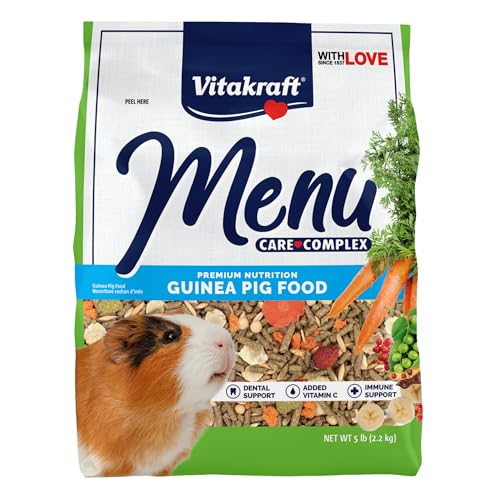
This Vitakraft Premium Guinea Pig Food is ideal for owners who want a complete, nutrition penalanced diet that supports both young and adult guinea pigs. It contains alfalfa pellets fortified with vitamin C, vital for preventing scurvy. The formula includes omega-3 fatty acids for skin and coat health, plus natural probiotics to aid digestion. A blend of vegetables, grains, and fruits mimics wild foraging habits, encouraging natural feeding behavior. Each ingredient aligns with guinea pigs’ herbivorous needs, promoting dental and gastrointestinal function. The resealable bag preserves freshness, ensuring nutritional potency and flavor stability over time. I find it consistently reliable.
Best For: Guinea pig owners seeking a complete, fortified diet that supports overall health, digestion, and natural foraging behavior in both young and adult pets.
Pros:
- Fortified with essential vitamin C to prevent scurvy and support immune health
- Contains omega-3 fatty acids and natural probiotics for skin, coat, and digestive wellness
- Blend of vegetables, grains, and fruits encourages natural foraging and dietary variety
Cons:
- Alfalfa-based formula may be too high in calcium for adult guinea pigs if fed long-term
- Some picky eaters may sort through the mix, leaving pellets uneaten
- Resealable bag may not fully prevent moisture exposure in humid environments
Kaytee Fiesta Guinea Pig Food (4.5 lb)

Kaytee Fiesta Guinea Pig Food (4.5 lb) is best suited for owners seeking a nutritionally complete, palatable diet that supports digestive and immune health in guinea pigs across all life stages. I rely on its balanced formula developed by small animal nutritionists. It includes grains, seeds, fruits, and vegetables fortified with antioxidants, prebiotics, and probiotics. Textured pieces promote chewing, supporting dental health. The 4.5-pound bag (ASIN: B000FXVV4Q) measures 11.02 x 9.72 x 3.46 inches. I recommend shifting over 7–10 days. Reseal and use within 45 days. Store in a cool, dry place.
Best For: Guinea pig owners seeking a nutritionally complete, palatable diet that supports digestive, immune, and dental health across all life stages.
Pros:
- Formulated by small animal nutritionists with balanced nutrients, including antioxidants, prebiotics, and probiotics
- Textured pieces encourage chewing to support dental health and natural foraging behavior
- Includes a mix of grains, seeds, fruits, and vegetables to stimulate appetite and provide variety
Cons:
- Contains seeds and nuts that may lead to selective eating if guinea pigs pick out preferred pieces
- Requires careful storage and must be used within 30–45 days after opening for optimal freshness
- Not exclusively pellet-based, which may reduce nutrient consistency compared to uniform pellet diets
Oxbow Garden Select Guinea Pig Food (8 lb)

I recommend Oxbow Garden Select Guinea Pig Food (8 lb) for adult guinea pigs needing a high-fiber, nutritionally complete pellet option that supports long-term digestive and immune health. It’s made primarily from timothy, orchard, and oat hay-the foundation of a natural cavy diet. These high-fiber hays promote healthy gut motility and dental wear. Each pellet is fortified with vitamin C, essential since guinea pigs can’t synthesize it. The formula is non-GMO and made in the USA with traceable, domestic ingredients. The 8 lb size guarantees long-term use with consistent freshness. Blending three hays increases foraging behavior and dietary variety, mimicking wild feeding patterns.
Best For: Adult guinea pigs needing a high-fiber, nutritionally balanced diet to support digestive health, immune function, and natural foraging behavior.
Pros:
- Made with three high-fiber hays (timothy, orchard, and oat) to support digestion and dental health
- Fortified with essential vitamin C and other nutrients for complete, balanced nutrition
- Non-GMO, made in the USA with traceable, domestically sourced ingredients
Cons:
- Higher price point compared to generic guinea pig feeds
- Some picky guinea pigs may prefer single-hay formulations
- 8 lb bag may be too large for owners with limited storage space
Kaytee Food from The Wild Natural Pet Guinea Pig Food, 4 Pound

Your guinea pig’s digestive system thrives on high-fiber nutrition, and that’s where Kaytee Food from The Wild Natural Pet Guinea Pig Food delivers. I rely on its 18% fiber content to maintain ideal gut motility. The formula features hand-selected timothy hay, rose hip, carrot, marigold, and strawberry-ingredients that mimic natural foraging diets. It contains zero added sugar or fillers and no artificial preservatives. Natural probiotics support microbial balance in the cecum. The texture promotes chewing, which wears down continuously growing teeth. Developed by Kaytee, a brand with over 150 years of small-animal expertise, this 4-pound blend balances nutrition, instinct, and health.
Best For: Guinea pig owners seeking a high-fiber, natural diet that supports digestive health and encourages natural foraging behavior.
Pros:
- High 18% fiber content promotes healthy digestion and gut motility
- Contains natural ingredients like timothy hay and probiotics with no added sugar or artificial preservatives
- Encourages chewing and foraging, supporting dental health and mental stimulation
Cons:
- May be more expensive than standard guinea pig pelleted feeds
- Some picky guinea pigs might not immediately accept the varied texture and ingredients
- Limited availability in certain retail locations compared to mainstream brands
Factors to Consider When Choosing Guinea Pig Pellets
You need to check the fiber content first-guinea pig pellets should contain 18–22% crude fiber to support proper digestion and prevent gastrointestinal stasis. Look for vitamin C levels of at least 500 mg per kg of feed, since guinea pigs can’t synthesize this nutrient and deficiency leads to scurvy. Always pick uniformly sized, dust-free pellets made from high-quality ingredients like timothy hay, and avoid mixes with seeds or colored bits that encourage selective eating and disrupt natural foraging behavior.
Fiber Content Importance
While selecting guinea pig pellets, prioritizing fiber content is critical for maintaining digestive and dental health. You need pellets with 18–22% crude fiber to support peak gut function. This fiber level prevents gastrointestinal stasis by ensuring consistent cecal fermentation and motility. High-fiber diets fuel beneficial gut microbiota, improving nutrient absorption and cecotrope production. Without enough fiber, your pet risks bloating, diarrhea, and other life-threatening disorders. Insoluble fiber in hay-based pellets aids natural tooth wear, countering the dangers of overgrown molars. Timothy hay-based pellets provide long-strand fiber, mimicking natural forage behavior and sustaining gut movement. Low-fiber diets reduce chewing activity, slowing digestion and encouraging hairball impaction. Prioritize fiber-rich formulations-your guinea pig’s digestive efficiency and dental alignment depend on it. Always check the guaranteed analysis for crude fiber percentages before purchasing.
Vitamin C Requirements
One essential nutrient stands above the rest when choosing guinea pig pellets: vitamin C. You must provide it daily because guinea pigs can’t make it themselves. Without enough, they develop scurvy-fast. The National Research Council advises at least 10 mg of vitamin C per kg of body weight each day for adults. Growing, pregnant, or sick pigs need more-often 20–30 mg/kg. But vitamin C breaks down over time. Heat, light, and humidity destroy it, so even fortified pellets lose potency within weeks. Check the manufacturing date and store pellets in a cool, dark, dry place to preserve it. Relying on pellets alone is risky. You should also offer fresh vitamin C-rich veggies daily-like red bell peppers or kale-delivering up to 150 mg per 100 grams. This mix guarantees your guinea pig stays healthy, active, and free from joint pain, slow healing, or loose teeth.
Ingredient Quality
A high-quality guinea pig pellet starts with the right base-timothy hay or another grass hay listed as the first ingredient. This guarantees a fiber content of at least 18–20%, essential for healthy digestion and dental wear. You need a pellet with stabilized vitamin C (typically 50–75 mg per 100 g of feed), as it resists oxidation and remains effective through storage. Avoid any formula with added sugars, artificial colors, or synthetic preservatives like BHA or BHT-they offer no nutritional benefit and increase health risks. Opt instead for natural preservatives such as mixed tocopherols and non-GMO ingredients. These choices reflect cleaner sourcing and better nutritional integrity. A simple, species-appropriate ingredient list closely mirrors a guinea pig’s natural foraging diet, reducing metabolic stress. Prioritizing these factors guarantees you’re giving your pet a pellet that supports long-term wellness.
Pellet Uniformity
You can’t afford to overlook pellet uniformity when selecting a diet for your guinea pig. Non-uniform feeds encourage selective eating, where your pet consumes only certain pieces, leading to nutritional imbalances. Uniform pellets deliver consistent composition, ensuring every bite contains the same ratio of fiber, vitamins, and minerals. These pellets are engineered with precise density and texture to prevent sorting. Unlike mixed diets with seeds or colored bits, uniform pellets eliminate the risk of rejecting less palatable components. They support accurate portion control, reducing waste and aiding weight management. Scientifically formulated complete diets rely on homogenous pellet structure to maintain balanced daily nutrition. The consistent size and shape mean your guinea pig gets ideal nutrient intake with each serving. This is critical for animals with strict dietary requirements. Uniformity isn’t just about appearance-it’s a functional necessity for health, safety, and nutritional reliability in every feeding cycle.
Natural Foraging Support
While uniformity guarantees balanced nutrition, designing pellets that support natural foraging behaviors enhances both physical health and psychological well-being. You should choose pellets with varied textures and shapes, as these encourage active nibbling and mimic natural grazing. Inclusion of dried vegetables or hay fibers increases feeding time, promoting dental wear and digestive health. High-fiber formulations-containing at least 18% crude fiber-replicate the low-calorie, abrasive forage guinea pigs consume in the wild. Uniform pellets prevent selective eating, ensuring consistent intake of essential nutrients. Prebiotics like inulin and probiotics such as *Lactobacillus acidophilus* support cecal fermentation during prolonged feeding. Since guinea pigs can’t synthesize vitamin C, pellets must include stabilized forms like L-ascorbyl-2-polyphosphate at 250–500 mg/kg to prevent scurvy. These features combined simulate natural foraging while delivering precise nutrition.
Frequently Asked Questions
Can I Mix Different Brands of Guinea Pig Pellets?
Yes, you can mix different brands of guinea pig pellets, but you shouldn’t. Blending brands risks unbalanced nutrition, especially vitamin C levels, which degrade quickly. Pellets vary in fiber (18–25%), protein (14–16%), and added preservatives. Inconsistent formulas cause digestive upset. Sudden changes impair cecotrope production. Stick to one high-quality, timothy-based, stabilized vitamin C-fortified pellet. Shift slowly over 7–10 days if switching. Mixed batches reduce diet reliability and health outcomes.
How Should I Store Guinea Pig Pellets to Keep Them Fresh?
You should store guinea pig pellets in an airtight container made of food-grade plastic or metal with a UV-blocking, sealed lid. Keep them in a cool, dry place below 70°F and under 60% humidity. Exposure to light, heat, or moisture degrades vitamin C within 90 days-even in stabilized forms like ascorbyl phosphate. Use pellets within 6–8 weeks of opening to guarantee nutrient potency. Rotate stock using the FIFO (first in, first out) method.
Are Colored Pellets Safe for My Guinea Pig?
No, you shouldn’t feed colored pellets to your guinea pig. The artificial dyes offer no nutritional benefit and may cause digestive upset or allergic reactions. These additives serve only marketing purposes, not health. Plain, uniform pellets made with stabilized vitamin C and timothy hay as the first ingredient are safer and more appropriate. Opt for natural formulations without fillers, sugars, or preservatives to support long-term digestive and dental health.
How Much Pellet Food Should I Feed My Guinea Pig Daily?
Feed your guinea pig 1/8 cup of high-quality pellet food daily. This amount prevents overfeeding while meeting nutritional needs. Choose pellets with 16–20% fiber, 14–18% protein, and stabilized vitamin C (at least 250 mg/kg). Avoid mixes with seeds or colored bits. Portion control is critical-excess leads to obesity. Fresh hay should be available constantly, as it supports digestion and dental health. Pellets supplement, not replace, hay and vegetables.
Can Guinea Pigs Eat Rabbit or Hamster Pellets Instead?
No, you shouldn’t feed your guinea pig rabbit or hamster pellets. Those pellets lack sufficient vitamin C, which guinea pigs can’t synthesize on their own. Rabbit pellets often contain lower fiber and incorrect protein levels. Hamster pellets may include animal by-products and excess fat, harmful to guinea pigs. Only use pellets specifically formulated for guinea pigs, labeled with 15–20% fiber, 14–16% protein, and stabilized vitamin C (at least 50–75 mg/kg).