Best Turtle Tank Substrates That Keep Tanks Clean & Safe
Choose Zoo Med Aquatic River Pebbles (10 lbs, smooth plastic-based, 2–5mm) or Aqua Natural Sugar Sand (10 lb, 0.5–1mm grain) to keep your turtle tank clean and safe. These inert, pre-washed substrates resist compaction, allow easy waste siphoning, and won’t harm red-eared sliders or painted turtles. Avoid fine silts or sharp grains that cause impaction or injury. Larger, smooth particles support filtration and reduce cloudiness. You’ll find deeper insights into long-term habitat hygiene just ahead.
We are supported by our audience. When you purchase through links on our site, we may earn an affiliate commission, at no extra cost for you. Learn more. Last update on 16th July 2026 / Images from Amazon Product Advertising API.
Notable Insights
- Choose smooth, medium-sized substrates like 1–2mm gravel or polished river rocks to prevent injury and impaction.
- Use natural, inert materials such as Aqua Natural Diamond Black Gravel to avoid pH fluctuations and chemical leaching.
- Opt for easy-to-clean substrates like coarse sand or gravel that allow efficient waste siphoning during maintenance.
- Coconut fiber substrates like Zoo Med Eco Earth help absorb waste, reduce odors, and maintain humidity in semi-aquatic setups.
- Avoid fine sands and sharp particles; select pre-washed, dust-free options to ensure water clarity and respiratory safety.
Zoo Med Aquatic River Pebbles for Turtle 10 lbs.

While some substrates risk harming sensitive species, Zoo Med Aquatic River Pebbles are specifically safe for fully aquatic turtles like red-eared sliders, map turtles, and painted turtles due to their smooth, plastic-based design. I recommend these pebbles because they won’t scratch delicate plastrons or damage sensitive skin. Each 9.9-pound pack measures 13.03 x 8.82 x 2.68 inches and contains pre-washed, ready-to-use pieces. They mimic natural riverbeds without the mess. Made by Zoo Med (model TP-10, ASIN B00V67EUZW), they’re ideal for active environments. Not for softshell turtles. Safe for fish and amphibians too.
Best For: Fully aquatic turtle species such as red-eared sliders, map turtles, and painted turtles, as well as fish and amphibians, due to its smooth, safe, plastic-based design.
Pros:
- Smooth, pre-washed pebbles safe for turtles’ plastrons and sensitive skin
- Mimics natural riverbeds for an attractive, natural-looking habitat
- Safe for use with fish, amphibians, and other aquatic pets
Cons:
- Not suitable for softshell turtles due to potential abrasion risks
- Plastic material may not appeal to keepers seeking fully natural substrates
- Slight variation in color (blue tint) may not match all tank aesthetics
Aqua Natural Sugar Sand 10lb Substrate

I recommend the Aqua Natural Sugar Sand 10lb Substrate for turtle keepers who prioritize a clean, stable, and visually appealing tank environment. This 100% natural sand is ethically sourced in New Zealand with a grain size of 0.5–1mm-dense, fine-free, and safe for all life stages. Each 9.9-pound bag is triple-washed and kiln-dried, containing zero toxins. Its off-white, sugar-like texture resists displacement, even under strong water flow. I’ve found it enhances visual contrast with plants and décor while maintaining clarity. Rinse before use. Sustainably harvested and ideal for aquariums or terrariums. Manufacturer: Pisces USA; ASIN: B094QH3SRR.
Best For: Turtle keepers and aquarium enthusiasts seeking a clean, stable, and natural-looking substrate that’s safe for all life stages and enhances tank aesthetics.
Pros:
- 100% natural, triple-washed, and kiln-dried with no toxins or fine particles
- Dense, 0.5–1mm grain size resists displacement in strong water flow
- Ethically and sustainably sourced, ideal for aquariums, terrariums, and vivariums
Cons:
- May require thorough rinsing to prevent initial cloudiness
- Off-white color may show waste more readily in high-bioload tanks
- Not suitable for species that require digging or burrowing substrates
Riare 2 Pack Coconut Fiber Substrate

The Riare 2 Pack Coconut Fiber Substrate is an ideal choice for turtle owners seeking a natural, moisture-retent ominous bedding that supports a healthy terrarium environment. Each brick measures 7.8 x 3.9 x 1.97 inches and expands greatly when soaked, yielding fluffy, clean substrate. Made from compressed coconut husk, it’s odorless, biodegradable, and safe for burrowing. It retains humidity well, aiding in temperature regulation. Weighing 2.73 pounds, the pack includes two bricks, easy to store and rehydrate. It outperforms wood shavings by absorbing waste and breaking down liquids, keeping tanks cleaner.
Best For: Reptile and amphibian owners seeking a natural, moisture-retentive, and safe substrate for burrowing and humidity regulation.
Pros:
- Expands significantly when soaked, providing ample substrate from compact bricks
- Effectively retains humidity and regulates terrarium temperature
- Biodegradable and compostable, suitable for eco-friendly disposal or reuse as plant fertilizer
Cons:
- May require frequent rehydration in very dry environments to maintain moisture levels
- Can compact over time with heavy use, reducing aeration
- Not ideal for adult turtles that may ingest substrate while feeding
Sukh Sphagnum Moss for Reptiles (5 oz)

You’ll find Sukh Sphagnum Moss ideal if you keep tropical reptiles or amphibians that thrive in consistently humid environments. I use it to maintain stable moisture levels in my enclosures. This green dried peat moss retains water well, preventing rapid substrate drying. It’s sold in a 5 oz package (13.5 x 8.98 x 0.43 in). Model H-Re-SphagnumMoss-112, ASIN B0CL4L8M1V, from Sukh. I combine it with sand, gravel, or aquatic plants for turtles. It supports burrowing, hiding, and egg laying. Not for sole use-I layer it. I replace it regularly to prevent mold.
Best For: Tropical reptile and amphibian owners seeking a reliable, moisture-retaining substrate to maintain stable humidity levels.
Pros:
- Effectively retains moisture to support high-humidity environments ideal for tropical species
- Encourages natural behaviors like burrowing, hiding, and egg laying
- Versatile use as substrate layer, incubation medium, or for horticultural applications
Cons:
- Not suitable as a standalone primary substrate-must be combined with other materials
- Requires regular replacement and careful moisture control to prevent mold
- Limited quantity (5 oz) may necessitate frequent repurchasing for larger enclosures
2 LB Natural Polished Aquarium Gravel Rock (32-Oz)

Natural polished river rock gravel suits turtle keepers seeking a safe, low-maintenance substrate that won’t compact or leach chemicals. I use this 32-oz (2 lb) bag in my tank setup because the smooth, polished stones prevent shell and skin abrasions. The gravel comes in mixed natural shades-browns, whites, and blacks-color-stable and non-toxic. Each piece varies slightly in shape and thickness due to natural formation, but none are sharp. It allows for easy waste siphoning and won’t trap debris like finer substrates. Ideal for bottom-dwelling turtles, it supports clean water conditions and works with undergravel or canister filters.
Best For: Turtle keepers seeking a safe, smooth, and low-maintenance substrate that promotes clean water and won’t harm sensitive skin or shells.
Pros:
- Smooth, polished stones prevent abrasions to turtles’ shells and skin
- Mixed natural colors are non-toxic, color-stable, and enhance tank aesthetics
- Allows easy waste siphoning and works well with undergravel or canister filters
Cons:
- Small 32-oz (2 lb) quantity may not be sufficient for larger tanks
- Natural variation in stone size and shape may not suit uniform decorative preferences
- Slightly polished finish may still trap minor debris over time if not regularly maintained
ZeeDix Coconut Fiber Substrate for Reptiles (2-Pack)
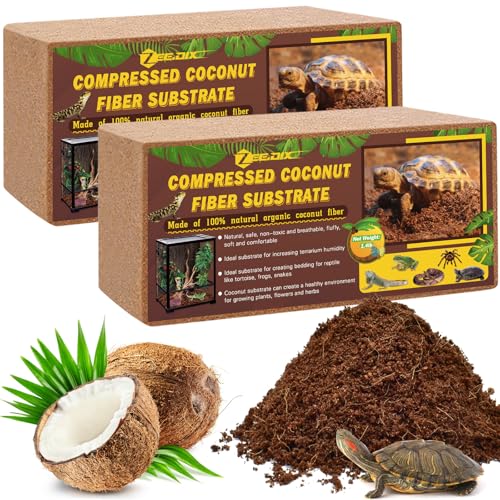
ZeeDix Coconut Fiber Substrate works best for turtle keepers who prioritize a clean, natural habitat with minimal maintenance. I use two compressed bricks, each measuring 7.8 x 3.9 x 1.97 inches and weighing 1.4 lbs. They expand considerably when soaked, saving storage space. Made from 100% organic coconut husk fiber, it’s biodegradable, pH balanced, low in salt, and non-toxic. It absorbs liquids and waste efficiently, reducing odors by breaking down contaminants. I recommend washing it first, especially for sensitive setups. It’s ideal for turtles, reptiles, and amphibians-and even doubles as planting medium for herbs or flowers.
Best For: Reptile and amphibian owners seeking a natural, low-maintenance substrate that promotes a clean and healthy habitat.
Pros:
- Made from 100% natural, biodegradable coconut husk fiber that is safe for pets and the environment
- Expands when soaked, offering excellent space-saving storage and high absorption for waste and odors
- Versatile for use with reptiles, amphibians, and invertebrates, and doubles as a soil substitute for plants
Cons:
- Requires pre-washing before use, especially in sensitive environments like worm farms
- May compact over time in high-moisture setups, reducing aeration
- Limited odor control in heavily soiled enclosures without regular spot cleaning
Aqua Natural Diamond Black Gravel (10lb)

Aqua Natural Diamond Black Gravel suits turtle tank keepers seeking a sleek, functional substrate that supports tank health without risking harm to sensitive species. I use 100% natural quartz gravel with a grain size of 1–2mm, too large for turtles to swallow, reducing impaction risk. The 10lb bag covers a standard 10–15 gallon tank at 1–2 inches deep. Its high surface area hosts beneficial bacteria, aiding biological filtration and reducing waste buildup. Light-reflecting facets add subtle sparkle while enhancing contrast in planted setups. I rinse it thoroughly before use to remove dust. It’s not for bottom feeders or snails.
Best For: Turtle tank keepers seeking a safe, natural substrate that enhances tank aesthetics and supports biological filtration without risking impaction.
Pros:
- Made of 100% natural quartz with a 1–2mm grain size, too large for turtles to ingest, reducing impaction risk
- High surface area promotes beneficial bacteria growth, improving biological filtration and reducing waste buildup
- Light-reflecting facets add subtle sparkle and enhance visual contrast in planted or colorful tank setups
Cons:
- Not suitable for bottom-feeding fish or snails due to grain size and texture
- Requires thorough rinsing before use to minimize cloudy water from residual dust
- Limited coverage-10lb only sufficient for 10–15 gallon tanks at optimal depth
Fluker’s Loose Coconut Fiber Bedding for Reptiles and Arachnids, 5QT

If you keep tropical turtles or other humidity-loving reptiles, Fluker’s Loose Coconut Fiber Bedding is one of the best substrates you can use. I rely on it because it’s made from 100% natural coconut husks-organic, chemical-free, and safe for sensitive species. It absorbs moisture effectively, holds up to six times its weight in water, and resists decay, preventing mold and bacterial growth. This bedding maintains stable humidity levels, which is essential for tropical species’ health. I’ve used it successfully with frogs, toads, lizards, snakes, and invertebrates. It’s also ideal for egg-laying; its texture supports burrowing and incubation, promoting proper egg development without desiccation.
Best For: Reptile and arachnid owners seeking a natural, moisture-retentive substrate ideal for tropical species and egg-laying environments.
Pros:
- Made from 100% natural coconut husks, organic and chemical-free, safe for sensitive pets
- Holds up to six times its weight in water, effectively maintaining stable humidity levels
- Resists decay and mold, supports burrowing, and is excellent for egg incubation
Cons:
- Can become compacted over time, requiring regular fluffing or replacement
- May retain too much moisture for species that prefer dry environments
- Dusty when dry, which could irritate respiratory systems if not misted before use
Zoo Med Eco Earth Coconut Fiber (2-Pack)

When maintaining a humid, naturalistic environment for tropical turtles and other moisture-loving species, the Zoo Med Eco Earth All-Natural Loose Coconut Fiber Substrate stands out as the ideal choice. I rely on this substrate because it’s made from safely composted coconut fiber, holding up to eight times its dry weight in water. Each 8-quart block expands when hydrated, and the 2-pack offers double the volume for larger or multiple enclosures. It naturally absorbs waste and neutralizes odors, promoting a cleaner habitat. I layer it over Zoo Med HydroBalls for superior drainage in planted setups. This substrate sustains humidity, supports plant growth, and mimics a true forest floor-critical for tropical species’ health.
Best For: Tropical reptiles, amphibians, and invertebrates requiring a moisture-retentive, naturalistic substrate to maintain high humidity and support a healthy terrarium ecosystem.
Pros:
- Holds up to eight times its weight in water, effectively maintaining humidity for tropical species
- Naturally absorbs waste and neutralizes odors, promoting a cleaner terrarium environment
- Expands when hydrated, providing excellent value with two 8-quart blocks for larger or multiple enclosures
Cons:
- Requires pre-soaking and proper drying techniques to avoid over-saturation
- May compact over time with heavy use, requiring occasional replacement or fluffing
- Not suitable for dry-habitat species that require arid substrates
Zoo Med Forest Floor Bedding, 4qt

You’ll find the Zoo Med Forest Floor Bedding, 4qt works best if you keep species that thrive in high-humidity environments, such as land turtles, tortoises, and amphibians. I use this substrate because it mimics a natural forest floor, supporting healthy burrowing and humidity retention. It’s made from renewable wood fiber, holding moisture well to sustain 60–80% humidity levels critical for proper hydration and shedding. The bedding resists compaction and mold, staying stable over time. Its natural look enhances the terrarium’s appearance without dyes or chemicals. I’ve seen it work reliably with snakes, lizards, frogs, toads, salamanders, and even tarantulas.
Best For: Reptile and amphibian owners seeking a naturalistic, moisture-retentive substrate for high-humidity terrarium environments.
Pros:
- Effectively retains moisture to maintain ideal 60–80% humidity levels for hydration and shedding
- Mimics a natural forest floor, encouraging natural behaviors like burrowing in snakes, tortoises, and amphibians
- Made from renewable wood fiber, free of dyes and chemicals, with resistance to compaction and mold
Cons:
- May be too moisture-retentive for species requiring dry environments
- Not suitable for juveniles or animals prone to impaction if ingested
- Requires monitoring to prevent over-saturation and potential hygiene issues if not maintained
Factors to Consider When Choosing a Turtle Tank Substrate
You need a turtle tank substrate that’s safe and functional. Pick materials free of sharp edges or toxic additives-your turtle’s health depends on inert, non-reactive substrates like aquarium-safe sand or fine river gravel. Size matters: particles smaller than 3 mm can cause impaction, while larger stones over 2 inches disrupt digging and waste management.
Safety For Turtles
A safe turtle tank substrate starts with smooth, rounded particles that won’t scratch or irritate your turtle’s plastron and sensitive skin. Sharp edges or coarse materials can cause micro-abrasions, increasing infection risk. You must choose non-toxic, chemically inert substrates like silica-free sand or aquarium-safe gravel to prevent pH fluctuations and leaching of harmful substances. Avoid materials with fine dust, loose fibers, or jagged fragments-they can inflame eyes, skin, or respiratory tissues. Select substrates that resist compacting and trapping waste, reducing anaerobic bacterial growth and maintaining water quality. Poor debris management leads to ammonia spikes and unhealthy living conditions. You’re responsible for creating a hazard-free environment that mimics natural habitats without the risks. Safe substrates support hygiene, reduce stress, and prevent injury. Prioritize physical and chemical safety above aesthetics. Your turtle’s long-term health depends on these foundational choices.
Substrate Size Matters
Substrate size plays a critical role in both the health of your turtle and the overall stability of the tank environment. Avoid fine substrates like sand under 0.5 mm-they’re easily ingested and can cause life-threatening impaction. Similarly, powders or silt cloud the water and reduce filter efficiency, harming water quality. Choose particles between 1–2 mm instead; these smooth, medium-sized grains protect your turtle’s limbs and plastron while supporting natural foraging. Gravel or stones from 1–2 inches are safer for larger turtles, minimizing ingestion risk. But don’t go too big-oversized pieces trap waste and uneaten food, creating pockets of decay that boost ammonia levels. The ideal substrate balances safety and function: large enough to avoid swallowing, small enough to prevent debris buildup. Think precision, not guesswork. Your turtle’s digestion and your tank’s stability depend on it.
Ease Of Cleaning
Smooth, larger particles between 1–2 mm allow waste and debris to remain on the surface, making them easy to siphon during routine maintenance. You’ll spend less time scrubbing and more time observing your turtle. Fine substrates like sand compact easily, trapping waste deep within and requiring full substrate removal for sanitation. That’s tedious and stressful for both you and your pet. Pre-washed options reduce initial cloudiness, cutting down on early water changes. You want inert materials-those that won’t decompose-so you avoid organic buildup and maintain stable water chemistry. Look for substrates labeled as non-degrading; they last longer and support cleaner tanks. Stable substrates resist displacement from water currents, preventing scattered messes. When the substrate stays put, cleaning is predictable and efficient. You’re not chasing debris. You’re staying ahead of it. Choose wisely-cleanability impacts your routine every week.
Natural Habitat Mimicry
You’ve optimized for cleanability-now consider how closely your substrate mirrors the natural world your turtle comes from. Choose materials that mimic riverbeds or lake bottoms, where aquatic turtles naturally thrive. Use smooth, rounded substrates to prevent cuts or shell damage. Aim for particle sizes between 0.5–2mm-small enough to reduce accidental ingestion, but large enough to allow natural foraging and digging. Sharp or jagged grains can abrade sensitive skin and plastron, especially in bottom-walking species. Earth-toned, natural colors help your turtle feel secure by simulating real habitat conditions. These substrates aren’t just about looks-they support beneficial bacteria colonization. That microbial activity acts like biological filtration, balancing the tank ecosystem much like a pond or stream. Matching nature closely means healthier, more confident turtles.
Drainage And Flow
A well-designed turtle tank substrate keeps water moving efficiently through the bottom layer. You need proper drainage to prevent stagnant zones and maintain clean water. Avoid fine sand (0.5–1mm), as it compacts easily and blocks flow. Choose coarser materials like natural gravel with irregular shapes-these create open interstitial spaces that enhance permeability. High porosity substrates support consistent water circulation, reducing waste buildup and preventing anaerobic pockets. Aim for grain sizes between 2–5mm to balance flow and safety. Layered setups help, too: add a drainage base of coarse gravel or specialized mesh under the top layer to stop water from pooling. This system mimics a biofilter, boosting bacterial colonization while keeping flow dynamics stable. Good flow means fewer toxins, less maintenance, and a healthier tank. Pick substrates that let water pass freely-it’s essential for long-term success.
Chemical Free Materials
Good water flow means little if the substrate introduces harmful substances into the tank. You need chemically inert materials that won’t leach toxins. Avoid substrates with dyes, glazes, or synthetic binders-these can release ammonia, phosphates, or heavy metals over time. Opt for natural options like untreated play sand or organic coconut fiber, which won’t alter pH or jeopardize water quality. These materials lack chemical additives that could irritate your turtle’s skin or respiratory system. Always rinse the substrate thoroughly before use; this removes dust, residues, and potential contaminants. Coated or treated products may degrade in aquatic environments, introducing preservatives that compromise habitat safety. Choose raw, unprocessed substrates to maintain a stable, healthy tank. Your turtle depends on clean, non-reactive surfaces to thrive. Safe substrates support biological balance without hidden chemical risks.
Durability Over Time
While some substrates break down quickly under constant disturbance, durable options maintain their structure and function over extended periods. You need a substrate that resists compaction and decomposition-gravel, for example, holds its form far longer than organic materials. High-quality choices won’t crumble into fine particles, which reduces water cloudiness and keeps filters working efficiently. Inert substrates like aquarium-safe stones or fired clay won’t leach chemicals or alter pH, ensuring stable water chemistry for years. These materials also withstand your turtle’s digging habits without shifting excessively or breaking down. Choose washed or pre-treated substrates to minimize debris and extend lifespan. Unlike softer options that degrade within months, robust substrates last indefinitely under proper conditions. Their resilience means fewer replacements, less maintenance, and consistent performance. Durable substrates aren’t just convenient-they’re essential for long-term tank stability and turtle health.
Visual Appeal
Several factors influence the visual appeal of a turtle tank, and substrate choice plays a central role in shaping its overall aesthetic. Earthy tones like browns, tans, and greens mimic natural riverbeds or forest floors, creating a realistic habitat. Lighter substrates, such as off-white or beige sand, brighten the tank and improve visibility of turtles and décor. Darker options, including black or deep gray gravel, offer contrast that enhances the colors of turtles and aquatic plants. Smooth, uniform particles provide a clean look, avoiding the cluttered appearance of jagged or irregular materials. Choose grain sizes between 2–5 mm to prevent compaction and aid cleaning. Reflective or slightly polished substrates add subtle sparkle, increasing perceived depth. Avoid overly bright or artificial colors-they can stress turtles. Prioritize natural appearance with functional texture. These choices improve both sightlines and animal well-being, ensuring your tank looks good and performs better.
Frequently Asked Questions
Can I Mix Different Substrates in My Turtle Tank?
Yes, you can mix substrates, but it’s risky. Layering different types may trap waste and create anaerobic pockets harmful to your turtle. If you mix, combine fine sand with larger, smooth pebbles no bigger than 1 inch to reduce impaction risk. Make certain all substrates are inert and non-toxic. Monitor water quality closely-mixed substrates complicate cleaning. A single, well-chosen substrate is safer and easier to maintain.
How Often Should I Replace the Substrate Completely?
You replace the substrate completely every 6 to 12 months under normal conditions. Heavy waste accumulators like red-eared sliders demand full changes every 6 months. Inert substrates such as sand or large river stones may last 12 months if cleaned weekly with a gravel vacuum. Organic materials like coconut fiber degrade faster, requiring replacement every 3–4 months. Poor maintenance accelerates breakdown, promoting bacterial growth and ammonia spikes. Regular water testing helps determine exact timing.
Do Turtles Eat Substrate, and Is It Dangerous?
Yes, turtles eat substrate sometimes, and it can be dangerous. Ingesting small or indigestible particles may cause impaction, blocking their digestive tract. Sandy or fine gravel poses high risks, especially for young turtles prone to accidental consumption. Use larger, smooth stones-over 1 inch in diameter-or avoid substrate entirely. Feeding in a separate enclosure reduces accidental ingestion. Monitor behavior closely; reduced appetite or lethargy signals potential digestive issues requiring veterinary care.
Is Substrate Necessary for a Turtle Tank?
No, you don’t need substrate in a turtle tank. A bare-bottom tank simplifies cleaning and reduces bacterial buildup. Without substrate, waste removal is more efficient, lowering ammonia spikes. If you choose substrate, use large, smooth stones (>2 inches) to prevent ingestion. Alternatively, opt for aquarium-safe sand only if you commit to frequent siphoning. Substrate isn’t functional-it’s cosmetic. You’re better off skipping it for health and maintenance.
Can Substrate Affect Water pH Levels?
Yes, substrate can affect water pH levels. Certain materials like crushed coral or limestone release calcium carbonate, raising pH over time. You’ll see measurable shifts, especially in soft or acidic water. Inert substrates like river rock or sand won’t alter pH. Test your water regularly-if using buffering substrates, monitor pH weekly with a digital meter or test kit. Adjustments may be needed to maintain a stable 6.5–8.0 range for most turtles.